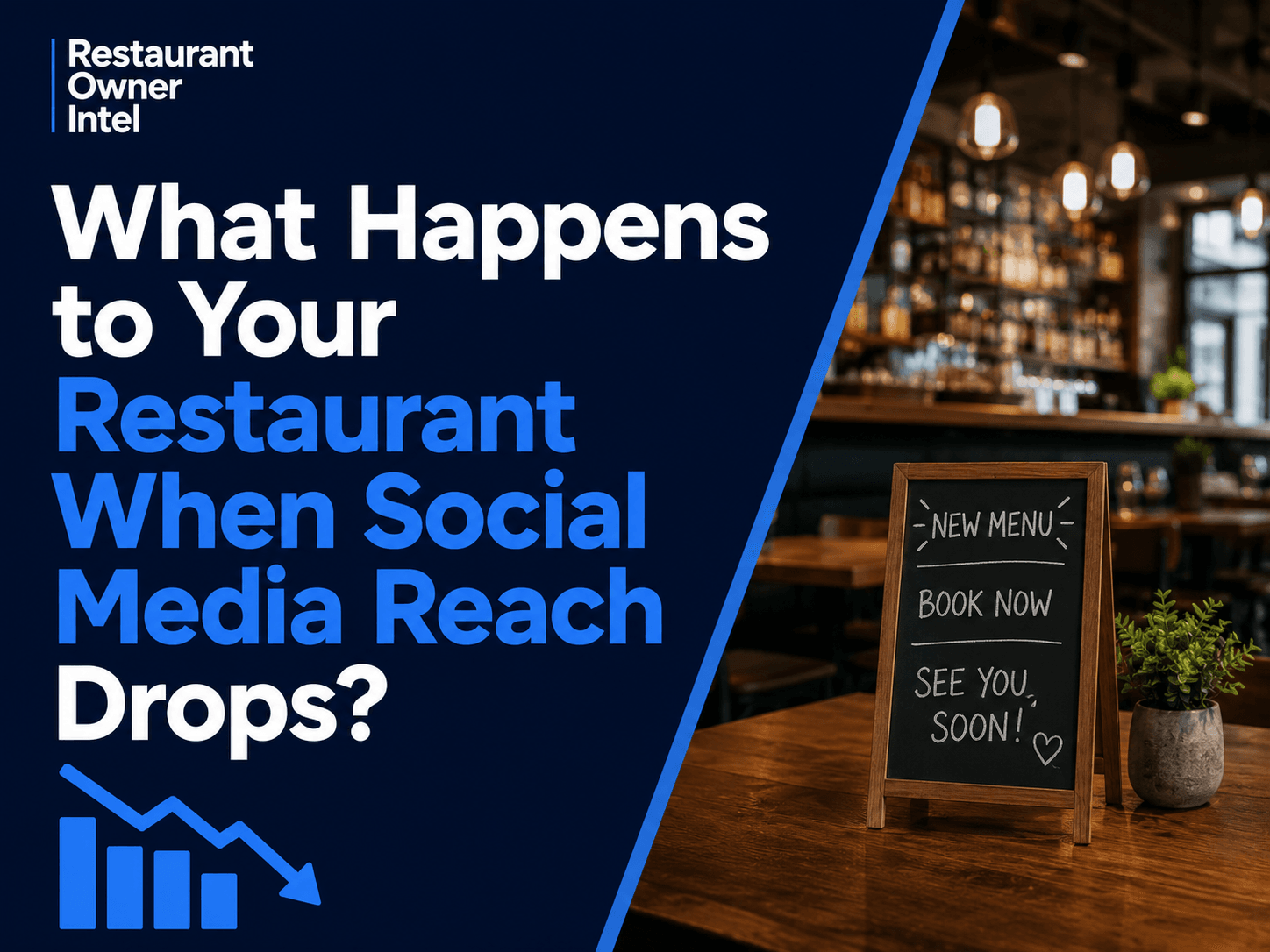
What Happens to Your Restaurant When Social Media Reach Drops?
Learn how to reduce your restaurant’s reliance on Facebook and Instagram by building a marketing system designed for discovery, bookings and repeat visits.
A restaurant can have thousands of Facebook followers, a healthy Instagram account, regular engagement, and still have a fragile marketing system. The problem isn’t that Facebook and Instagram are ineffective. They can be extremely useful for keeping a restaurant visible, showing atmosphere, promoting dishes, reminding customers you exist, and reaching people who haven’t visited yet. The problem starts when they become the whole system. If most of your customer communication depends on two platforms whose reach you don’t control, then your marketing performance can change even when you haven’t done anything differently. A platform adjusts what it shows. Organic reach drops. A post that would once have reached a meaningful percentage of your audience reaches a fraction of it. Suddenly you’re posting more often just to produce the same level of attention. That’s not simply a social media problem. It’s a structural problem. A useful way to think about restaurant marketing is this: Every marketing channel should have a job, and no single channel should be responsible for the whole customer journey. That distinction changes how you build your marketing. Instead of asking, “How do we get more reach on Instagram?” you start asking, “What job should Instagram do for us, and where should the customer go next?” That leads to a much more resilient system. Give each channel one clear jobA strong restaurant marketing engine usually doesn’t require ten platforms, expensive software, or a full-time marketing team. It needs a small number of channels that do different jobs and support one another. Think about the customer journey in five parts: Discovery. Intent. Trust. Conversion. Return. Each part answers a different question in the customer’s mind. Discovery: “What restaurants are around here, and what looks interesting?” Intent: “Where should we eat tonight?” Trust: “Is this place actually worth trying?” Conversion: “How do I book, order, call, or get there?” Return: “What will bring me back?” The mistake many restaurants make is asking social media to handle all five. They use Instagram to get discovered, prove credibility, announce offers, drive bookings, remind regulars to return, promote events, answer questions, and maintain visibility. That sounds efficient because everything is in one place. It’s actually risky because everything is in one place. A better setup gives each channel a narrower job. Facebook and Instagram can be excellent discovery channels. They show food, atmosphere, staff, events, new dishes, and the personality of the restaurant. Google Business Profile can capture intent. Someone searching “Italian restaurant near me,” checking opening hours, looking for directions, or comparing local options is already closer to making a decision. Reviews help reduce uncertainty. A diner who has never visited you may trust the experiences of previous customers more than your own promotional claims. Your website and booking system handle conversion. They should make it easy to view the menu, check key information, reserve a table, order, call, or find the restaurant without friction. Email helps with return visits. Once a customer has chosen you before, you no longer need to reintroduce the restaurant from scratch. You can remind them about a new menu, a quiet Tuesday offer, a seasonal event, a birthday meal, or simply give them a reason to come back. The strength comes from the combination. Social media might create the first spark. Google might confirm the decision. Reviews might remove doubt. The website might make booking easy. Email might generate the second visit. No single channel has to carry the entire load. That’s the first principle to remember: A channel is stronger when it performs one job well than when your entire marketing system depends on it. Test your marketing for single points of failureThere’s a simple diagnostic restaurant owners can use. Take each important source of customer demand and ask: If this disappeared for 30 days, what would replace it? If Instagram disappeared tomorrow, how would previous customers hear about your new menu? If Facebook reach dropped sharply, how would you promote a midweek event? If Google traffic weakened, what other channel would help local diners find you? If your booking platform went offline, could customers still contact you easily? If you stopped posting for two weeks because you were short-staffed, would your restaurant become almost invisible? You’re not trying to predict which platform will fail. You’re checking whether one platform has become too important. That’s what a single point of failure is. It’s any part of your marketing system whose weakness creates a disproportionate problem elsewhere. Consider a hypothetical independent neighbourhood restaurant. It has built an Instagram following of 8,000 people over several years. The owner posts four times a week. The photography is strong. Customers tag the restaurant. Reels occasionally perform well. From the outside, the marketing looks healthy. But look at what happens beneath the surface. The restaurant doesn’t collect customer email addresses. Its Google Business Profile is technically complete but rarely updated. The website is slow on mobile and the menu PDF is awkward to read. Reviews are left unanswered. Most special events are promoted only on Instagram. Regular customers who haven’t visited for three months aren’t contacted anywhere else. Now suppose Instagram reach becomes noticeably weaker. The owner’s instinct may be to post more. That feels logical because reach is the visible problem. But posting more doesn’t fix the underlying weakness. The restaurant still depends on Instagram to do discovery, promotion, retention, and customer communication. The better response is to reduce the amount of work Instagram is expected to do. The restaurant starts collecting email addresses through table bookings, Wi-Fi sign-ups, a birthday club, or a simple opt-in offer. Its Google Business Profile becomes an active source of current information rather than a static listing. Recent reviews are answered consistently. The website is simplified so customers can see the menu, book, call, and find opening hours without hunting. Instagram still matters. In fact, it may become more useful because its role is clearer. A post promoting a new Sunday lunch menu doesn’t need to reach every follower forever. It can generate initial attention, send interested people to the website, encourage some to book, and give returning guests another reason to join the restaurant’s email list. The system now has movement between channels. That movement is what most restaurant owners miss. The goal isn’t to build five separate marketing activities. The goal is to make each channel feed the next one. A customer sees a dish on Instagram. Later, they search the restaurant on Google. They check the rating and recent reviews. They visit the website. They book a table. After visiting, they join the email list. Three months later, an email announcing a new menu brings them back. One customer relationship has now travelled through multiple channels. That matters because the relationship is no longer trapped inside whichever platform introduced the customer first. This gives you another useful rule: Discovery can be rented. Retention should increasingly be owned. You may always depend partly on platforms you don’t control to reach new people. That’s normal. Google, Meta, review platforms, reservation marketplaces, and other services can all introduce valuable customers. The danger is continuing to depend on those platforms after the customer already knows you. If someone has visited your restaurant three times but the only way you can reach them is hoping they see your next Facebook post, you’re repeatedly renting access to a relationship you already earned. That’s inefficient. A customer who already likes your restaurant should gradually become easier to reach, not harder. This is where email is particularly useful for independent restaurants. It doesn’t need to replace social media. It handles a different job. Social can attract attention from people at different levels of familiarity. Email can speak directly to people who have already raised their hand and said, in effect, “Keep me informed.” That makes it useful for events, quieter nights, seasonal menus, private dining, holiday bookings, birthdays, reopening notices, new dishes, and other reasons to return. The same principle applies across the rest of the system. Reviews shouldn’t be treated as a reputation trophy. Their job is to reduce uncertainty. Google Business Profile shouldn’t simply exist because someone claimed it five years ago. Its job is to help high-intent local customers make a decision. Your website shouldn’t be treated as an online brochure. Its job is to remove friction between interest and action. Social media shouldn’t be judged only by likes and reach. Its job is to create enough interest for the customer to take the next useful step. Once each channel has a job, you can make better decisions because you stop comparing them using the wrong metric. Instagram may deserve credit for generating attention even if the final booking happens through your website. Google may be doing valuable work even if customers never follow your profile. Email may produce little public engagement while still bringing previous customers back. Reviews may generate no direct sales you can easily attribute, but still make every other channel more persuasive. You stop asking, “Which platform is best?” You start asking, “Where is the weak link?” That’s a far more useful question. If plenty of people discover you but few book, the problem may be conversion. If the website gets traffic but information is unclear, the problem may be friction. If first-time visits are healthy but regulars fade away, the problem may be retention. If your social posts perform well but nobody joins a channel you control, you may be building attention without building resilience. You can audit your own restaurant in a few minutes. Write down the five stages: Discovery. Intent. Trust. Conversion. Return. Then put at least one channel beside each.
Now look for two things. First, look for empty stages. If you have no reliable return channel, you’re probably paying too much attention to acquisition and too little to repeat business. Second, look for one platform appearing everywhere. If Facebook is your discovery channel, event channel, repeat-customer channel, offer channel, communication channel, and primary traffic source, you’ve found your concentration risk. You don’t have to abandon it. You need to reduce your dependency on it. Choose one missing connection and build that next. If social media creates attention but there’s nowhere for interested customers to go, improve the website or booking path. If you get plenty of bookings but collect no direct customer contact details, start building an opted-in email list. If Google sends people to you but your reviews are neglected, strengthen the trust layer. If customers visit once and disappear into the crowd, create a simple return mechanism. The objective isn’t maximum complexity. It’s continuity. A resilient restaurant marketing engine keeps working when one part underperforms because customers can still discover you, trust you, book with you, and hear from you somewhere else. So use this decision rule: Never let one platform own both your visibility and your customer relationship. Keep Facebook and Instagram if they work. Use them well. But make sure they feed something else. Your first practical action is simple: draw your five-stage customer journey today and write the channel currently responsible for each stage. Wherever you find a blank space, or the same platform doing almost everything, you’ve found the next part of your marketing system to strengthen. The more balanced that system becomes, the less time you’ll spend reacting to algorithm changes and the more time you can spend improving the parts of customer demand you can actually control. That shift also reveals a bigger question many restaurants rarely ask: once you can reach customers reliably, what exactly are you giving them a reason to come back for? Try This With AIUse the AI you're already using: ChatGPT, Claude, Gemini, Grok, Meta AI, Copilot, or another general-purpose AI assistant. Replace the example information inside the brackets with your own information, then copy and paste the complete prompt into your AI. AI PromptAct as a practical marketing adviser for an independent restaurant. Audit my current marketing system for single points of failure using five stages: Discovery, Intent, Trust, Conversion, and Return. Here is my restaurant and how we currently attract, convert, and communicate with customers: [Describe your restaurant and current marketing in plain language. For example: “We’re an independent Italian restaurant. We post on Facebook four times a week and Instagram three times a week, and most promotions go there. We have a Google Business Profile and around 300 reviews, but we rarely update the profile or reply to reviews. Our website has our menu and a link to an online booking system. We don’t collect email addresses except whatever the booking platform collects, and we don’t send emails to previous customers.”] Map what I’m currently using against Discovery, Intent, Trust, Conversion, and Return, and identify any empty stages, weak connections between stages, and channels that are being asked to do too many jobs. Apply this test to each important channel: “If this disappeared or became much less effective for 30 days, what would replace it?” Highlight my biggest single point of failure and explain specifically why it creates risk for customer acquisition or repeat business. Then show me how customers should ideally move between the channels I already have, where appropriate, rather than simply recommending more platforms. Prioritize the three improvements that would make my marketing system more resilient, explaining what to change, why it matters, and what practical first step I can take. Pay particular attention to whether I’m relying on rented visibility from social platforms when I could be moving existing customers toward direct, permission-based relationships such as an opted-in email list. Keep recommendations realistic for a busy independent restaurant with limited time and resources. Don’t invent performance data or assume a channel is working without evidence. Clearly label any useful inference you make from my description. Finish with one specific action I should take first and answer this question in one sentence: “Does one platform currently own both my visibility and too much of my customer relationship?” |
Restaurant Owner Resource |
Free AI Restaurant Growth Plan |
Curious what growth opportunities your restaurant might be missing? Our free AI-powered Growth Plan analyses your restaurant's online presence, marketing and growth goals to identify opportunities you may not have considered.
|
Oct 19, 2026
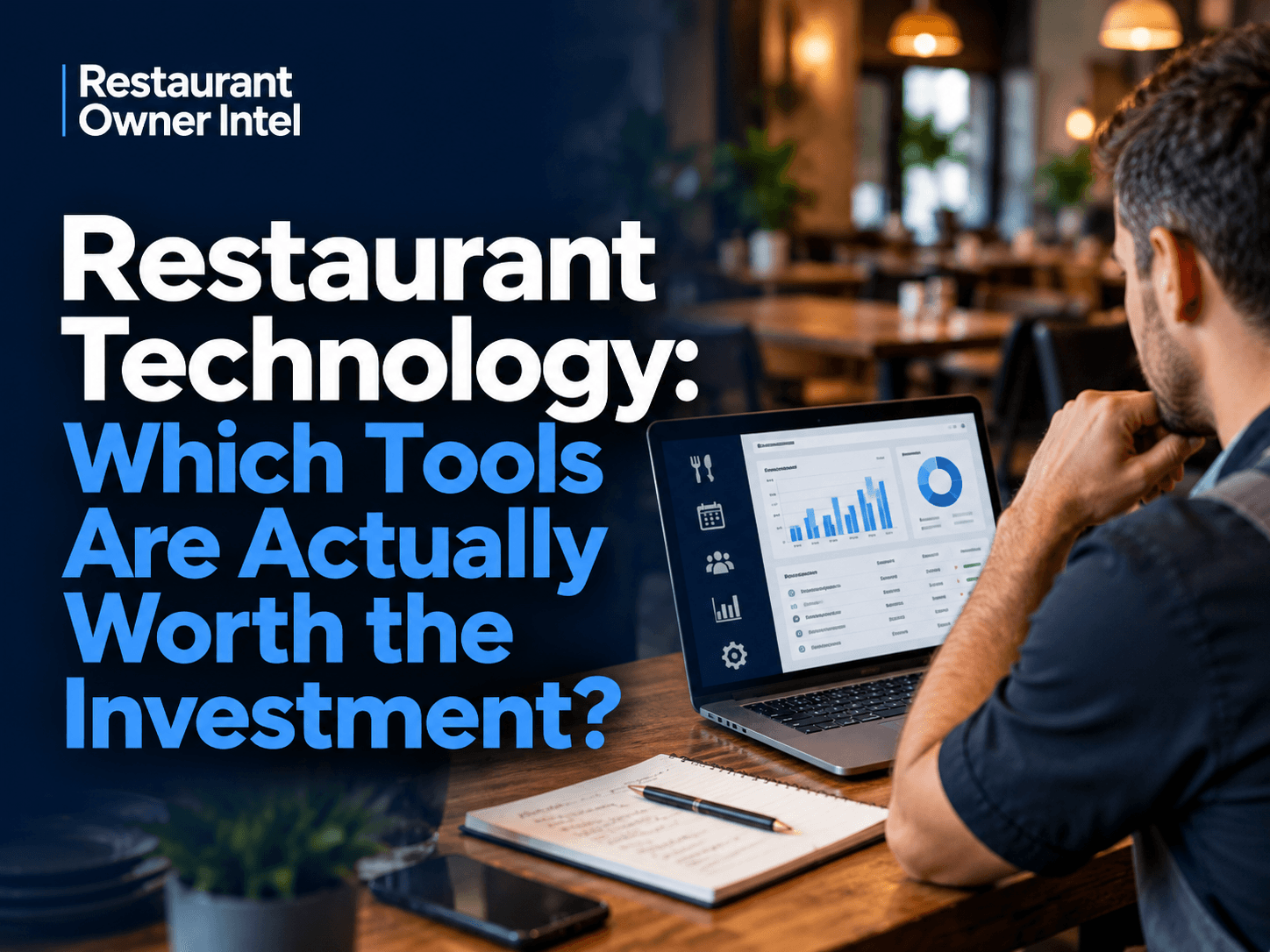
Restaurant Technology: Which Tools Are Actually Worth the Investment?
From POS systems and booking software to AI and staff scheduling, here's how to choose restaurant technology that earns its place in your budget, protects your margins and makes running your business easier.
Oct 18, 2026
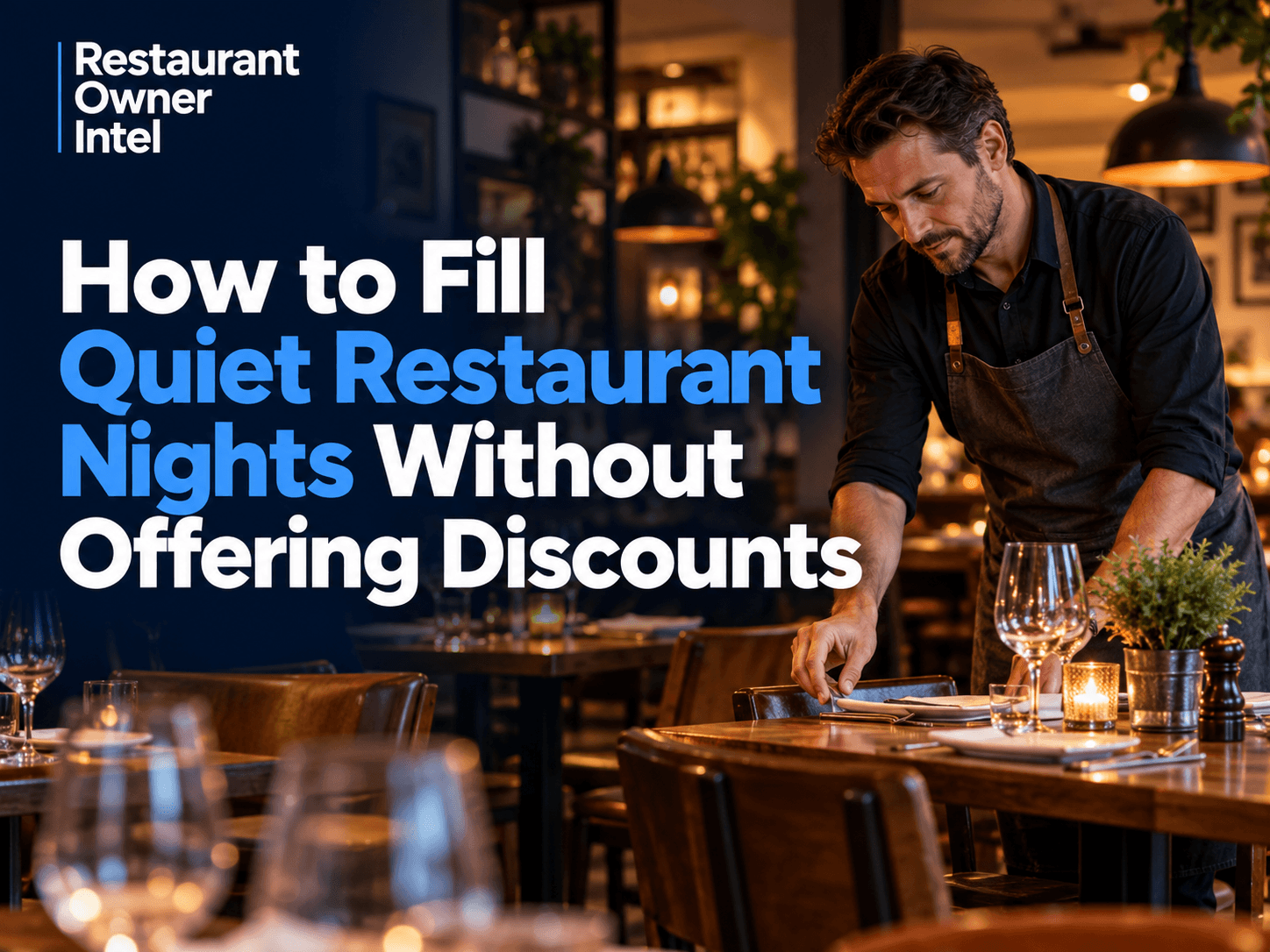
How to Fill Quiet Restaurant Nights Without Offering Discounts
Empty tables on a Tuesday or Wednesday can be expensive. But cutting prices isn't the only way to bring customers through the door. These practical restaurant marketing ideas can help you increase midweek bookings, give diners a reason to visit and protect your profit margins.
Oct 18, 2026
Are Delivery Apps Bringing You Sales or Taking Too Much Margin?
Delivery apps can keep your kitchen busy and your sales figures climbing. But how much of that money are you actually keeping? Here's how to uncover the real cost of restaurant delivery apps, protect your profit margins and make every order work harder for your business.
Oct 17, 2026
Why Customers Choose One Restaurant Over Another (And How to Win Their Business)
Why Customers Choose One Restaurant Over Another comes down to more than food and price. Understanding the psychology behind dining decisions can help your restaurant attract more customers, win bookings and build repeat business.
0 Comments
Join the conversation
Be the first to comment
Share your thoughts above.