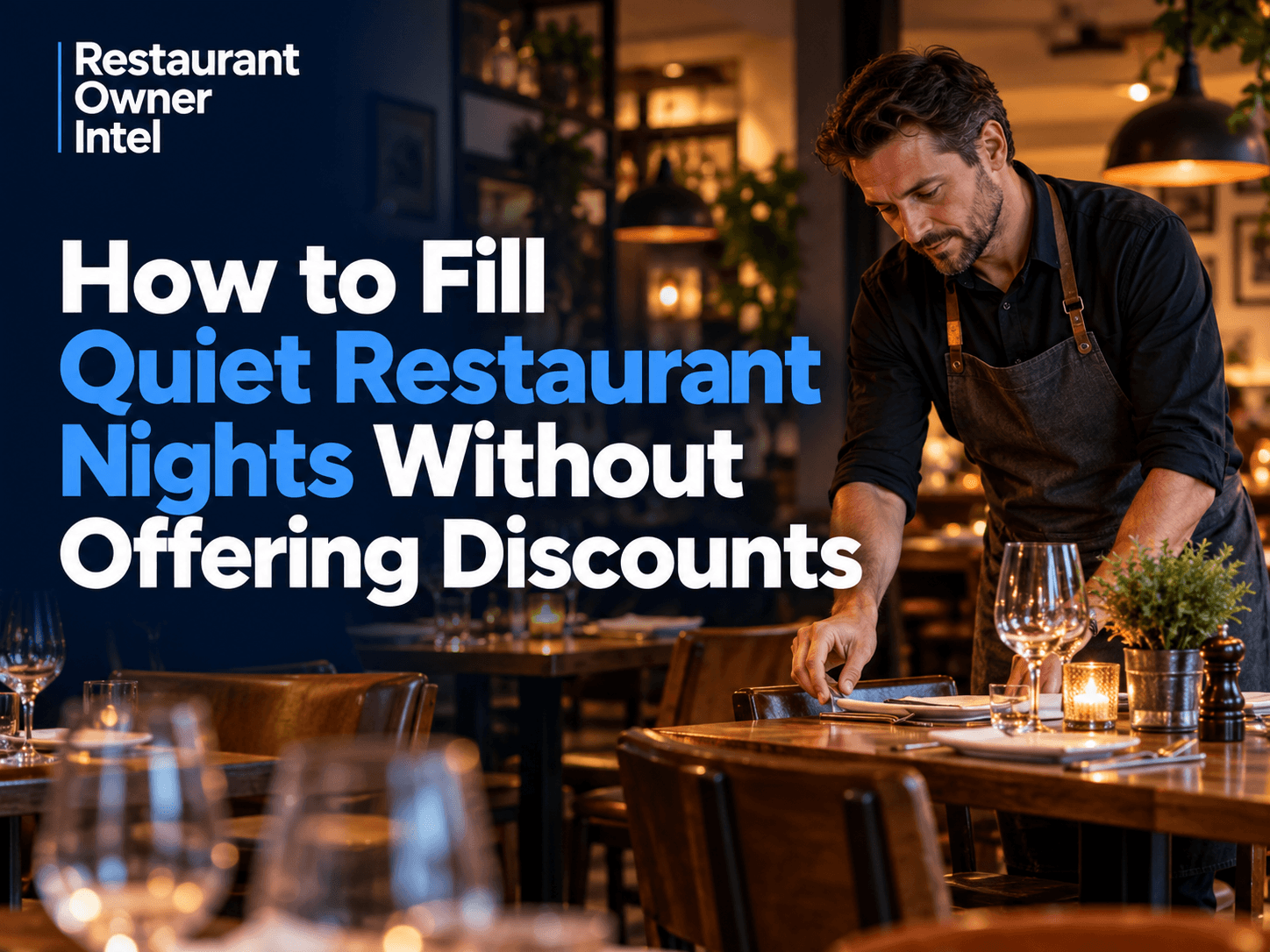
How to Fill Quiet Restaurant Nights Without Offering Discounts
Learn how to fill quiet restaurant nights with practical marketing ideas that attract more diners, increase midweek bookings and protect your profit margins.
It's 7.30 on a Wednesday evening. The kitchen is ready, the team is on shift, and the restaurant looks exactly as it should. Except for the empty tables. You glance at the reservations. A couple of walk-ins might arrive, but it won't be enough to turn the evening around. The food has been ordered, the staff need paying, and another slow service is starting to look inevitable. So the familiar question comes up: Should we run an offer? Perhaps 20% off food. Two courses for a fixed price. A free starter with every main. It's understandable. When you've got empty seats, anything that encourages people to book can seem better than leaving those tables unused. But there's a problem with making discounts your first response. You're reducing the amount customers pay without necessarily reducing what it costs to serve them. And if the same promotion appears every Wednesday, customers may eventually start expecting it. The real opportunity is to give people a reason to choose your restaurant on a night they might otherwise stay at home. That's what makes learning how to fill quiet restaurant nights without offering discounts so valuable. Instead of competing on price, you start creating demand around the food, atmosphere and experiences your restaurant can offer. The Hidden Cost of Filling Tables With DiscountsA busy dining room feels better than an empty one. There's energy, conversation, plates moving through the kitchen and the reassuring sound of a restaurant doing business. But activity isn't the same as profitability. Imagine your average customer spends £35. After the variable costs of food, drink and service, £12 remains to contribute towards fixed costs and profit. Offer that customer 20% off, and their bill falls by £7. Assuming the variable costs stay the same, the contribution drops from £12 to just £5. You've served the same meal, used the same ingredients and provided the same service. Yet you've retained considerably less money from the transaction. Discounts can still make commercial sense, particularly when they attract genuinely additional customers and the remaining contribution is positive. The danger is offering them indiscriminately, including to people who would have paid full price. There's also a longer-term concern. Once customers associate a particular evening with cheaper food, it becomes harder to persuade them to return at normal prices. That doesn't mean every special offer is a mistake. It means your quiet-night marketing should start with the value customers receive, not the amount they save. 1. Give Customers Something Worth Leaving the House ForThink about what you're asking someone to do when you promote a quiet Wednesday. They've finished work. They're comfortable at home. Going out means getting ready, travelling to your restaurant and spending money. A photograph of your dining room with the caption "We're open tonight" probably isn't enough to change their plans. They already know restaurants are open on Wednesdays. What they need is a reason to make tonight different. That could be a weekly pasta evening, a seasonal seafood special or a small tasting experience built around something your kitchen does particularly well. Picture a neighbourhood Italian restaurant introducing Pasta & Wine Wednesday. The chef prepares two pasta dishes that aren't on the regular menu. The team recommends wines that complement them. A few photographs are taken during preparation, and customers are invited to book. Nothing needs to be discounted. The appeal is the opportunity to enjoy something that isn't normally available. Better still, the restaurant can build the evening around ingredients, equipment and skills it already has. A successful quiet-night promotion shouldn't create an entirely new operational problem. Keep it manageable: One or two special dishes, a clear booking message and an experience your existing team can deliver consistently. If customers enjoy it, you have the beginnings of something they might return for every month. 2. Make One Dish the Reason to BookA full menu gives customers plenty of choice. It doesn't necessarily give them a reason to visit on a particular night. Sometimes, one carefully chosen dish can do more promotional work than an entire menu. Imagine a slow-cooked beef dish that customers regularly ask about, but which isn't practical to offer every day. You decide to serve it on Thursdays. The kitchen prepares a manageable quantity. You photograph the finished plate in good light. Then you tell customers exactly when it's available. Your message might read: "Thursday night at ours: 12-hour slow-cooked beef, buttery mash and red wine jus. Back on the menu for one evening." There's no discount. No complicated promotion. Just a dish that sounds worth making a reservation for. And because it's genuinely available for a limited time, customers have a reason to act rather than putting off the visit. This approach works particularly well with dishes that have a story behind them: an old customer favourite, a seasonal ingredient or something the chef enjoys preparing but rarely gets to serve. However, don't let enthusiasm override the numbers. Before promoting a special, calculate the ingredient cost, preparation time, expected selling price and likely contribution. Consider whether unsold portions can be used safely and appropriately elsewhere. A beautiful dish that takes hours to prepare and sells poorly won't solve a quiet-night problem. 3. Your Next Midweek Customers May Already Know YouThere's something frustrating about spending money trying to attract new customers while people who already enjoyed your restaurant haven't visited for months. They know where you are. They've tasted the food. They've experienced the service. Perhaps they've simply fallen out of the habit of coming in. A quiet evening gives you a good reason to reconnect. If you've built an email list with appropriate marketing consent, use it to tell previous customers about something specific that's happening. Not a generic message asking them to visit soon. Give them a reason to open their diary. For example: Subject: A little something different this Wednesday "We're bringing handmade mushroom ravioli back to the menu this Wednesday evening. It's a dish we've had plenty of requests for, and our chef is preparing it for one night only. If you've been meaning to come back, we'd love to see you. You can reserve your table here." Notice what's missing. There's no desperate language about empty tables. No attempt to persuade people with a lower price. The message is simply an invitation to enjoy something appealing. Email is particularly useful because you can reach people who have chosen to hear from you, without depending entirely on whether a social media platform shows them your post. Send the invitation a few days before the evening, rather than waiting until you're already looking at an empty reservation book. And measure the response. If your booking system allows it, use a dedicated booking link or campaign code so you can see whether the message actually generated reservations. 4. Create an Occasion Without Turning Your Restaurant Upside DownAn ordinary Wednesday might not be memorable. A Wednesday when customers meet a local winemaker, enjoy a short acoustic performance or try a new seasonal menu has a different appeal. You don't need an elaborate event calendar. In fact, a small, well-run occasion is often more suitable for an independent restaurant than an ambitious event that requires extra staff, equipment and preparation. Consider a 40-seat restaurant with a quiet Thursday. The owner invites a local wine merchant to host an informal tasting. Guests reserve places in advance, the kitchen prepares a suitable food selection, and the evening is promoted to both businesses' customers. The restaurant gains a reason to attract bookings. The wine merchant meets potential customers. Diners enjoy an experience that goes beyond their usual meal out. Other possibilities include a monthly regional food evening, a relaxed quiz night, a chef's table or a collaboration with a nearby independent producer. The trick is choosing something that suits the restaurant you already operate. A quiet neighbourhood bistro doesn't need loud entertainment to fill tables. Equally, a lively casual restaurant may be better suited to a social event than a formal tasting. Protect the experience your regular customers already enjoy. And work out the economics before announcing anything. A musician, host or outside supplier may add value, but they also add cost. If the event requires additional labour or disrupts normal service, those expenses need to be included when judging its success. Check any relevant licensing requirements too. An event is only worth repeating if the additional business justifies the effort and expense. 5. Stop Apologising for a Quieter AtmosphereSaturday evenings have their appeal. The buzz of a full dining room. Groups celebrating. Tables turning. A kitchen working at pace. But not everyone wants that experience every time they eat out. Some customers would rather have a relaxed conversation without raising their voices. Others prefer an unhurried dinner after work or a midweek date without the weekend crowds. Your quieter evening might offer exactly what they're looking for. Instead of presenting Wednesday as the night when you're struggling for bookings, present it as an opportunity to enjoy the restaurant at a gentler pace. Something as simple as: "Your favourite dishes, a more relaxed atmosphere and time to enjoy the evening. Join us this Wednesday." That message won't appeal to everyone. It doesn't need to. It only needs to resonate with enough customers who value that kind of experience. Of course, it must be authentic. If your restaurant is built around music, energy and a lively atmosphere, don't suddenly promise candlelit tranquillity. Look at what genuinely makes your quieter evenings enjoyable. Perhaps it's easier to book a favourite table. Perhaps service feels less hurried. Perhaps customers can spend more time enjoying a bottle of wine. Those are benefits worth talking about. 6. Look Beyond Your Own CustomersWalk outside your restaurant and consider the businesses around you. Where do people go before dinner? What brings them into the area? Who already has relationships with the customers you'd like to attract? A theatre, gym, office, cinema or independent retailer could provide an opportunity to reach people who haven't considered your restaurant before. A restaurant near a theatre might promote a pre-show dining experience, with clear service times that allow guests to reach the performance comfortably. A restaurant close to offices could organise a monthly networking supper. A local florist and restaurant might collaborate on a seasonal evening, with each business promoting the event to its own customers. The point isn't to exchange discounts. It's to create a reason for two audiences to come together. You don't need ten partnerships. One suitable local business with an engaged customer base could be enough to test the idea. Start with a conversation. Explain the evening you're considering, why it could interest their customers and what each business would contribute. Keep the arrangement simple enough that both sides can see whether it worked. 7. Don't Let a Good Promotion Die at the Booking LinkA customer sees your Wednesday special on Instagram. The photograph looks excellent. The dish sounds tempting. They tap your profile to make a reservation. Then the problems begin. The booking link is buried. The website takes too long to load. The special isn't mentioned on the booking page, and it's unclear whether it's available at 6pm or 8pm. After a couple of attempts, they give up. This is where restaurant marketing can quietly lose money. You've done the hard work of creating interest, but the final step makes it unnecessarily difficult for someone to become a paying customer. Before promoting a quiet evening, follow the booking journey yourself on a mobile phone. Can someone find the information quickly? Is the date clear? Can they reserve a table without having to telephone for basic details? Make sure your team also knows what's being promoted. There's little point advertising a special if someone calls to ask about it and the person answering the phone hasn't heard of it. Your Google Business Profile can support the campaign too. Where the feature is available, publish a relevant update or event post, with accurate details and a suitable link. Use the same clear message across your website, email and social media. The goal isn't to produce more marketing content. It's to make the decision to book as easy as possible. 8. A Full Restaurant Isn't Enough. Check What You Actually Earned.Suppose your usual Wednesday brings in 20 customers, each spending an average of £35. That's £700 in sales. You introduce a monthly special, promote it to existing customers and attract 40 covers instead. At the same average spend, sales rise to £1,400. An extra £700 sounds encouraging. But before declaring the evening a success, look at what it cost to generate that revenue. Did you need an extra member of staff? Were ingredient costs higher? Did you pay for entertainment? Was there additional waste? And how many of those 40 customers would have visited anyway? Those questions matter because the purpose of filling quiet restaurant nights is to improve the business, not simply make the dining room look busier. Track four figures for each promotion: covers, average spend, total sales and contribution after the additional costs of running the evening. Compare the results with your normal trading pattern. One successful Wednesday might be influenced by good weather, a local event or a large group booking. Repeating the promotion over several weeks gives you a better picture. It also helps you spot opportunities. Perhaps the chef's special attracts plenty of customers but produces little contribution. A different dish might improve the economics. Perhaps the wine evening generates fewer covers than expected, but guests spend more and several book again. The numbers will help you decide what deserves a permanent place in your calendar. 9. Build a Quiet-Night Promotion You Can Actually SustainIt's easy to get enthusiastic about an event when the idea is new. The harder part is making it work alongside the demands of running a restaurant. Start with one evening. Choose a night that's consistently quiet, rather than reacting to an occasional slow service. Look at the past few weeks of trading. Establish your usual covers, average spend and contribution. Then select one idea that gives customers a reason to visit without cutting your standard prices. Keep the first test simple. If it's a special dish, make sure the kitchen can prepare it comfortably. If it's an event, confirm the costs and staffing. If you're contacting previous customers, prepare the message and booking link in advance. Promote the evening with enough notice for people to make plans. Afterwards, record what happened while the details are fresh. Did customers mention the promotion? Were bookings made in advance? Did the experience run smoothly? Did the additional revenue leave a worthwhile contribution? Repeat the test over four weeks, adjusting only what needs improvement. You may find that one reliable monthly event performs better than trying to invent a different promotion every week. And if something doesn't work, you haven't committed the restaurant to an expensive, complicated programme. You've tested an idea, learned from it and kept control of the costs. Products / Tools / ResourcesYou don't need an expensive marketing system to promote a quiet restaurant night. A few practical tools, used consistently, can make the work easier. Google Business Profile — Useful for keeping your restaurant's information accurate and promoting relevant updates or events where supported. Make sure customers can find your website, booking options and correct opening hours. Canva — Helpful for creating simple, consistent graphics for your chef's specials, tasting evenings and midweek events. A good photograph, a short headline and a clear date are usually enough. Mailchimp — An option for restaurants building a permission-based email list. It can help you send invitations to previous customers and review campaign engagement. Check the plan and pricing against the size of your list. Your existing restaurant reservation system — Before paying for another service, check whether your current system supports booking links, guest notes, campaign tracking or customer communications. You may already have the features you need. Your EPOS reports and a simple spreadsheet — Use them to compare normal and promoted evenings. Record covers, average spend, sales, additional costs and contribution. Even a basic spreadsheet can reveal which promotions are worth repeating. Local business networks and independent suppliers — Wine merchants, food producers, theatres, offices and community organisations can become useful promotional partners. Start with businesses whose customers are a natural fit for your restaurant. Your own customer list — Perhaps the most valuable resource of all. A well-maintained, permission-based list of people who already enjoy your restaurant gives you a direct way to promote future evenings without relying entirely on advertising or social media reach. Try This With AIUse the AI you're already using: ChatGPT, Claude, Gemini, Grok, Meta AI, Copilot, or another general-purpose AI assistant. Replace the example information inside the brackets with your own information, then copy and paste the complete prompt into your AI. AI PromptAct as an experienced restaurant profitability and marketing adviser who understands the pressures of running an independent restaurant. I want you to help me fill a consistently quiet evening without relying on discounts or reducing my normal menu prices. Here's my restaurant and the problem: [I'm running a 45-seat independent Italian restaurant in a residential neighbourhood. Tuesdays and Wednesdays are consistently quiet, averaging around 15 to 20 covers. Our average customer spend is £32. We're known for homemade pasta, good wine and a relaxed atmosphere. We have Instagram, a small customer email list and online reservations. I want to attract more midweek customers without creating lots of extra work for the kitchen.] Based on this information, identify the three most commercially sensible ways to make my quiet evening more attractive, using what my restaurant already does well. Consider limited-availability dishes, simple dining experiences, existing customers and suitable local partnerships, but don't recommend events or promotions just because they sound interesting. For each idea, explain why customers would make a special trip, how I could run it with minimal additional cost, how to promote it using my existing channels and what could go wrong operationally or financially. Rank the three ideas by likely practicality, customer appeal and potential contribution to profit, clearly identifying any assumptions. Then select the strongest option and turn it into a realistic four-week test, including a specific promotional message I can use, when and where to promote it, a simple booking call to action and the figures I should track to judge success. Distinguish additional revenue from actual contribution after costs, and explain how to avoid discounting customers who would have visited anyway. Don't invent customer demand, financial results or capabilities I haven't mentioned. Where information is missing, make reasonable assumptions and label them. Keep everything specific to my restaurant, commercially grounded and manageable for a busy owner. I want one practical promotion I can put into action, not a complicated marketing strategy. |
Restaurant Owner Resource |
Free AI Restaurant Growth Plan |
Curious what growth opportunities your restaurant might be missing? Our free AI-powered Growth Plan analyses your restaurant's online presence, marketing and growth goals to identify opportunities you may not have considered.
|

Oct 18, 2026
Are Delivery Apps Bringing You Sales or Taking Too Much Margin?
Delivery apps can keep your kitchen busy and your sales figures climbing. But how much of that money are you actually keeping? Here's how to uncover the real cost of restaurant delivery apps, protect your profit margins and make every order work harder for your business.
Oct 17, 2026
Why Customers Choose One Restaurant Over Another (And How to Win Their Business)
Why Customers Choose One Restaurant Over Another comes down to more than food and price. Understanding the psychology behind dining decisions can help your restaurant attract more customers, win bookings and build repeat business.
Oct 16, 2026
Revenue Is Up. But Is Your Restaurant Actually Doing Better?
Higher sales can create the impression of a healthier restaurant business. But unless customer numbers, operating costs and profit margins are improving too, revenue growth may be hiding a very different story.

Oct 15, 2026
Does Your Restaurant Look as Good Online as It Does in Person?
Your restaurant might be everything a customer wants when they walk through the door. But if your online presence tells a different story, you could be losing bookings before anyone gets the chance to experience it.
0 Comments
Join the conversation
Be the first to comment
Share your thoughts above.