
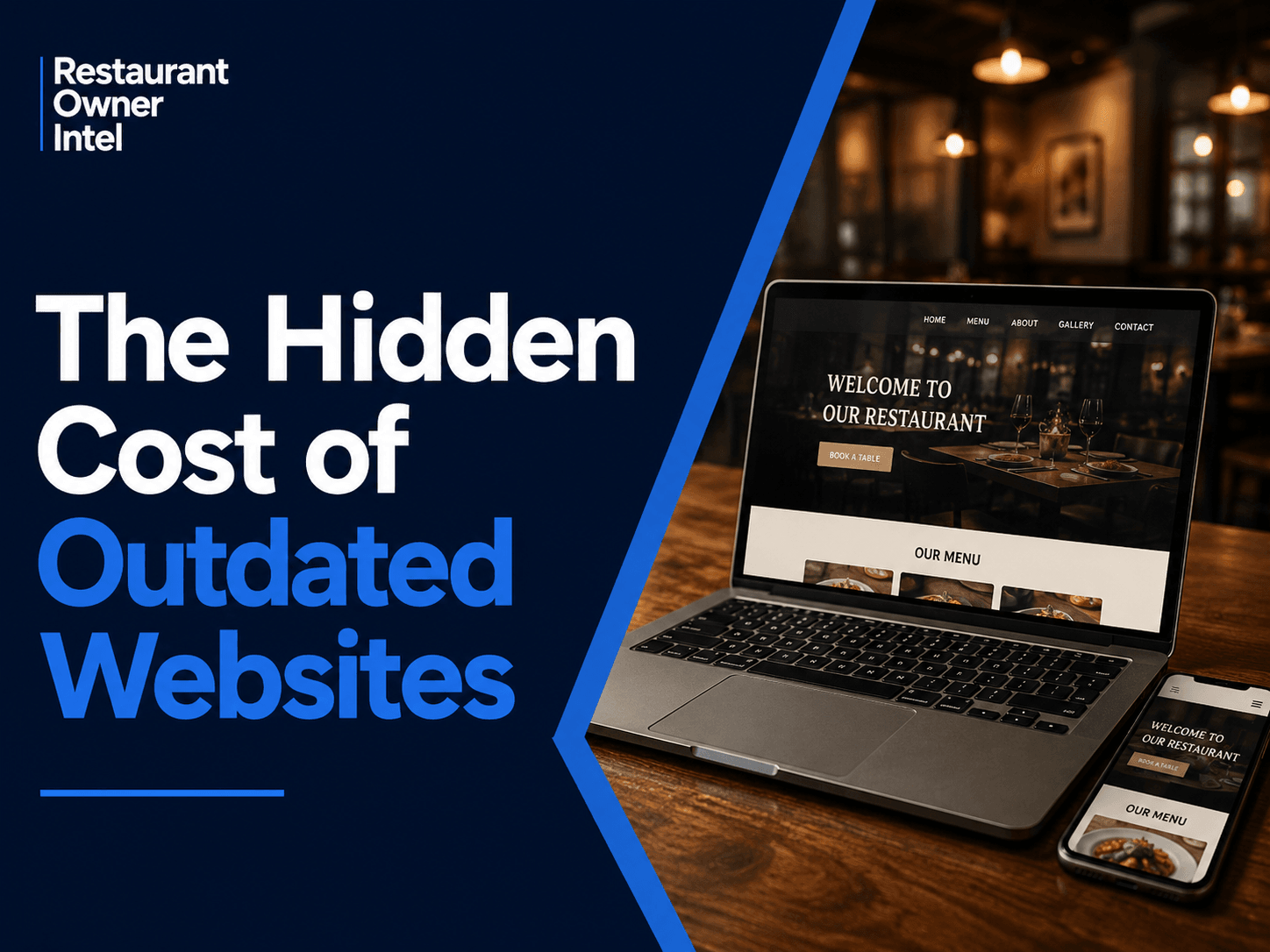
The Hidden Cost of Outdated Websites
Discover the hidden cost of outdated websites for restaurants and how poor mobile design, old information and booking friction can quietly cost you customers and revenue.
A customer searches for somewhere to eat tonight.
They find your restaurant on Google, like the photos, check the reviews and click through to your website.
Then things start to go wrong.
The website takes too long to load. The menu is difficult to read on a phone. The opening hours are buried. The booking button is hard to find. Perhaps the menu is an old PDF, or the prices do not match what customers see when they arrive.
The customer does not complain.
They simply leave.
That is the hidden cost of outdated websites. You rarely see the customers you lose, which makes the problem easy to ignore.
For an independent restaurant, however, your website is not just a digital brochure. It should help turn customer interest into bookings, orders and visits. Your Website Is Part of the Customer Experience
Restaurant owners naturally spend time thinking about the physical customer experience.
Is the entrance welcoming?
Are the menus clean?
Does the restaurant look well maintained?
Are customers greeted quickly?
But the customer experience often begins long before someone walks through the door.
A potential customer may first encounter your restaurant through Google, Instagram, a recommendation or an online review. From there, they visit your website because they want to make a decision.
They are usually looking for something simple:
Your website needs to answer those questions quickly.
Every unnecessary step creates another opportunity for the customer to leave. The Hidden Cost of Outdated Websites Is Lost Conversion
One of the biggest problems with a poor restaurant website is that lost business is difficult to measure.
If 100 people visit your website and only a small percentage book, you know how many bookings you received.
You do not necessarily know how many people wanted to book but gave up.
Imagine a customer looking for a restaurant for Saturday evening.
They visit your website on their phone. The booking button is difficult to find, so they open the menu instead. It is a PDF designed for a desktop screen. They zoom in, scroll around and eventually go back to Google.
Another restaurant is one click away.
That competitor does not necessarily have better food, better service or better value.
They simply made the decision easier.
For restaurants, website conversion is often about removing small pieces of friction. 1. An Outdated Website Can Weaken Trust
Customers make quick judgements online.
If your website looks neglected, they may wonder whether other parts of the business are neglected too.
That does not mean every restaurant needs an expensive redesign every few years.
It means the website should feel maintained.
Current photography, accurate menus, working links, clear contact information and a clean mobile layout send a simple message:
This restaurant pays attention.
The opposite can happen when customers find broken pages, old promotions or information that has clearly not been updated for years.
The website becomes a trust problem rather than a sales tool. 2. Poor Mobile Experience Creates Unnecessary Friction
Restaurant websites need to work particularly well on phones.
Think about the situations in which customers search for restaurants.
They may be walking through town, sitting in a hotel, travelling home from work or discussing dinner plans with friends.
They want information quickly.
Open your own website on a phone and try to complete the same tasks as a new customer.
Can you find the menu within seconds? Can you read it without zooming? Can you see the location and opening hours? Can you book a table easily? Can you call the restaurant with one tap?
If any of those actions are unnecessarily difficult, there is friction in the customer journey. 3. Old Information Creates Problems Before Customers Arrive
An outdated website can also create operational problems.
Suppose a customer checks your website and sees an old menu.
They arrive expecting a particular dish or price, only to discover it has changed.
You have created disappointment before the meal has started.
The same applies to incorrect opening hours, outdated offers, old event information and unavailable services.
Your team may then have to explain information that should have been corrected online.
Keeping a restaurant website accurate is therefore not just a marketing task.
It reduces confusion for customers and unnecessary work for staff. 4. Your Website May Be Making Bookings Harder Than Necessary
Every restaurant owner should test the booking journey personally.
Start from the homepage and pretend you have never visited the restaurant before.
How many steps does it take to reserve a table?
A customer who has decided to book should not have to hunt for the next step.
A clear Book a Table button should be easy to find, particularly on mobile.
The same principle applies if online ordering is important to your business.
Do not make an interested customer search for the action that produces revenue. 5. Your Menu May Be Selling Less Than It Could
Your online menu is not simply a list of dishes.
It helps customers decide whether to visit.
Poor menu presentation can therefore have a commercial cost.
Check whether your online menu has:
Your menu should make the food easy to understand and appealing to buy.
If customers have to download a difficult-to-read file and repeatedly zoom in to inspect it, you are making one of your most important sales tools harder to use.
6. Slow Websites Lose Impatient Customers
Restaurant customers are not visiting your website because they want to admire the website.
They want information.
Large images, unnecessary animations, outdated technology and poorly maintained pages can make a website feel slow.
That matters because the customer has alternatives immediately available.
A beautiful homepage is of little value if customers become frustrated before reaching the menu or booking page.
Speed and simplicity should come before clever design. 7. You Could Be Paying for Marketing That Your Website Undermines
This is where an outdated restaurant website can become particularly expensive.
You may be spending money or staff time on:
All of those activities can send potential customers to your website.
If the website then makes it difficult to book, order or find information, some of that marketing effort is being wasted.
Think of it as a leak.
Increasing traffic without fixing the leak simply sends more potential customers through a poor conversion journey.
Before spending more money attracting visitors, make sure your website does a good job with the visitors you already have.
|
Restaurant Owner Resource |
Free AI Restaurant Growth Plan |
Curious what growth opportunities your restaurant might be missing? Our free AI-powered Growth Plan analyses your restaurant's online presence, marketing and growth goals to identify opportunities you may not have considered.
|
Oct 19, 2026
Restaurant Technology: Which Tools Are Actually Worth the Investment?
From POS systems and booking software to AI and staff scheduling, here's how to choose restaurant technology that earns its place in your budget, protects your margins and makes running your business easier.
Oct 18, 2026
How to Fill Quiet Restaurant Nights Without Offering Discounts
Empty tables on a Tuesday or Wednesday can be expensive. But cutting prices isn't the only way to bring customers through the door. These practical restaurant marketing ideas can help you increase midweek bookings, give diners a reason to visit and protect your profit margins.

Oct 18, 2026
Are Delivery Apps Bringing You Sales or Taking Too Much Margin?
Delivery apps can keep your kitchen busy and your sales figures climbing. But how much of that money are you actually keeping? Here's how to uncover the real cost of restaurant delivery apps, protect your profit margins and make every order work harder for your business.
Oct 17, 2026
Why Customers Choose One Restaurant Over Another (And How to Win Their Business)
Why Customers Choose One Restaurant Over Another comes down to more than food and price. Understanding the psychology behind dining decisions can help your restaurant attract more customers, win bookings and build repeat business.
0 Comments
Join the conversation
Be the first to comment
Share your thoughts above.