
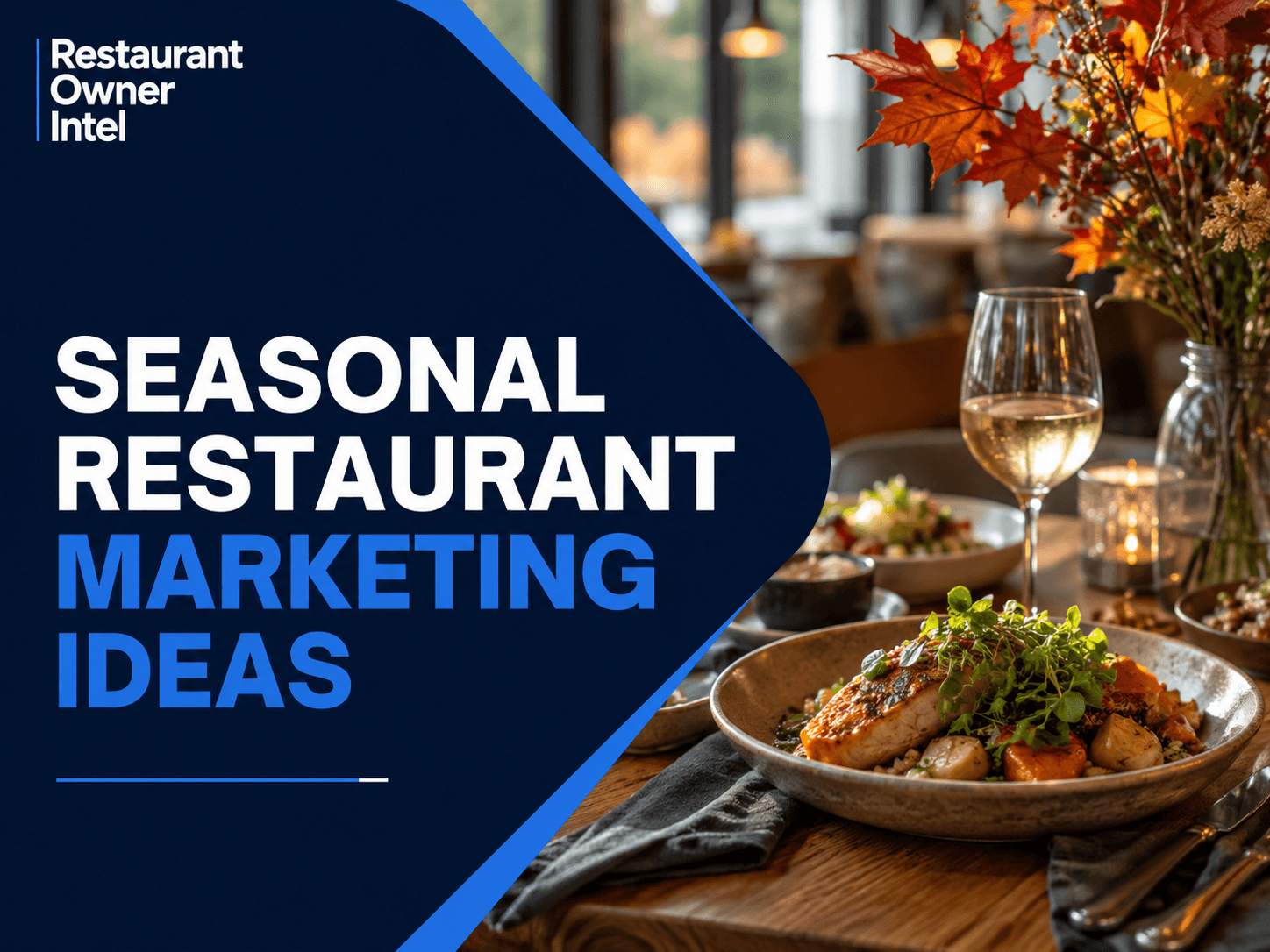
Seasonal Restaurant Marketing Ideas That Give Customers a Reason to Visit
Discover practical seasonal restaurant marketing ideas to attract more customers, increase repeat visits, fill quieter services and create timely reasons to book.
Most restaurants already change with the seasons. Menus change. Ingredients change. Customers move from outdoor tables to cosy dining rooms. Christmas parties arrive. Summer brings longer evenings. Valentine's Day creates a different type of demand from a normal Friday night. But the marketing often stays exactly the same. The same social posts go out. The same menu sits on the website. The same messages are sent to customers. Then, when a quiet period appears, the response is often a last-minute discount. Seasonal marketing gives you another option. Instead of simply asking customers to “book a table”, you create a timely reason for them to visit now. The key is to make the season commercially useful rather than simply decorative. What Seasonal Restaurant Marketing Should Actually AchieveSeasonal restaurant marketing is not about putting pumpkins on an Instagram post in October or adding snowflakes to your website in December. A good seasonal campaign should help you achieve a specific business result. That could mean:
Start with the business objective. Then build the seasonal idea around it. Here are practical ways to do it. 1. Create a Seasonal Menu With a Commercial PurposeA seasonal menu can give previous customers a genuine reason to return. But changing dishes simply because the calendar has changed is not enough. Look for dishes that combine seasonal appeal with good margins and strong perceived value. An autumn menu might introduce a high-margin starter using seasonal produce. A summer menu could add sharing dishes and drinks designed for outdoor dining. A winter menu might focus on comforting dishes that encourage customers to add sides, desserts or another drink. Then make those dishes visible. Feature them on your website, Google Business Profile, social channels and email marketing rather than expecting customers to discover them after they arrive. Ask yourself: Which seasonal dish gives customers the strongest reason to come back — and which one makes the most commercial sense for the restaurant? 2. Turn Seasonal Moments Into Specific Reasons to VisitYou do not need to build every campaign around the biggest dates in the calendar. Christmas, Valentine's Day and Mother's Day are obvious opportunities, but there are plenty of smaller seasonal moments you can use. Think about:
The opportunity is often in connecting what is happening locally with a clear restaurant occasion. A restaurant near a theatre could promote a pre-show menu. A restaurant with outdoor seating could start promoting its terrace as soon as warmer weather arrives. A neighbourhood restaurant could create a family-focused offer during school holidays. You are not inventing demand from nothing. You are connecting your restaurant to something customers are already planning. 3. Give Customers a Reason to Return Each SeasonAcquiring a new customer usually requires more effort than contacting someone who already knows your restaurant. Seasonal changes create natural opportunities to bring previous customers back. Instead of sending a generic message saying: “Book your table this weekend.” Give them something new to return for: “Our autumn menu launches Thursday.” “Terrace dining is back from this weekend.” “Our Christmas menu is now available.” “Three new summer dishes have just landed.” This is one reason an email database is so valuable. Social media requires you to hope the right customers see your post. An email list gives you a direct way to tell previous customers that something has changed. Each season gives you a new reason to contact them. 4. Build Seasonal Campaigns Around Quiet PeriodsOne of the best uses of seasonal restaurant marketing is directing demand towards services that actually need it. Suppose Saturday evening is already full. There is little value in offering a broad promotion that makes Saturday even busier, particularly if it gives away margin on tables you could have sold at full price. Instead, use seasonal campaigns strategically. Winter midweek: Create a fixed-price Tuesday-to-Thursday menu. Summer afternoons: Promote drinks, sharing plates or early-evening dining outside. January: Give customers a reason to return after the Christmas rush with a new menu or midweek experience. School holidays: Develop an offer for quieter family-friendly services. The important question is not simply: “What promotion should we run?” It is: “Which service do we want more customers to book?” That small change in thinking can protect margin and make promotions much more useful. 5. Use Limited Availability Instead of Permanent DiscountsSeasonal offers have a natural advantage: they end. That creates urgency without needing aggressive sales tactics. A dish using seasonal ingredients might only be available for six weeks. A terrace menu only makes sense during warmer months. A festive menu has a clear booking window. A Valentine's experience exists for a specific date. Use that honestly. “Available throughout September.” “Six weekends only.” “Festive bookings now open.” “Summer menu ends 30 September.” give customers a reason to make a decision. Compare that with a permanent “10% off” offer. If customers know the discount will still be there next month, there is little urgency to act today. 6. Update Your Google Business Profile for the SeasonYour seasonal campaign should not exist only on Instagram. Customers searching for somewhere to eat are often much closer to making a decision than someone casually scrolling through social media. Keep your Google Business Profile aligned with what is happening inside the restaurant. That can include:
Check the basics as well. If your opening hours change over Christmas, Easter or another holiday period, make sure the information customers find online is accurate. Seasonal marketing can attract attention. Incorrect information can waste it. 7. Make Your Photography Match the SeasonCustomers buy with their eyes. If you are promoting a summer terrace but your latest photography shows a dark dining room in winter, the marketing feels disconnected. You do not need a major professional photoshoot four times a year. Create a small bank of useful seasonal images. For summer, that might include outdoor tables, lighter dishes, drinks and customers dining outside. For autumn, focus on new dishes, warmer lighting and seasonal ingredients. For Christmas, capture group dining, your festive menu and the atmosphere inside the restaurant. One focused photography session can provide material for your website, Google Business Profile, emails and social media for weeks. 8. Turn One Seasonal Idea Into a Full CampaignA common restaurant marketing mistake is treating every piece of content as a separate job. You do not need ten different ideas. You need one strong idea used properly. Imagine you launch a new autumn menu. That one change could become:
One genuine restaurant development has now produced weeks of useful marketing. That saves time and keeps the message consistent. 9. Create Seasonal Experiences, Not Just Seasonal DiscountsA discount reduces the price. An experience can increase perceived value. That distinction matters. Instead of immediately offering 20% off, consider whether the season allows you to create something customers would actively choose to visit for. Examples might include:
The strongest ideas give customers something worth talking about while also giving the restaurant a clear product to market. 10. Start Marketing Before the Season ArrivesTiming is one of the biggest differences between a planned campaign and a last-minute promotion. Do not wait until Valentine's week to start thinking about Valentine's Day. Do not start promoting Christmas parties when every local business has already booked somewhere else. Work backwards from the date. For a significant seasonal campaign, decide:
The bigger the occasion and the more valuable the booking, the earlier this planning should happen. A Simple Seasonal Restaurant Marketing CalendarYou do not need a complicated annual marketing strategy. Start by looking 90 days ahead. For each upcoming season or event, write down four things: Opportunity: What is happening? Customer: Who might visit because of it? Offer: What are you giving them a reason to book? Business goal: What result do you actually want? For example: Opportunity: Autumn menu launch Or: Opportunity: Christmas party season This keeps seasonal marketing connected to restaurant performance rather than filling a content calendar for the sake of it. Quick Seasonal Marketing AuditBefore launching your next campaign, check:
If you cannot explain what the campaign is supposed to achieve, rethink it before spending more time or money promoting it. Seasonal Restaurant Marketing Ideas Should Create Reasons to ActThe best seasonal restaurant marketing ideas are not necessarily the most creative. They are the ones that connect something customers already care about with something your restaurant wants to sell. A new season can give an existing customer a reason to return. A local event can help fill a quieter service. A limited menu can create urgency. A festive package can secure bookings weeks in advance. And one well-planned seasonal idea can provide material for your email, Google profile, website and social channels at the same time. Your next action: Look at the next 90 days and identify three seasonal opportunities. For each one, decide which customers you want to attract, what you will offer them and which service or revenue target you want the campaign to improve. That gives you a seasonal marketing plan built around restaurant performance rather than simply the calendar. |
Restaurant Owner Resource |
Free AI Restaurant Growth Plan |
Curious what growth opportunities your restaurant might be missing? Our free AI-powered Growth Plan analyses your restaurant's online presence, marketing and growth goals to identify opportunities you may not have considered.
|
Oct 19, 2026
Restaurant Technology: Which Tools Are Actually Worth the Investment?
From POS systems and booking software to AI and staff scheduling, here's how to choose restaurant technology that earns its place in your budget, protects your margins and makes running your business easier.

Oct 18, 2026
How to Fill Quiet Restaurant Nights Without Offering Discounts
Empty tables on a Tuesday or Wednesday can be expensive. But cutting prices isn't the only way to bring customers through the door. These practical restaurant marketing ideas can help you increase midweek bookings, give diners a reason to visit and protect your profit margins.

Oct 18, 2026
Are Delivery Apps Bringing You Sales or Taking Too Much Margin?
Delivery apps can keep your kitchen busy and your sales figures climbing. But how much of that money are you actually keeping? Here's how to uncover the real cost of restaurant delivery apps, protect your profit margins and make every order work harder for your business.

Oct 17, 2026
Why Customers Choose One Restaurant Over Another (And How to Win Their Business)
Why Customers Choose One Restaurant Over Another comes down to more than food and price. Understanding the psychology behind dining decisions can help your restaurant attract more customers, win bookings and build repeat business.
0 Comments
Join the conversation
Be the first to comment
Share your thoughts above.