
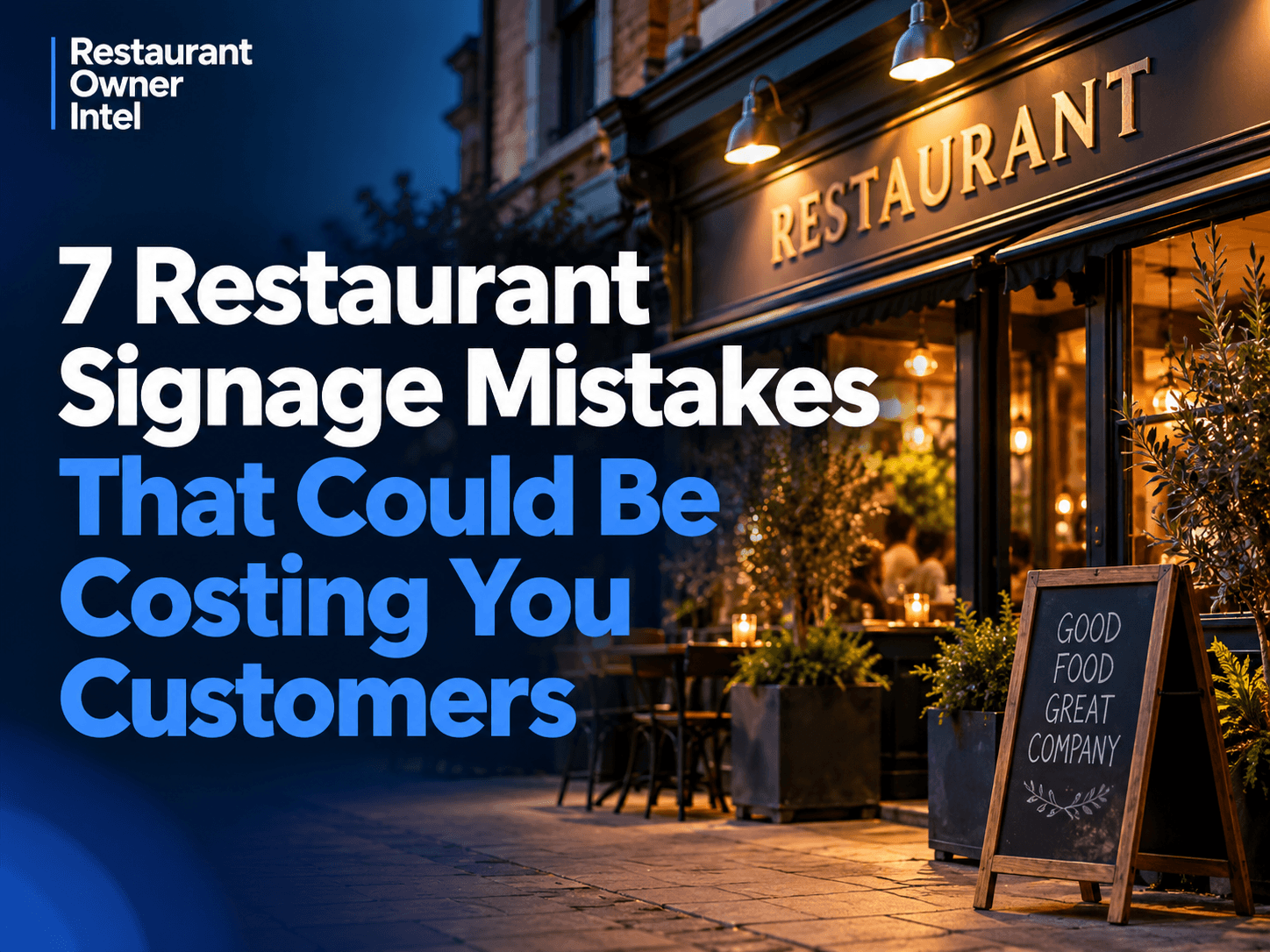
7 Restaurant Signage Mistakes That Could Be Costing You Customers
Is your restaurant signage costing you customers? Avoid 7 common outdoor sign mistakes and learn how to attract more walk-in diners.
Someone is walking down your street looking for somewhere to eat. They're hungry, they haven't made a booking, and they're weighing up the restaurants around them. They glance at your restaurant. Then at the one next door. A few seconds later, they've made their decision. They keep walking. You may have better food, friendlier staff and a more interesting menu than the restaurant they eventually choose. But none of that matters if your exterior hasn't given them a reason to stop. That's what makes restaurant signage mistakes so frustrating. You rarely see the customers you're losing. Nobody comes inside to explain that your sign was difficult to read, your menu looked confusing or your entrance didn't appear particularly welcoming. They simply go somewhere else. And while a single missed table might not seem significant, the commercial impact becomes more interesting when the same problem is repeated throughout the week. The encouraging part is that improving your restaurant's outdoor signage doesn't necessarily mean commissioning an expensive redesign. Some of the most useful changes are surprisingly straightforward. Why Restaurant Outdoor Signage Matters for Attracting Walk-In CustomersThink about everything you do to bring customers through your doors. You maintain your Google Business Profile, post on social media, encourage reviews and perhaps spend money on advertising. Yet one of your most visible marketing assets is already sitting outside your restaurant, communicating with people who are physically close enough to become customers. Your signage has three jobs. It needs to get noticed, explain enough about your restaurant to create interest, and make people feel comfortable taking the next step. When it fails, the cost isn't always obvious. But consider a simple example. Suppose clearer signage helped you attract two additional tables of two people each day. At an average spend of £25 per person, that would generate another £100 in daily sales. Across 25 trading days, that's £2,500 in additional monthly revenue. That's an illustration, not a promise. Actual results depend on your location, foot traffic, demand and available capacity. Revenue isn't the same as profit, either. But it shows why the details outside your restaurant deserve more than an occasional glance. Here are seven mistakes worth looking for. 1. Your Restaurant Sign Looks Good Up Close but Disappears from a DistanceA beautifully designed sign isn't much use if customers can't read it until they're standing underneath it. This happens more easily than you might think. Decorative lettering looks elegant on a designer's screen. Subtle colours complement the building. The finished sign looks impressive when you step outside to admire it. But from the opposite pavement, the letters merge into the background. From further down the street, the restaurant name becomes a blur. Potential customers aren't studying your signage the way you are. They're walking, talking, checking their phones and looking at several businesses at once. Your sign needs to work within those conditions. What to changeCross the street and look back at your restaurant. Better still, walk towards it from both directions. Can you read the name without slowing down? Does the lettering stand out against the background? Are trees, parked vehicles or neighbouring signs obscuring the view? If visibility is poor, you may need stronger contrast, simpler lettering or a better position. You don't necessarily need a more elaborate design. A sign that looks impressive but cannot be read is failing at its most basic job. 2. Your Sign Leaves People Guessing What You Actually ServePicture a restaurant called The Willow Room. It's a perfectly good name. Memorable, perhaps even distinctive. But what does it tell a stranger who's looking for lunch? Is it a café? A fine-dining restaurant? A cocktail bar? Somewhere that serves breakfast? If the answer isn't obvious, that customer has to investigate. They might stop and study the menu. They might search for you online. Or they might simply choose the Italian restaurant a few doors down because they immediately understand what's on offer. This is particularly relevant if your restaurant depends on tourists, passing trade or people who don't already know your business. What to changeConsider adding a short description beneath your restaurant name or on a separate exterior sign.
You don't need to explain everything you serve. Just give people enough information to recognise whether your restaurant matches what they're looking for. Clarity can be more valuable than cleverness when someone is deciding where to eat. 3. Your Exterior Is Sending the Wrong Message About the Restaurant InsideInside, your tables are clean. The kitchen is organised. Your team takes pride in the food and service. Outside, however, the sign has faded. One letter is damaged. The menu case is marked by months of rain and road dust. It's easy to become accustomed to these things when you see them every day. Customers notice them differently, especially when they're considering a restaurant they've never visited before. A neglected exterior doesn't prove that standards inside are poor. But it can create uncertainty. And when customers have several restaurants to choose from, uncertainty doesn't help you. What to changeMake signage part of your routine maintenance checks, rather than waiting until something breaks completely. Look for faded lettering, dirty surfaces, peeling paint, damaged fixings and lighting that no longer works properly. Cleaning a sign, replacing a damaged panel or repairing a light can be considerably less expensive than installing a new sign. The condition of your exterior helps shape the expectations customers bring through your door. 4. Your Restaurant Becomes Difficult to Notice After DarkAt lunchtime, your restaurant looks inviting. The name is visible, the menu is easy to read and natural light makes the entrance stand out. By seven in the evening, it's a different picture. The sign disappears into the darker frontage. The outdoor menu is difficult to read. From across the street, it's not entirely clear whether you're open. For a restaurant that relies on evening trade, that's a problem worth addressing quickly. Now picture the restaurant next door. Its name is clearly illuminated, the entrance looks warm and the menu is visible without anyone having to lean towards the window. Neither restaurant has served the customer yet. But one has made the decision feel easier. What to changeVisit your restaurant after dark and approach it from the same directions your customers use. Check the main sign, entrance, outdoor menu and any pavement displays. Can someone tell immediately that you're open? Improving existing lighting may be enough. In other cases, a properly illuminated sign or menu display could be worth considering. Before making changes, check any relevant planning, signage and lighting restrictions. 5. Your Pavement Sign Has Plenty of Words but No Clear MessageThere's a temptation to squeeze everything onto a pavement board. Breakfast. Lunch. Dinner. Cocktails. Happy hour. Sunday roast. Opening times. Social media details. Perhaps a few decorative illustrations for good measure. By the time you've finished, the board is full. Unfortunately, the message has become harder to understand. A pavement sign isn't a brochure. People generally see it while moving, often with only a moment to decide whether it's relevant. If everything is competing for attention, nothing stands out. What to changeGive your pavement sign one clear purpose. LUNCH SPECIAL Or perhaps: FRESHLY MADE PIZZA These messages work because they can be understood almost immediately. There's a product, an occasion or a reason to stop. Think about timing, too. A breakfast promotion makes sense during the morning rush. Displaying it at dinner time is a missed opportunity to promote something more relevant. Make sure pavement signage complies with local requirements and doesn't obstruct pedestrians, wheelchair users or access routes. 6. Your Outdoor Menu Makes Choosing Your Restaurant Feel Like Hard WorkA couple stops outside your restaurant and looks at the menu. One leans closer to read the prices. The other tries to make sense of a long list of dishes printed in small lettering. After a short discussion, they move on. Perhaps your food wasn't what they wanted. That happens. But perhaps they simply couldn't work out what you offered quickly enough to feel confident walking inside. An outdoor menu should remove uncertainty. Customers want to understand the type of food, the likely cost and whether there's something they'll enjoy. They shouldn't need to study several pages to get those answers. What to changeReview your outdoor menu with fresh eyes. Is the lettering readable? Are the prices clear? Is the layout easy to follow? Does the display look current and well maintained? If your full menu is extensive, consider displaying a shorter selection outside. An Italian restaurant, for example, could highlight several popular pizzas, pasta dishes and a lunch offer. That may tell passing customers more than a crowded display containing every available dish. Make sure the information is accurate. Outdated prices or unavailable dishes can create disappointment before the meal has even started. Your outdoor menu doesn't need to sell the entire meal. It needs to make walking through the door feel like a sensible choice. 7. Your Signage Tells People Who You Are but Not Why They Should StopYour restaurant name tells customers where you are. It doesn't necessarily tell them why they should choose you over the other restaurants nearby. That distinction matters when you're competing for walk-in business. Perhaps you serve an excellent-value lunch. Maybe you have a popular early evening menu, a comfortable outdoor seating area or a Sunday roast that brings regular customers back every week. If these are genuine reasons people choose your restaurant, why leave passing customers to find out for themselves? What to changeUse secondary signage to highlight something specific and relevant.
The best message depends on the customers you're trying to attract. A restaurant surrounded by offices might focus on quick lunches. A business in a tourist area may benefit from clearly displaying its cuisine and prices. A neighbourhood restaurant might promote a midweek special or Sunday lunch. Choose the message that gives someone passing your restaurant a genuine reason to stop today. The Customers You Lose Through Poor Signage Rarely Tell You WhyOne of the difficulties with restaurant signage is that its failures are largely invisible. You can see an empty table. You can review your bookings. You can check how much you've spent on advertising. But you can't easily count the people who considered your restaurant and then walked away because the exterior didn't convince them. That doesn't mean every passer-by was a potential customer. Plenty of people were never going to stop, regardless of how good your signage looked. The opportunity lies with those who are already considering somewhere to eat. These people may have seen your restaurant online. They may have heard about you from a friend. Or they may simply be hungry and looking at the options nearby. Clear, attractive signage helps them connect what they're looking for with what your restaurant offers. It's also worth remembering that outdoor signage works differently from a paid advertisement. Once installed, it can communicate with potential customers throughout your trading hours without a charge for every impression, although maintenance and other costs still apply. If you're already spending money attracting customers to your area, making the restaurant itself easier to notice and choose is a sensible place to look for improvements. The 10-Minute Restaurant Signage AuditYou don't need to start by calling a sign company. Start outside your own restaurant. Walk away from the entrance, turn around and approach it as though you're seeing the business for the first time. Try both directions along the street. If evening trade matters, repeat the exercise after dark. Then work through these questions. Visibility
Clarity
Appearance
Customer Appeal
If possible, ask someone who doesn't know your restaurant particularly well to do the same exercise. Owners become familiar with their surroundings. That familiarity can make small problems almost invisible. Someone seeing the restaurant for the first time may spot them immediately. How Can You Tell Whether Better Signage Is Bringing in More Customers?It's tempting to replace a sign, notice a busier lunch service and assume the improvement worked. But restaurant trade changes for all sorts of reasons. Weather, local events, school holidays, promotions and the day of the week can all influence customer numbers. A simple test can give you a clearer picture. Choose one improvement. For example, replace a cluttered pavement sign with a clear lunchtime offer. Record your lunchtime walk-in numbers before making the change, then monitor them over the following two to four weeks. Compare similar trading days wherever possible and note anything unusual that could have affected demand. You can also ask first-time customers a useful question: "What made you decide to come in today?" You may hear that they noticed the lunch offer, liked the look of the menu or realised you served the type of food they wanted. That feedback won't provide perfect attribution, but it can reveal patterns that your sales figures alone won't explain. Keep the test simple. One change, a short measurement period and a comparison with what was happening before. Products / Tools / ResourcesImproving restaurant outdoor signage doesn't always require a large budget. Depending on the condition of your existing signs, a few practical tools or relatively inexpensive replacements may be enough to address the biggest problems. 1. Weather-Resistant Pavement SignsA sturdy A-board or pavement sign can help promote lunch offers, daily specials and other reasons to visit. Look for a design that's stable, easy to update and suitable for outdoor conditions. Make sure its placement is permitted and doesn't obstruct access. 2. Outdoor Menu Display CasesA weather-resistant menu case protects printed menus and gives customers a dedicated place to check your dishes and prices. For restaurants trading after dark, an illuminated version may be worth considering. Choose a size that allows the menu to remain readable rather than squeezing too much information into a small display. 3. Exterior LED Sign LightingIf your restaurant becomes difficult to identify in the evening, suitable exterior lighting may improve visibility without replacing the main sign. Choose lighting appropriate for the location and have electrical work carried out by a qualified professional. Check local restrictions before installation. 4. Outdoor Chalkboards and Sign MarkersFor restaurants that change offers regularly, a reusable chalkboard can be a practical option. Use high-contrast, weather-suitable markers and keep the message short. A clearly written offer will usually be easier to understand than a decorative board crowded with information. 5. Canva for Signage LayoutsIf you're creating a new pavement sign insert or printed promotion, Canva can help you produce a simple layout without starting from scratch. Prioritise large lettering, strong contrast and one clear message. Check the finished design at its intended print size before ordering. 6. Google Business ProfileYour physical signage and online presence should tell the same story. Use your Google Business Profile to keep your restaurant name, opening hours and exterior photographs accurate. Clear photographs of your frontage can also help customers recognise the restaurant when they arrive. 7. Local Sign Makers and Planning GuidanceIf your main sign needs replacing, a local sign maker can advise on suitable materials, lettering, installation and visibility. Before commissioning new exterior signage, check the relevant rules with your local authority. In the UK, GOV.UK is a useful starting point for finding official guidance, although the requirements for your premises may depend on the local council and the type of sign. |
Restaurant Owner Resource |
Free AI Restaurant Growth Plan |
Curious what growth opportunities your restaurant might be missing? Our free AI-powered Growth Plan analyses your restaurant's online presence, marketing and growth goals to identify opportunities you may not have considered.
|
Nov 2, 2026
Should You Put Currency Symbols on Your Restaurant Menu?
Currency symbols on restaurant menus: what the research supports, when to keep £ signs and how to test a clearer price format.
Oct 31, 2026
What Should a Restaurant Actually Put in Its Newsletter?
A practical restaurant newsletter content plan, with useful topics, a repeatable layout and a complete example to adapt

Oct 29, 2026
More Customers or Higher Spend? How to Grow Your Restaurant's Revenue
Should you concentrate on filling more tables or getting customers to spend a little more? The answer could change how you approach restaurant growth - and how much of your additional revenue actually becomes profit.
Oct 28, 2026
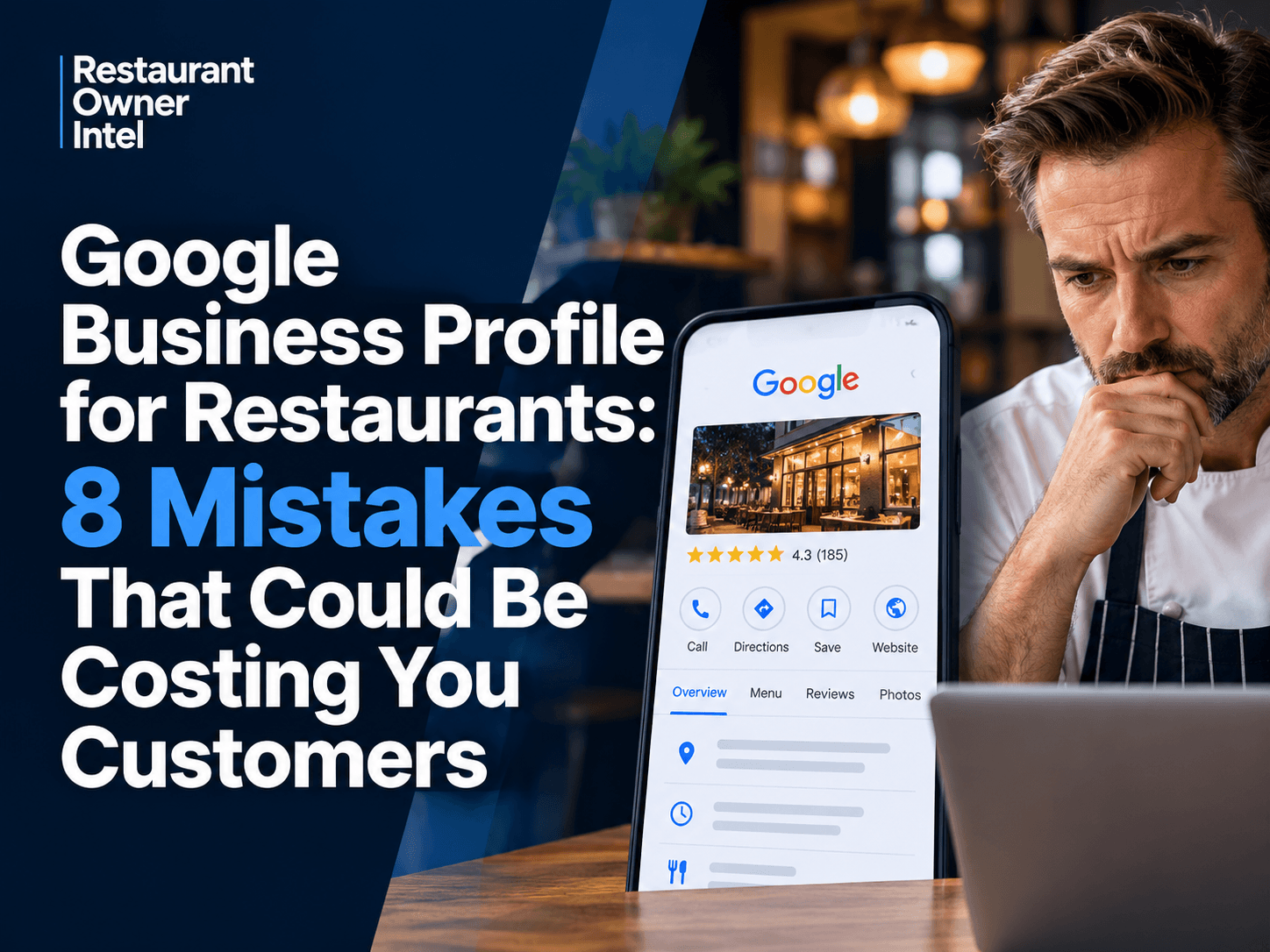
Google Business Profile for Restaurants: 8 Mistakes That Could Be Costing You Customers
Your restaurant could be losing potential customers before they ever visit your website. These common Google Business Profile mistakes can damage first impressions, create unnecessary barriers to booking and send diners towards your competitors.
0 Comments
Join the conversation
Be the first to comment
Share your thoughts above.