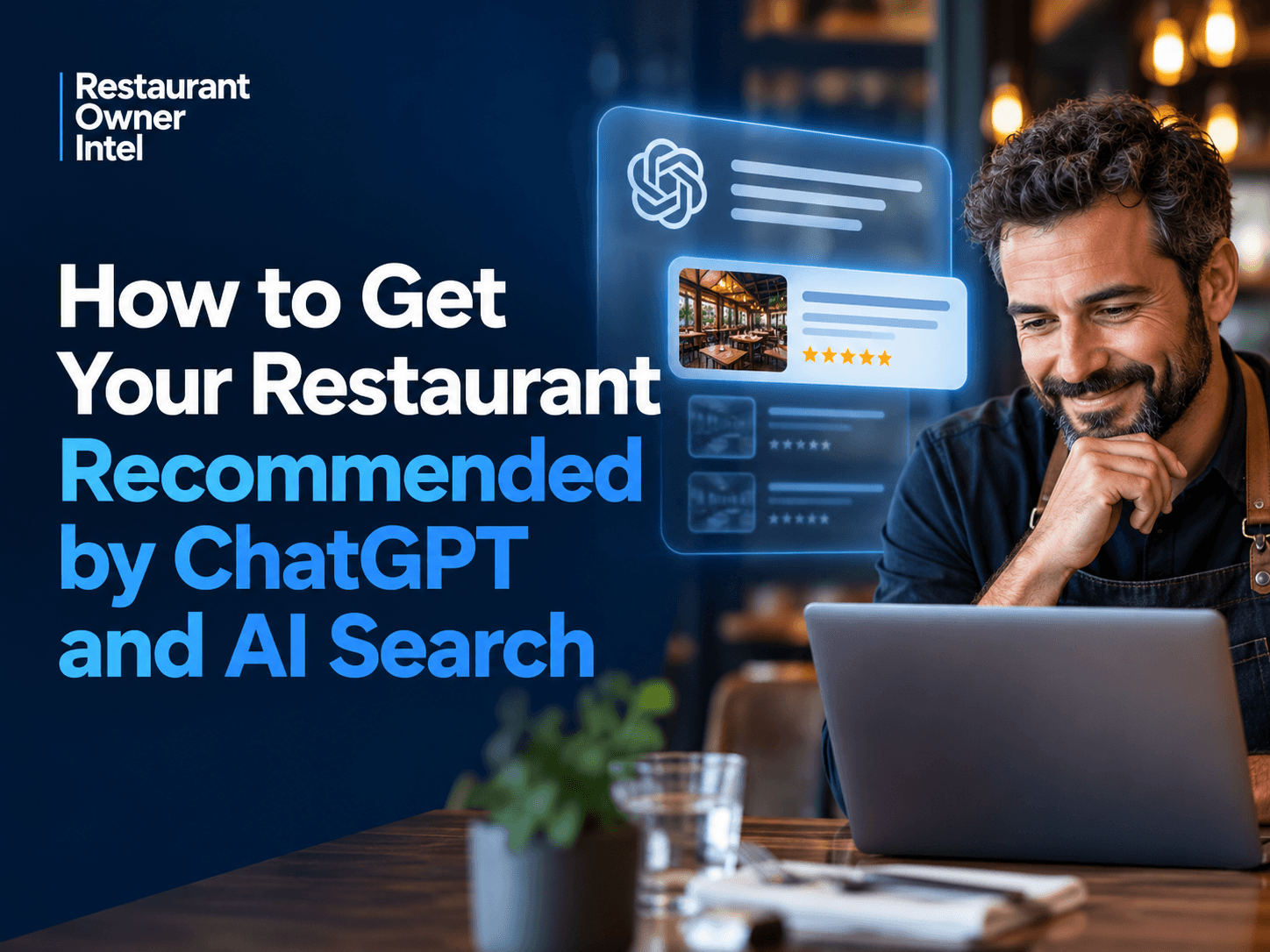
How to Get Your Restaurant Recommended by ChatGPT and AI Search
Want ChatGPT and AI search to recommend your restaurant? Learn practical ways to improve your online visibility and attract more customers.
Picture this. It's Friday afternoon. Someone is planning dinner for six people. They want somewhere independent, with good Italian food, a relaxed atmosphere and enough vegetarian options to keep everyone happy. Instead of scrolling through Google Maps or reading restaurant websites, they open ChatGPT. "Can you recommend a good independent Italian restaurant nearby for six people, with vegetarian options and a nice atmosphere?" Your restaurant ticks every box. You've got the food. You've got the space. Your regulars love the atmosphere, and your vegetarian dishes are among the most popular things on the menu. But your restaurant never appears in the recommendations. Why? Perhaps your website doesn't mention that you cater for groups. Your vegetarian options are buried in a PDF menu. Your Google Business Profile hasn't been properly updated in months. To someone who has eaten at your restaurant, the match is obvious. To an AI system trying to work out where to send that customer, it might not be obvious at all. And that is the problem restaurant owners need to start paying attention to. The good news? Improving your restaurant's visibility in AI search doesn't necessarily require a new website, specialist software or a substantial marketing budget. It starts with making the information about your restaurant clearer, more accurate and easier to find. Restaurant Search Is Changing. Your Online Information Needs to Keep Up.Think about how customers have traditionally searched for somewhere to eat. They type "Italian restaurant near me" into Google, browse a few listings, check the reviews, look at some photographs and eventually choose somewhere. That process still matters enormously. But AI-powered search introduces another way of finding restaurants. Customers can now describe exactly what they want, almost as though they're asking a knowledgeable friend for advice. They might ask:
Notice what's different. These aren't simply searches for a cuisine or location. They're requests built around particular needs, preferences and occasions. AI systems may draw on restaurant websites, business listings, reviews and other available information to identify suitable places. Different systems work in different ways, and not every answer comes from a live internet search. There is no guarantee that a restaurant will be included simply because its website contains the right information. But one thing is clear. If your restaurant's online presence doesn't properly explain what you offer, you're making it harder for these systems to recognise when you're a good match. That's something you can do something about. 1. Your Website Should Tell AI What Your Restaurant Actually DoesOpen your restaurant's homepage and read the first few lines. Now imagine you've never heard of the business. Would you know what kind of restaurant it is? What it serves? Who it's suitable for? Why someone might choose it? Or would you find something like this? "Welcome to our restaurant, where exceptional cuisine meets outstanding hospitality in a warm and inviting atmosphere." It sounds pleasant. Unfortunately, it tells you almost nothing. Compare it with: "We're an independent Italian restaurant in central Manchester, serving handmade pasta, wood-fired pizzas and traditional Italian dishes. Our relaxed dining room welcomes families, couples and groups, with vegetarian and gluten-free options available." That second description gives both customers and search systems something useful to work with. It identifies the restaurant's location, cuisine, atmosphere, specialities and relevant dining options. There is no clever trick involved. Just clear information. What should you change?Your homepage should answer a few straightforward questions:
Don't turn this into a long essay. A short, well-written description near the top of your homepage can communicate more than several paragraphs of vague promotional language. And remember, you're writing for potential customers first. The fact that clear information also helps search systems understand your business is an added advantage. 2. Your Google Business Profile May Be Telling the Wrong StoryA customer checks your Google listing before visiting. It says you close at 9 pm. You actually close at 10 pm. They decide it's too late to book and choose somewhere else. You've lost a potential customer without ever knowing they were interested. Now consider the same problem in an AI-powered search. Your website says one thing. Your Google Business Profile says another. A restaurant directory still displays your old opening hours. Which information should a search system trust? Conflicting details create unnecessary uncertainty. Your Google Business Profile remains one of the most important sources of information about your restaurant, particularly within Google's own search and mapping services. It may also contribute to the wider online information available to other discovery systems, although access and use vary by platform. Give your profile a proper checkLook beyond the star rating. Check your business category, opening hours, telephone number, address, website, booking link and menu link. Then look at the photographs. Do they represent the restaurant customers will actually walk into today? If you've renovated the dining room, introduced a new menu or started serving Sunday lunch, your online information should reflect those changes. The same applies to facilities. If you have outdoor seating, wheelchair-accessible facilities or a private dining room, make sure the relevant details are accurately recorded wherever the platform allows. This isn't about filling every available field for the sake of it. It's about removing doubt. Accurate information helps customers make decisions. Inaccurate information gives them reasons to look elsewhere. 3. Your Menu Might Be Hiding Your Restaurant's Best Selling PointsHere's a familiar frustration. You visit a restaurant website, click the menu button and wait for a large PDF to load. When it finally appears, the text is tiny. You pinch the screen, scroll sideways and try to work out what's available. After a minute, you give up. Your customers experience this too. And although some AI and search systems can read PDFs and interpret images, menus published as ordinary webpage text are generally easier to access and process reliably. That's particularly important when someone is searching for something specific. Imagine a customer asks ChatGPT: "Which Italian restaurants nearby serve gluten-free pasta?" Your restaurant offers three gluten-free pasta dishes. But if that information is buried inside an image-based menu, it may be harder for some systems to identify. Make the menu readable, not just attractiveWhere possible, publish your current menu directly on your website. Use proper text for dish names, descriptions and prices. Separate lunch, dinner, children's menus and other relevant sections clearly. Consider the difference between these descriptions: "Sea Bass – £24" And: "Pan-roasted sea bass with crushed new potatoes, seasonal greens and lemon butter sauce – £24." The second tells customers what they're getting. It also provides more context about the dish. There's a commercial benefit here that goes beyond AI. Good menu descriptions can make dishes more appealing and help customers choose with confidence. Just keep everything accurate. Dietary and allergen information must be reliable, and customers with allergies should still be encouraged to confirm arrangements directly with your team. A readable menu is not a technical luxury. It's part of making your restaurant easier to choose. 4. Stop Making Customers Guess What Occasions You're Good ForYour restaurant might be brilliant for birthday dinners. Perhaps you have a private dining area, staff who handle larger groups well and a menu that makes sharing easy. But does your website actually say any of that? Or are you expecting customers to work it out from photographs? This matters because people don't always search for restaurants by cuisine. Sometimes they're trying to solve a problem. They need somewhere for an anniversary. A business lunch. A family gathering. A meal before the theatre. The occasion matters as much as the food. And if your restaurant is particularly well suited to one of those occasions, it deserves a clear mention online. Give your strengths some contextA restaurant with a private dining room could have a short page explaining how many guests it accommodates, which menus are available and how to enquire. A family-friendly restaurant might mention its children's menu, high chairs and early evening dining options. A restaurant popular for business lunches could explain its lunchtime service, fixed-price menu and proximity to nearby offices. These details help customers recognise whether you're right for them. They also give AI search tools more relevant information when matching restaurants to specific requests. Be careful not to promise experiences you can't consistently deliver. Calling your restaurant "perfect for a quiet romantic dinner" won't help if Friday nights involve loud music and tightly packed tables. Specific, honest descriptions are far more useful than trying to appeal to everyone. 5. Your Reviews Tell a Story Your Website Can't Tell AloneThere's a particular kind of review that's worth paying attention to. Not simply: "Great food. Five stars." But something like: "We booked for my mum's 70th birthday. There were eight of us, including two vegetarians, and the staff couldn't have been more helpful. Lovely atmosphere and nobody felt rushed." That review tells a potential customer a great deal. It suggests the restaurant can accommodate groups, handle dietary preferences and provide a relaxed experience for a special occasion. Your website can make those claims. A genuine customer describing their own experience adds another perspective. Reviews may also provide useful context to AI systems when those reviews are available and used by the platform. That doesn't mean stuffing review responses with keywords or trying to manipulate what customers write. It means recognising that customer feedback helps build a more complete picture of your restaurant. Make reviews part of your normal routineEncourage satisfied customers to leave genuine feedback. Make the process easy with a direct review link or a QR code where appropriate. And respond when you can. If someone praises your Sunday roast, acknowledge it naturally. If a customer mentions a family celebration, thank them for choosing your restaurant. If someone raises a genuine complaint, address it professionally. Over time, these conversations help future customers understand what dining with you is like. One caution: don't offer incentives in exchange for positive reviews or ask customers to include particular phrases. Follow the review platform's policies and keep feedback authentic. Your reputation should reflect the experience you actually deliver, not a collection of carefully engineered keywords. 6. An Outdated Restaurant Listing Can Undo Good Work ElsewhereYou updated your website six months ago. The menu is current. The photographs look good. Your opening hours are correct. But somewhere online, a restaurant directory still says you serve tapas. You stopped serving tapas two years ago. This happens more easily than you might think. Restaurants change menus, ownership, opening hours, booking systems and sometimes their entire concept. Old information doesn't always disappear with those changes. And your own website isn't necessarily the only source a customer or AI-powered search tool will encounter. Restaurant directories, booking platforms, local tourism websites, community pages and food publications may all contain details about your business. Start with the listings people are likely to findSearch for your restaurant name. Look through the main results and open the listings that appear relevant. Check the basics: name, address, telephone number, opening hours, cuisine, menu and booking details. If something is wrong, correct it wherever you have access or request an update from the website. You don't need to spend your evenings submitting your restaurant to dozens of obscure directories. Focus on credible platforms that customers already use. The objective is consistency. When your restaurant is described accurately across its main online listings, customers have fewer conflicting details to navigate. And search systems have a clearer set of facts to work with. 7. Help ChatGPT and AI Search Understand Your Website's StructureThere's another part of restaurant AI visibility that's less obvious. The way your website is built can affect how easily search systems access and interpret its information. That doesn't mean you need to understand coding. But it is worth knowing what to ask your website provider. Imagine a website where every page has a vague title. One page says "Welcome". Another says "More Information". A third says "Our Services". Compare that with pages titled:
The second approach gives visitors and search systems a clearer understanding of what each page contains. The same principle applies to headings and the text underneath them. Ask your website provider about structured dataStructured data, often called schema markup, is a way of identifying specific information within a website's code. For restaurants, it can describe details such as:
Schema markup doesn't guarantee that ChatGPT will recommend your restaurant or that Google will rank it higher. But it can help compatible search systems interpret factual information more clearly. Your website provider should also check that important pages can be accessed by search engines, that the site works properly on mobile phones and that essential information isn't unnecessarily hidden behind scripts or inaccessible formats. These are sensible website maintenance tasks. They are not reasons to rush into an expensive rebuild. If your existing website is functioning well, targeted improvements may be all you need. 8. Getting Recommended Means Very Little If Customers Can't BookImagine the work has paid off. Someone asks an AI assistant for a restaurant recommendation. Your business appears. The description sounds exactly right, so the customer opens your website. Then the problems begin. The booking button is buried halfway down the homepage. The telephone number isn't clickable. The menu is difficult to read. And the online booking system opens a page that doesn't work properly on their phone. A promising enquiry disappears. This is where the conversation needs to move beyond visibility. Because appearing in search results isn't the commercial objective. Getting customers through the door is. Follow the customer's journeyPick up your phone and visit your restaurant's website as though you're booking for the first time. Can you find the menu immediately? Can you see the opening hours? Is the address easy to locate? Can you book a table without hunting through several pages? If you need to call, is the telephone number easy to tap? Fix the points that create unnecessary effort. A clear booking button near the top of the page might do more for your business than another month spent experimenting with search terminology. Being found creates an opportunity. Making the next step easy helps turn that opportunity into revenue. How to Check Whether AI Search Understands Your RestaurantYou don't need to buy a specialist platform to carry out an initial test. Open ChatGPT or another AI assistant that supports restaurant discovery. Ask questions that reflect what real customers might want. For example:
Now examine the results. Does your restaurant appear? If it does, is the information accurate? If it doesn't, look at the businesses being recommended. What information is available about them that might make their suitability easier to recognise? Perhaps their websites explain their private dining facilities more clearly. Perhaps their menus are easier to access. Or perhaps they have more detailed, consistent information across established restaurant listings. These observations can give you useful ideas. But don't mistake a handful of prompts for a reliable ranking report. AI recommendations can change between searches and platforms. Results may depend on location, available sources, wording and other factors. Your restaurant might appear in one response and not another. Use the exercise to identify missing information, not to judge your entire marketing performance. The 15-Minute Restaurant AI Visibility AuditBefore spending money on AI optimisation, carry out this simple check. You can do it between services, with your laptop or phone. First five minutes: Check your homepage. Can a first-time visitor immediately understand your cuisine, location, atmosphere and main selling points? If not, your description needs work. Next five minutes: Check your Google Business Profile. Look at your opening hours, menu, booking link, business category and photographs. Correct anything outdated. Final five minutes: Check your menu and booking journey. Can someone read your menu comfortably on a mobile phone? Can they find relevant dietary information? Can they make a booking without unnecessary effort? Write down the three most obvious problems. Then decide which one is likely to have the greatest effect on customer enquiries or bookings. That becomes your first priority. You can review the more technical improvements, such as structured data and website accessibility, with your website provider afterwards. Will Improving AI Search Visibility Actually Bring More Diners?It's a reasonable question. You already have enough competing demands on your time. Staffing, food costs, supplier prices, customer service and the endless small problems that come with running a restaurant. Why add AI search to the list? Because customers are being given new ways to find places to eat, and it's worth making sure your business is represented accurately wherever that discovery happens. But there's an important distinction. Making your restaurant easier for AI to understand is not the same as guaranteeing that AI will recommend it. No agency, software package or website adjustment can promise that outcome across every AI platform. The systems are different, their information sources vary and the way they generate recommendations continues to evolve. What you can control is the quality of your restaurant's online information. And that's where the commercial case becomes stronger. A clearer homepage helps customers understand your business, whether they arrive through ChatGPT, Google or a link shared by a friend. An accessible menu makes choosing dishes easier. Accurate opening hours prevent confusion. A straightforward booking process reduces the chance of losing an interested customer. Those improvements have value regardless of how AI search develops. If your website analytics can identify traffic from AI platforms, monitor it. Compare it with other sources of enquiries and bookings where possible. Just remember that not every visit influenced by an AI recommendation will be identifiable as AI traffic. The useful question isn't simply, "Is ChatGPT mentioning my restaurant?" It's whether your online presence is helping interested customers find reliable information and take the next step. Products / Tools / ResourcesYou don't need a collection of expensive AI marketing tools to improve your restaurant's online visibility. Start with the platforms you already use, then consider additional tools only where they solve a specific problem. Google Business Profile — Keep your restaurant information accurateThis should be one of your first stops. Check your opening hours, business category, contact details, menu and booking links. It's free to manage and directly relevant to how customers find your restaurant through Google Search and Maps. ChatGPT — Test how AI responds to restaurant searchesUse realistic customer questions to explore how your restaurant is described and whether it appears among suggested options. Treat the responses as observations rather than guaranteed evidence of search performance. Where available, use search-enabled features for more current restaurant information. Google Search Console — Understand how customers find your websiteThis free Google tool helps you monitor your website's presence in Google Search. It can show which search queries generate impressions and clicks, and highlight certain indexing issues. It won't give you a complete picture of ChatGPT recommendations, but it's valuable for understanding your existing search visibility. Google PageSpeed Insights — Check your website's mobile performanceA slow or awkward mobile website can frustrate customers before they reach your booking page. This free tool helps identify performance and usability issues you can discuss with your website provider. Google Rich Results Test — Check supported structured dataIf your website provider has added structured data, this tool can check whether Google detects supported markup eligible for rich results. It is not a general AI recommendation test, and it does not validate every type of schema markup. Schema.org — Restaurant structured data referenceThis is a useful technical reference for your website provider. It explains the types of restaurant information that can be described using structured data, including location, cuisine and opening hours. Google Analytics — Monitor website visits and customer actionsIf properly configured, Google Analytics can help you understand where website visitors come from and what they do after arriving. Tracking booking-button clicks or completed reservations, where your booking system supports it, can help connect online activity with commercial results. You don't need to adopt everything at once. The free tools above are enough to identify several worthwhile improvements, particularly when combined with an accurate website, a readable menu and a straightforward booking process. Try This With AIUse the AI you're already using: ChatGPT, Claude, Gemini, Grok, Meta AI, Copilot, or another general-purpose AI assistant. Replace the example information inside the brackets with your own information, then copy and paste the complete prompt into your AI. AI PromptAct as a restaurant online visibility specialist and carry out a practical AI Search Visibility Audit for my independent restaurant. I want to understand how easily AI assistants such as ChatGPT, Gemini and Copilot could identify, understand and recommend my restaurant when potential customers search for somewhere to eat. Here are my restaurant details: [Example: Bella Napoli is an independent Italian restaurant in Manchester city centre. We serve handmade pasta, wood-fired pizzas and traditional Italian dishes. We offer vegetarian and gluten-free options, welcome families and groups, and have a private dining room for 16 guests. Our website is bellanapoli.example, and we take bookings online. Our menu is currently a PDF, and our Google Business Profile hasn't been updated recently.] Using only the information I provide and any information you can reliably access, assess how clearly my restaurant communicates its cuisine, location, specialities, atmosphere, dietary options, dining occasions, facilities and booking arrangements. Identify the five biggest gaps that could make it harder for AI search tools to recognise my restaurant as a suitable recommendation. For each gap, explain why it matters, give a specific improvement I can make and provide ready-to-use website wording where appropriate. Then create five realistic questions potential customers might ask an AI assistant that my restaurant should be relevant for, explaining which details would help establish that relevance. Rank your five recommended improvements by likely business impact and ease of implementation, prioritising changes that could attract more suitable customers and turn enquiries into bookings. Finish with a simple 30-minute action plan I can start today. Clearly distinguish confirmed information from reasonable inferences, flag anything that needs checking, and don't invent restaurant features, reviews or facilities. If you can't access my website or business listings, explain what remains unverified rather than pretending you've inspected them. Keep your recommendations practical, specific and affordable for an independent restaurant. The goal isn't to guarantee AI recommendations but to make my restaurant easier for customers and AI search systems to understand, trust and choose. |
Restaurant Owner Resource |
Free AI Restaurant Growth Plan |
Curious what growth opportunities your restaurant might be missing? Our free AI-powered Growth Plan analyses your restaurant's online presence, marketing and growth goals to identify opportunities you may not have considered.
|
Oct 21, 2026
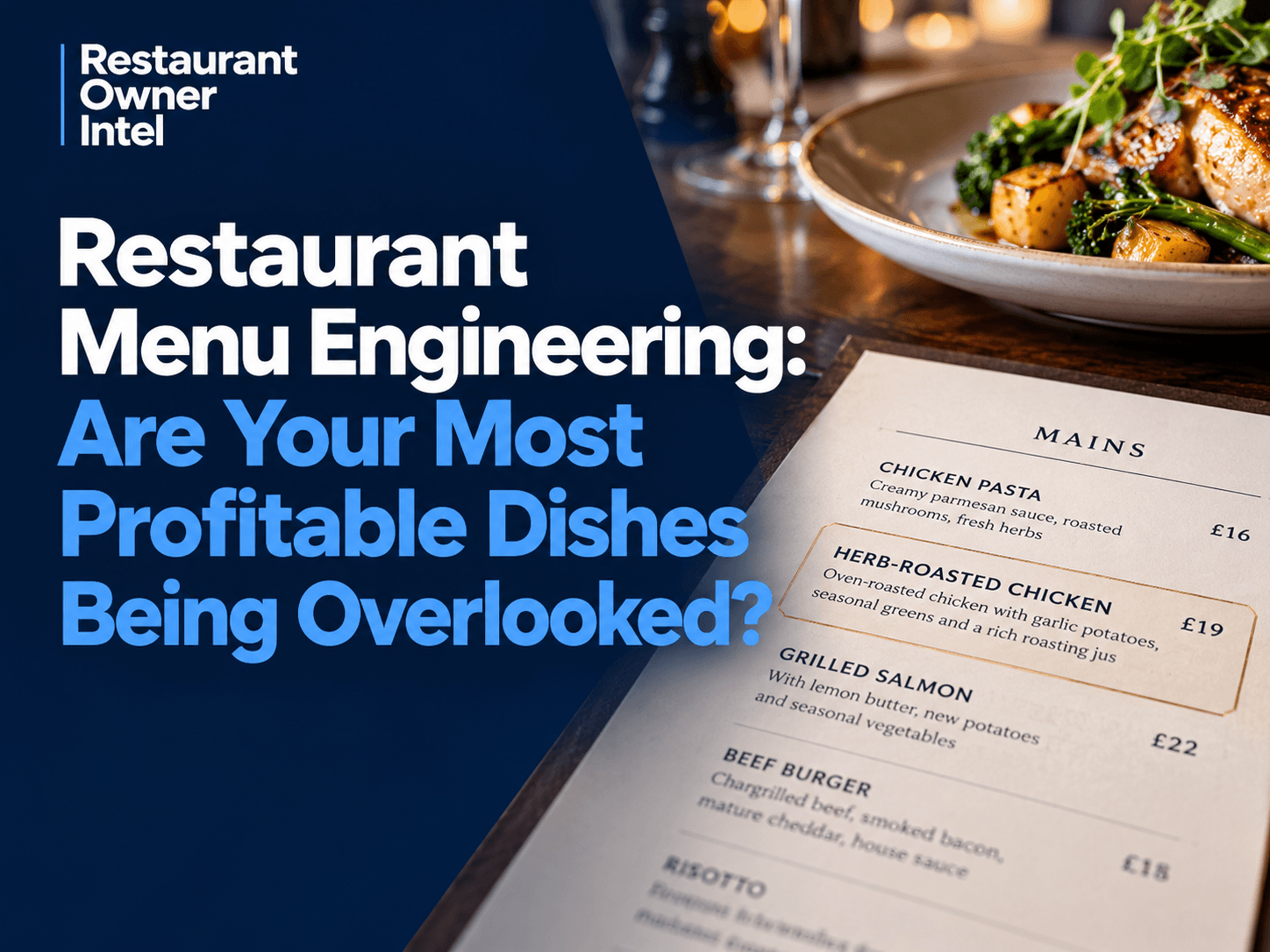
Restaurant Menu Engineering: Are Your Most Profitable Dishes Being Overlooked?
Your restaurant could be selling plenty of food while missing opportunities to make more profit. Here's how restaurant menu engineering can help you identify your most valuable dishes, give them the attention they deserve and improve what you earn from every service.
Oct 20, 2026
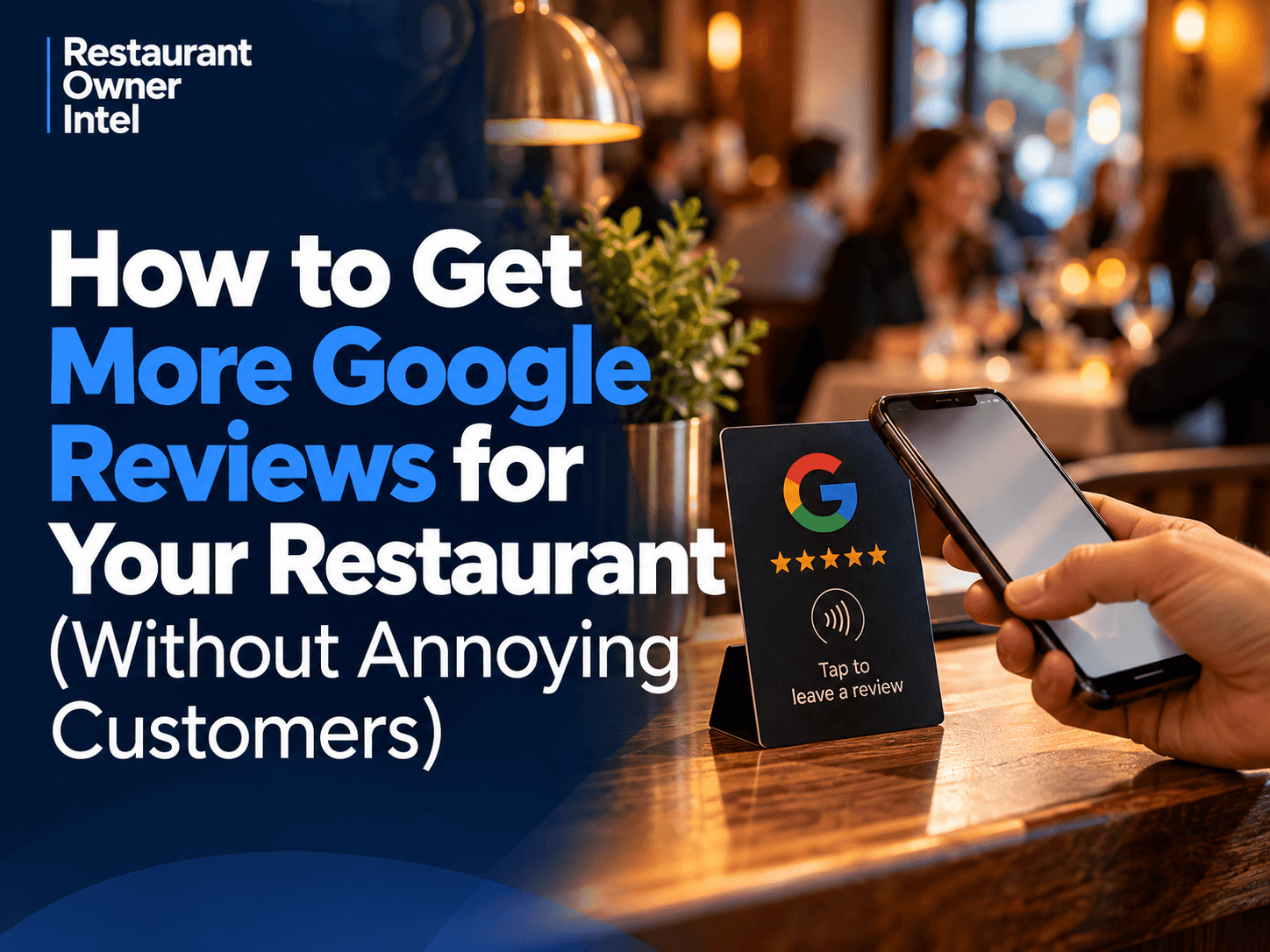
How to Get More Google Reviews for Your Restaurant (Without Annoying Customers)
Want more Google reviews for your restaurant? Learn simple ways to get genuine customer reviews, improve your reputation and attract more local diners.
Oct 19, 2026
Restaurant Technology: Which Tools Are Actually Worth the Investment?
From POS systems and booking software to AI and staff scheduling, here's how to choose restaurant technology that earns its place in your budget, protects your margins and makes running your business easier.

Oct 18, 2026
How to Fill Quiet Restaurant Nights Without Offering Discounts
Empty tables on a Tuesday or Wednesday can be expensive. But cutting prices isn't the only way to bring customers through the door. These practical restaurant marketing ideas can help you increase midweek bookings, give diners a reason to visit and protect your profit margins.
0 Comments
Join the conversation
Be the first to comment
Share your thoughts above.