
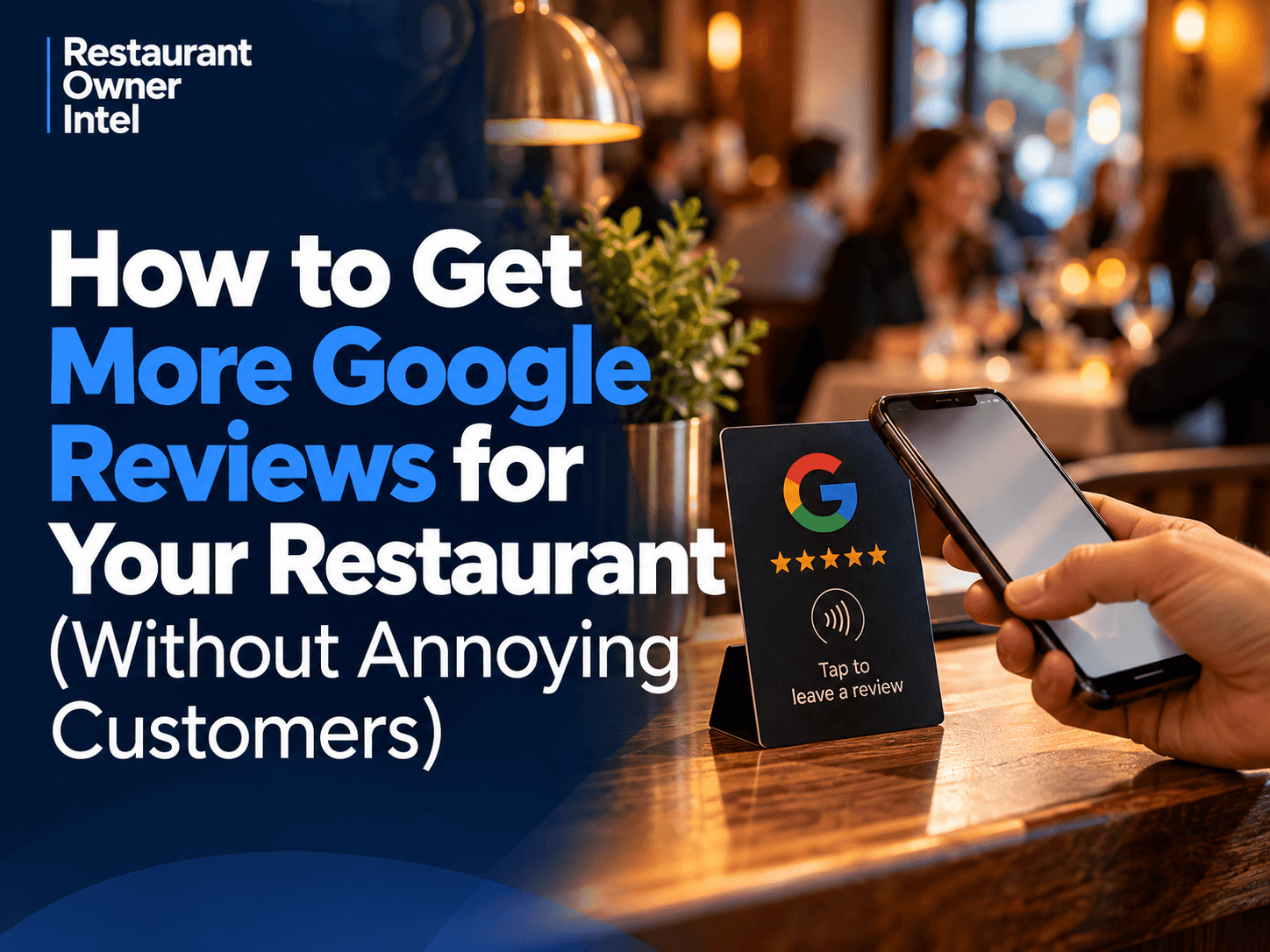
How to Get More Google Reviews for Your Restaurant (Without Annoying Customers)
Want more Google reviews for your restaurant? Learn simple ways to get genuine customer reviews, improve your reputation and attract more local diners.
A customer finishes their meal, pushes back their chair and catches your attention on the way out. "That was fantastic. We'll definitely be back." It's exactly what you want to hear. Your kitchen has delivered. The service was good. Another table leaves happy. By tomorrow, though, that moment will probably be forgotten by everyone except the people who were there. No Google review. No public recommendation. Nothing to help the next customer who's searching online for somewhere good to eat. And that's the frustrating part. Your restaurant could be giving people brilliant experiences every day, while your Google listing tells a much quieter story. The problem isn't necessarily that customers don't want to leave reviews. Often, the thought simply doesn't cross their minds. And when it does, finding your business on Google and working out how to post a review can feel like another job. So, how do you get more Google reviews without annoying your customers? You make it easy. You choose the right moments. And you create a process that works quietly alongside your normal service, rather than becoming another thing your team has to chase. Your Google Reviews Are Making an Impression Before Customers Walk Through the DoorPicture someone looking for a restaurant on a Friday afternoon. They're meeting friends that evening. They don't know the area particularly well, and they're scrolling through Google Maps trying to decide where to book. Your restaurant appears alongside several competitors. The photos look appealing. Your menu sounds good. The location is convenient. Then they notice the reviews. You have 87 reviews and a 4.6-star rating. The latest was written nearly four months ago. A nearby restaurant has a slightly lower rating of 4.5 stars, but more than 600 reviews. Several were posted this week. Which restaurant feels like the safer choice? There's no guaranteed answer. But the second restaurant has something powerful working in its favour: a substantial collection of recent experiences from real customers. People can see what others ordered, whether the service was friendly and what the atmosphere was like. They're getting reassurance before they've spent a penny. That's why Google reviews for restaurants matter beyond the star rating. They help customers feel confident about choosing you. Reviews can also contribute to your visibility in local Google search results. Google considers review count and positive ratings among the signals associated with local prominence, alongside other factors. But appearing in search results is only part of the job. Your Google listing also needs to give people enough confidence to book a table. A steady stream of genuine, recent reviews can help do exactly that. 1. The Biggest Barrier to More Google Reviews Is Often the Effort InvolvedThink about what happens when a customer decides to leave your restaurant a review. They take out their phone, open Google and type your restaurant's name. Perhaps another business with a similar name appears first. They find the correct listing, scroll to the reviews, locate the button and finally start writing. It's not particularly difficult. But it's more effort than most people want to make after dinner. Especially when they're standing outside waiting for a taxi, getting the children into the car or heading to their next destination. That small amount of friction is enough to lose a review. The solution is to stop making customers find their own way to your review page. Google allows businesses to create a direct review link from their Google Business Profile. That link takes customers straight to the place where they can leave feedback. You can share it through a QR code, an appropriate follow-up email or an NFC tap card. The difference is simple. Instead of asking customers to go looking for your restaurant, you're giving them a direct route. And when something takes seconds rather than several steps, it's much easier for people to follow through. 2. How to Ask Customers for Google Reviews Without Making It AwkwardThere's a moment during restaurant service when a request for feedback can feel perfectly natural. And there's another moment when it feels completely out of place. Imagine a couple celebrating their anniversary. They've just finished their desserts, they're enjoying the last of their wine, and a member of staff appears to ask whether they'll leave a five-star Google review. The mood changes. What should have been a relaxed ending to a lovely evening suddenly feels like a sales pitch. Now imagine a different situation. A customer is paying at the counter and notices a small Google review card. Your team member says: "If you'd ever like to leave us some feedback on Google, you can use that card. We really appreciate hearing what customers think." That's it. No awkward conversation. No expectation. No pressure to do it immediately. The customer can tap the card or simply carry on with their day. The best way to ask for Google reviews is to make the invitation feel optional, because it should be. You don't need to ask every table verbally. In fact, doing so could quickly become irritating. Instead, make the opportunity available to all customers at sensible points in their visit. A small card at reception, a discreet sign near the payment terminal or a link in a post-visit message can do the job without interrupting the experience. And remember, you're asking for honest feedback, not a particular rating. Don't reserve the invitation only for customers who have complimented their meal. Google prohibits selectively soliciting positive reviews, a practice sometimes called review gating. Your reputation is stronger when it reflects genuine customer experiences. 3. The Easiest Way to Get More Google Reviews: Use a Tap CardRestaurant service is busy enough without adding another complicated marketing task. Your team is taking orders, clearing tables, answering questions, managing payments and keeping everything moving. Asking them to explain how customers can find your restaurant on Google isn't particularly practical. That's where a Google review tap card becomes useful. An NFC tap card allows customers with compatible smartphones to open your restaurant's review link by tapping their phone against the card. No searching for your business. No typing a web address. No need to scan a QR code. A practical option: Review BoostReview Boost offers a Tap Card designed to make collecting Google reviews simpler. Customers tap the card with a compatible smartphone and are directed to your Google review page, where they can choose to leave feedback. Think about where this could fit into your restaurant. A card beside the till in a café. One at the reception desk of a busy bistro. A card available when customers settle their bill. There's no need for a lengthy explanation. Your team can simply point out that customers are welcome to leave a Google review using the card. It also solves another common problem: inconsistency. When review collection depends entirely on staff remembering to mention it, the process tends to disappear during busy shifts. A tap card remains available whether it's a quiet Tuesday lunch or a packed Saturday evening. It won't guarantee that every customer leaves a review. Nothing can. But it removes unnecessary steps and makes the process easier for people who want to share their experience. For an independent restaurant, that simplicity is the real attraction. 4. Make Google Reviews Part of Service, Not Another Staff TargetYou know what happens when a new procedure is introduced in a restaurant. Everyone remembers it for the first few days. Then Friday arrives, two people call in sick, the kitchen gets backed up and the new procedure quietly disappears. Collecting Google reviews can easily follow the same pattern. The answer isn't to give staff review quotas or put pressure on them to collect five-star ratings. It's to build a small, reliable system that doesn't depend on someone remembering a long list of instructions. Start with the basics.
That's enough to get started. You could also include a short invitation in a follow-up email to customers who have agreed to receive those communications. Something as straightforward as: "Thanks for dining with us. We hope you enjoyed your visit. If you'd like to share your experience, we'd appreciate an honest Google review." It doesn't need clever wording. The more natural the request, the better it fits your restaurant. And once the system is in place, you don't have to keep reinventing it. 5. Why Offering a Free Drink for a Google Review Is a Bad IdeaA free coffee for a review. Ten per cent off the next meal. Entry into a prize draw for everyone who leaves feedback. On the surface, these offers might seem like an easy way to increase your Google review count. But they create a problem. Google's review policies prohibit businesses from offering incntives in exchange for reviews, whether the feedback is positive or negative. That includes discounts, free products and other rewards. It's also a poor foundation for building trust. A customer reading your reviews wants to know what people genuinely thought about your restaurant. Were the steaks cooked properly? Was the service attentive? Did the food justify the price? Those details are useful because they're based on real experiences. If people are being rewarded for posting reviews, that trust becomes harder to establish. There's another temptation worth avoiding: asking customers specifically for five-star reviews. Don't do it. A genuine review with a little constructive criticism can be more useful than a glowing review that says almost nothing. Someone might love your food but mention that the restaurant was noisy. Another customer might praise your staff while suggesting that the vegetarian options could be better. That feedback gives future diners a realistic picture of your business. It can also tell you something worth improving. You don't need perfect reviews. You need credible ones. 6. Your Replies to Google Reviews Are Part of Your Customer ServiceA customer leaves a thoughtful review praising your restaurant. They mention the friendly waiter, the excellent seafood and the fact that you made their birthday feel special. You read it, smile and get back to work. But there's one more thing worth doing. Reply. Not because every review needs a lengthy response, but because the conversation doesn't necessarily end when the customer posts their feedback. Other people are reading. A potential diner looking through your reviews may notice whether you acknowledge customers, how you respond to criticism and whether you appear to care about their experience. A short, personal response is usually enough. For example: "Thank you for celebrating your birthday with us. We're delighted you enjoyed the evening, and we'll pass your kind words on to the team." That's far more meaningful than posting the same generic thank-you message beneath every review. Negative reviews deserve attention too. Imagine someone writes that they waited 40 minutes for their main course and felt forgotten. You might disagree with parts of their account. Perhaps the restaurant was unusually busy. Perhaps a large table had delayed the kitchen. But a public argument rarely makes a restaurant look better. A calmer response would be: "Thank you for taking the time to share your experience. We're sorry your meal took longer than expected and that we didn't communicate the delay clearly. We'll discuss this with our team." You're acknowledging the concern without making promises you can't keep. And you're showing prospective customers how your restaurant handles problems. That's valuable. 7. Don't Chase 100 Reviews This Month. Build a Steady Flow InsteadThere's something satisfying about watching your Google review count climb. You reach 100 reviews. Then 200. Eventually, perhaps 500. Those milestones can feel significant, especially when you've spent years building your restaurant's reputation. But the total number isn't the only figure worth watching. Look at the dates of your reviews. If your restaurant received 40 reviews during a campaign last summer and only three since, potential customers may wonder what the business is like today. A smaller but steady flow of fresh reviews gives people a more current picture. It also gives you regular feedback about what customers are experiencing. Perhaps your Sunday lunches consistently receive praise, but several customers mention slow service on Friday evenings. That's information you can act on. Or perhaps customers repeatedly mention a particular member of staff by name. That's worth recognising. Reviews aren't just a marketing asset. They're another way to understand what's happening in your restaurant when you're not personally standing beside every table. You can monitor progress with three simple figures.
A spreadsheet is perfectly adequate. Check the numbers once a month, look for patterns and pay attention to recurring comments. You don't need to turn this into another complicated reporting exercise. 8. The Small Mistakes That Stop Restaurants Getting More ReviewsSometimes the problem isn't that customers are unwilling to leave feedback. It's that the restaurant has made the process unnecessarily difficult. A QR code is printed on a receipt, but it's so small that customers struggle to scan it. A review link is buried at the bottom of a long email. A staff member asks for a review while the customer is clearly in a hurry. Or a card on the counter links to the wrong Google listing. These are small details, but they matter. If you're trying to get more Google reviews for your restaurant, look at the process from a customer's point of view. Would you notice the invitation? Would you understand what to do? Could you reach the review page within a few seconds? And, perhaps most importantly, would you feel comfortable ignoring the request? That last question is worth considering. Customers should never feel that leaving a review is part of paying their bill, receiving good service or being welcomed back. The best review collection systems are visible enough to be useful and discreet enough not to interfere with hospitality. 9. What About Customers Who Have Had a Bad Experience?This is where restaurant owners sometimes hesitate. What if you make leaving reviews easier and someone posts a complaint? It's a reasonable concern. A disappointing meal, a delayed order or a poorly handled booking can leave someone frustrated. But avoiding reviews won't fix the underlying problem. In fact, negative feedback can sometimes reveal issues that aren't reaching you through normal service. Perhaps customers are regularly waiting too long for drinks. Perhaps a menu description is creating the wrong expectations. Perhaps the dining room becomes uncomfortable when every table is occupied. You might not hear these complaints directly, particularly when customers prefer to leave quietly rather than raise an issue. A review gives you another opportunity to listen. That doesn't mean every criticism will be fair. Some reviews will be exaggerated. Others may leave out important context. But patterns are harder to dismiss. If several customers independently mention the same problem, it's worth investigating. And when you respond professionally, future customers can see that you take feedback seriously. A restaurant with a few thoughtful responses to criticism can still make a strong impression. Perfection isn't what customers expect. They want confidence that their evening matters to the people running the business. 10. A Simple 30-Day Plan to Get More Google ReviewsYou don't need to overhaul your restaurant's marketing to improve your review collection. Start by making one part of the process easier. During the first week, open your Google Business Profile and check how customers currently leave reviews. Find your direct review link. Test it on your phone. Ask a colleague to try it on theirs. If the process feels awkward, simplify it. Next, decide where a review invitation would fit naturally into your restaurant. For a counter-service business, that might be beside the payment terminal. For a table-service restaurant, reception or an appropriate post-visit message may work better. If you use a Google review tap card, position it somewhere customers can access it without holding up service. Brief your team so everyone understands the approach. They don't need a script to memorise. They simply need to know where the review link is and how to mention it politely when appropriate. Then leave the system running. At the end of 30 days, compare your new review count with the previous month. Read the feedback, respond where appropriate and look for anything customers repeatedly mention. You may find that reviews are arriving more regularly. You may discover that customers rarely notice your QR code and that it needs moving. Or you may realise that your team needs a simpler way to share the review link. Either way, you'll have something useful to work with. And you'll be improving your restaurant's online reputation without turning a pleasant meal into an uncomfortable request for a rating. Products / Tools / ResourcesIf you're ready to make Google reviews easier for customers to leave, these are the tools and resources worth considering. 1. Review Boost – Google Review Tap CardFor restaurants wanting the simplest physical way to invite reviews, Review Boost is a practical starting point. The NFC Tap Card allows customers with compatible smartphones to open your Google review page with a tap. It works particularly well at payment counters, reception desks and other places where customers naturally finish their visit. There's no complicated process for staff to explain, and customers remain free to leave an honest review or simply carry on with their day. 2. Google Business ProfileYour Google Business Profile is where you manage your restaurant's presence on Google Search and Maps. Use it to access your review link, monitor new reviews, respond to customer feedback and keep important restaurant information up to date. 3. Google Review QR CodeA QR code linked directly to your Google review page is a useful alternative when customers can't use an NFC tap card. You can display it on a small counter sign or other suitable material. Test it on different phones before printing anything. 4. Post-Visit Email or Booking SystemIf your booking platform supports appropriate follow-up communications, consider including a short invitation to leave an honest Google review. Keep the message brief, make the review optional and ensure your customer communications comply with applicable privacy and marketing rules. 5. Google's Policies on Reviews and User-Contributed ContentBefore introducing a new review collection process, familiarise yourself with Google's policies. They explain the restrictions on incentivised reviews, misleading feedback and attempts to manipulate ratings. A useful reference for keeping your restaurant's review strategy genuine and compliant. |
Restaurant Owner Resource |
Free AI Restaurant Growth Plan |
Curious what growth opportunities your restaurant might be missing? Our free AI-powered Growth Plan analyses your restaurant's online presence, marketing and growth goals to identify opportunities you may not have considered.
|
Oct 19, 2026
Restaurant Technology: Which Tools Are Actually Worth the Investment?
From POS systems and booking software to AI and staff scheduling, here's how to choose restaurant technology that earns its place in your budget, protects your margins and makes running your business easier.

Oct 18, 2026
How to Fill Quiet Restaurant Nights Without Offering Discounts
Empty tables on a Tuesday or Wednesday can be expensive. But cutting prices isn't the only way to bring customers through the door. These practical restaurant marketing ideas can help you increase midweek bookings, give diners a reason to visit and protect your profit margins.

Oct 18, 2026
Are Delivery Apps Bringing You Sales or Taking Too Much Margin?
Delivery apps can keep your kitchen busy and your sales figures climbing. But how much of that money are you actually keeping? Here's how to uncover the real cost of restaurant delivery apps, protect your profit margins and make every order work harder for your business.

Oct 17, 2026
Why Customers Choose One Restaurant Over Another (And How to Win Their Business)
Why Customers Choose One Restaurant Over Another comes down to more than food and price. Understanding the psychology behind dining decisions can help your restaurant attract more customers, win bookings and build repeat business.
0 Comments
Join the conversation
Be the first to comment
Share your thoughts above.