Why Most Restaurants Lose Customers Before They Ever Visit
A practical guide to marketing a restaurant using proven digital strategies that drive bookings, build loyalty, and grow your local reputation.
Marketing a restaurant means competing for attention every single day.
A new bistro opens nearby with Instagram-worthy décor.
A food truck parks around the corner with queues stretching down the street.
A competitor launches a new menu with eye-catching videos.
Standing out isn't about one great advert.
It's about showing up consistently wherever your customers are looking.
The restaurants that win don't rely on a single marketing tactic.
They build a system that attracts new diners, encourages repeat visits, and keeps their restaurant front of mind. What You'll Learn
In this guide you'll discover:
Where Should You Start?
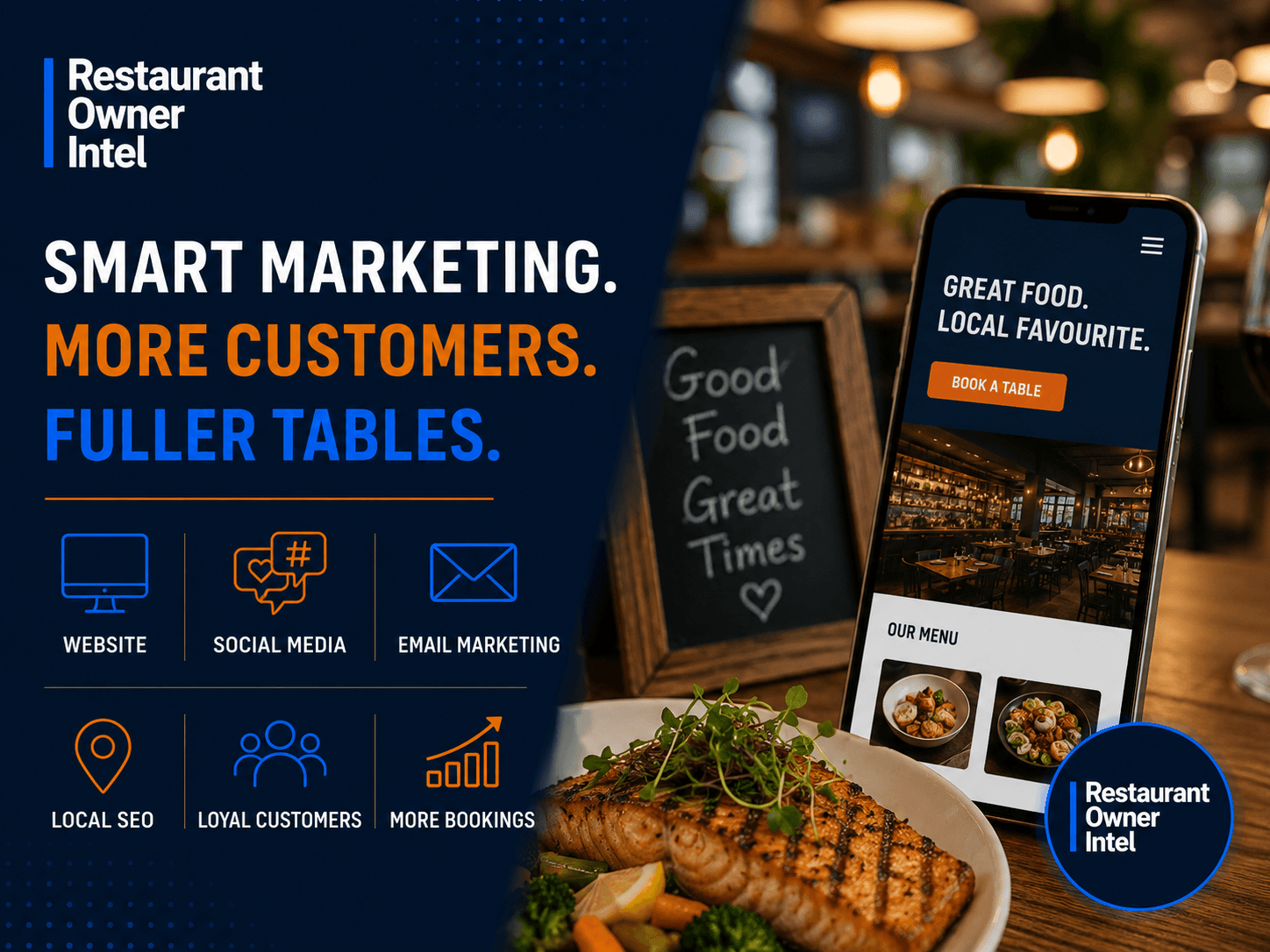
If you're building your restaurant marketing from scratch, focus on these areas first:
Master each one before moving to the next.
Marketing a restaurant becomes much easier when every channel works together. Building a Website That Converts Hungry Visitors
Your website has one job.
Turn visitors into customers.
Within five seconds people should know:
Don't make people hunt for basic information.
Put your menu on the homepage.
Use photographs of your actual dishes rather than stock images.
Show customers exactly what they'll receive.
If you offer online ordering, test it regularly on your own phone.
A slow or confusing checkout process sends hungry customers straight to another restaurant.
Your contact page should also include parking information and an embedded map.
Small details remove hesitation. Social Media Strategies for Marketing a Restaurant
Social media isn't about collecting likes.
It's about encouraging visits.
Show your kitchen in action.
Film chefs preparing signature dishes.
Capture food as it leaves the pass.
Use Instagram Stories for daily specials and limited-time offers.
Poll your audience.
Ask which dessert should return.
Invite followers to help choose your next special.
User-generated content is one of your most valuable marketing assets.
Encourage customers to tag your restaurant.
Ask permission to reshare their photos.
Real customers enjoying real food build trust far faster than polished advertising.
Choose platforms based on your audience.
Facebook remains highly effective for local audiences over 35.
Instagram excels at visual storytelling.
TikTok helps younger diners discover new places to eat.
Consistency matters more than perfection. Email Marketing That Fills Empty Tables
Social media helps people discover your restaurant.
Email helps them return.
Collect email addresses at the point of sale and through your website.
Offer something valuable in exchange, such as a birthday reward or exclusive offers.
Keep emails short.
Feature one great photograph.
Include one clear call to action.
Segment your audience where possible.
Lunch regulars don't need the same messages as weekend diners.
Birthday offers, seasonal menus and quiet midweek promotions all work particularly well.
Remember, your email list is one of the few marketing assets you truly own. Local SEO Tactics for Marketing a Restaurant Business
When someone searches for "restaurants near me," your Google Business Profile often determines whether they choose you.
Complete every section.
Upload fresh photographs regularly.
Update opening hours immediately.
Respond to every review.
Positive or negative.
Consistent replies show prospective customers that you care.
Keep your name, address and phone number identical across every directory.
Search engines reward consistency.
If you have multiple locations, create separate pages for each one with unique local information. Partnership Programmes for Marketing a Restaurant to New Audiences
Your next customers may already be visiting neighbouring businesses.
Partner with gyms, estate agents, offices, breweries and local attractions.
Offer exclusive discounts.
Cross-promote each other's businesses.
Corporate catering introduces your food to dozens of potential future diners.
A single weekly office lunch could become one of your most reliable revenue streams.
Invite local food creators to visit your restaurant.
Let them tell your story in their own words.
Authenticity always performs better than scripted promotion. Loyalty Programmes That Drive Repeat Business
Finding new customers costs more than keeping existing ones.
Reward loyalty.
Simple punch cards often outperform complicated points systems.
Offer birthday rewards.
Celebrate customer anniversaries.
Give regular guests early access to new menu items.
Small gestures create emotional loyalty that discounts alone never will.
Referral programmes also work well.
Reward both the customer making the recommendation and the friend they introduce.
Everybody wins. Paid Advertising Approaches for Marketing a Restaurant Effectively
Paid advertising works best when your foundations are already strong.
Facebook Ads let you target people living within a few miles of your restaurant.
Google Ads reach customers actively searching for somewhere to eat.
Retargeting reminds website visitors to complete their booking.
Seasonal campaigns work especially well around Valentine's Day, Mother's Day and Christmas.
Track every campaign carefully.
Know exactly which adverts produce bookings.
Pause poor performers quickly.
Increase budgets on campaigns that generate measurable results. How Everything Works Together
Imagine this journey.
Someone searches Google and discovers your restaurant.
They visit your website.
They book a table.
During their visit they join your email list.
A month later they receive an invitation to your new seasonal menu.
They return with friends.
One of those friends becomes a regular customer too.
That's what effective marketing looks like.
Not isolated tactics.
A connected system. Five Marketing Mistakes Most Restaurants Still Make
Avoid these mistakes and you'll already be ahead of many competitors. Frequently Asked QuestionsHow much should a restaurant spend on marketing?Most restaurants invest between three and six percent of gross revenue into marketing. New restaurants often spend more while building awareness. Always measure the return on every marketing activity. What is the fastest way to get new customers?Keeping your Google Business Profile updated, responding to reviews quickly, posting consistently on social media and building local partnerships usually deliver the fastest results. How often should restaurants post on social media?Aim for at least four posts each week, supported by regular Stories. Consistency matters more than volume.
Do restaurants need email marketing?Yes. Email remains one of the most effective ways to encourage repeat visits because you own your audience rather than relying on social media algorithms. What makes marketing a restaurant different?Restaurants depend on local customers making quick decisions. Visual content, online reviews, local search visibility and timing all play a much bigger role than they do for many other businesses. Restaurant Owner Intel Tip
You don't need to master every marketing channel at once. Choose one area.
Improve it.
Measure the results.
Then move on to the next.
Restaurants that make steady improvements almost always outperform those chasing the latest marketing trend. Final Thoughts
Marketing a restaurant isn't about doing everything.
It's about doing the right things consistently.
A strong website attracts visitors.
Google builds trust.
Social media creates awareness.
Email brings customers back.
Loyalty programmes encourage repeat visits.
When these channels work together, your marketing becomes a system that keeps attracting new customers while encouraging existing ones to return.
Choose one improvement this week.
Start there.
Keep improving.
That's how great restaurant marketing is built. |
Oct 19, 2026
Restaurant Technology: Which Tools Are Actually Worth the Investment?
From POS systems and booking software to AI and staff scheduling, here's how to choose restaurant technology that earns its place in your budget, protects your margins and makes running your business easier.
Oct 18, 2026
How to Fill Quiet Restaurant Nights Without Offering Discounts
Empty tables on a Tuesday or Wednesday can be expensive. But cutting prices isn't the only way to bring customers through the door. These practical restaurant marketing ideas can help you increase midweek bookings, give diners a reason to visit and protect your profit margins.

Oct 18, 2026
Are Delivery Apps Bringing You Sales or Taking Too Much Margin?
Delivery apps can keep your kitchen busy and your sales figures climbing. But how much of that money are you actually keeping? Here's how to uncover the real cost of restaurant delivery apps, protect your profit margins and make every order work harder for your business.
Oct 17, 2026
Why Customers Choose One Restaurant Over Another (And How to Win Their Business)
Why Customers Choose One Restaurant Over Another comes down to more than food and price. Understanding the psychology behind dining decisions can help your restaurant attract more customers, win bookings and build repeat business.
0 Comments
Join the conversation
Be the first to comment
Share your thoughts above.