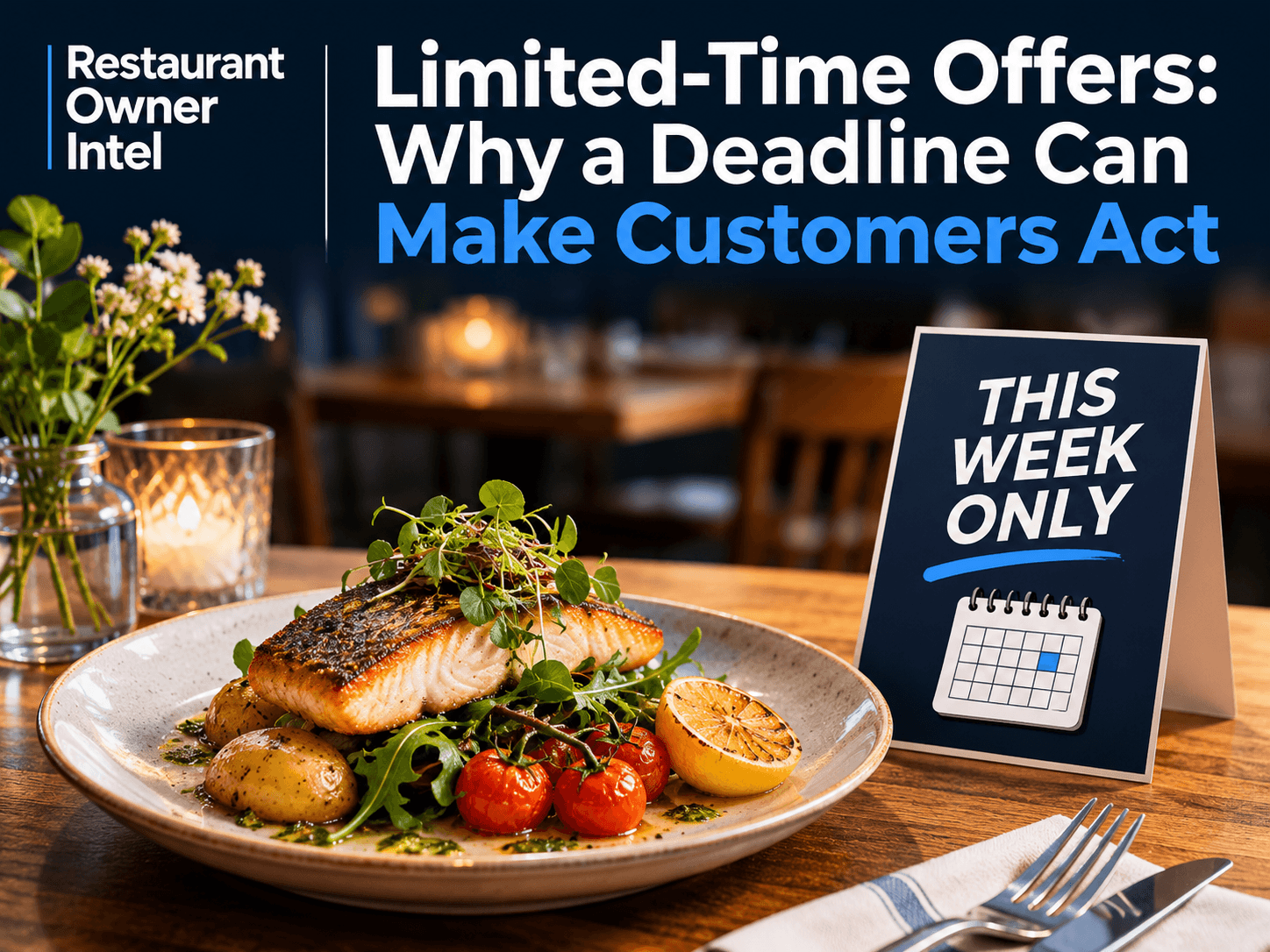
Limited-Time Offers: Why a Deadline Can Make Customers Act
Learn how limited-time restaurant offers encourage bookings, create genuine urgency and protect profit with practical promotion ideas and UK advertising rules.
A couple sees your new seasonal sharing menu on Instagram. They like the sound of it, mention trying it sometime and carry on scrolling. By the weekend, the idea has slipped their minds. Now give the same menu a clear end date. Available until Sunday. Suddenly there is a decision to make: book while the menu is on, or miss this particular dining experience. That is the useful role of limited-time restaurant offers. A credible deadline turns a vague intention into a specific opportunity. Yet a deadline alone does not create demand, and constant discounts can undermine the very sales you are trying to generate. For an independent restaurant, the aim is to give interested customers a reason to act while protecting the value of the meal, the margin on each table and your reputation. Why a Deadline Changes the Decision A customer might like your restaurant but have no immediate reason to book. They have other plans to organise, other restaurants to consider and no shortage of things competing for their attention. Without a reason to choose a date, ‘we should go there’ can stay an intention for weeks. A genuine deadline introduces a choice. If the special menu ends on Sunday, the customer needs to decide whether they want the experience before it disappears. It also makes your message more useful: customers know what is available and when. Research on scarcity messages suggests that time restrictions sometimes accelerate purchasing decisions, but the effect depends on the offer and the level of pressure. A UK government evidence review discusses studies linking scarcity cues to greater purchase interest and shorter searches. These are wider consumer findings, not a forecast of restaurant bookings. There is an important counterpoint. A 2019 experimental study of time-limited offers found that offers with extremely tight decision windows were less likely to be chosen than those allowing more time. Pressure can send people away rather than towards the checkout. A restaurant customer is often making a shared decision, arranging childcare or checking a diary. Give them enough time to act. Urgency works best when the offer is appealing and the deadline is believable. A Limited-Time Offer Does Not Have to Mean a Discount The immediate temptation is to advertise 20% off until Friday. Sometimes a price promotion makes sense, particularly if you have spare capacity and a clear margin calculation. But the deadline is only one part of the message. The reason to visit matters more. A seasonal dish, visiting chef evening, early-week tasting menu or Sunday lunch special each has a natural end point. Customers have a reason to book without being trained to wait for a cheaper price. Three Offers Worth Testing A seasonal experience. ‘Our autumn mushroom and truffle menu is available until 22 November.’ A specific date is relevant because the menu is genuinely changing. A quiet-service promotion. ‘Tuesday and Wednesday early supper menu, available for the next two weeks.’ The offer is designed to bring bookings into services with unused capacity rather than reduce takings on a packed Saturday. A fixed-capacity event. ‘Four-course winemaker dinner on 19 November, advance booking required.’ An event has an authentic date and seating limit. Only mention how many spaces are left if the figure is current and accurate. Each gives customers something distinct to choose. The marketing should explain the food, occasion, price where relevant, dates and booking route. ‘Hurry, don’t miss out’ is a poor substitute for information. Choose the Trading Period Before Designing the Offer Suppose Friday and Saturday evenings are consistently close to full, but Thursday early evening has empty tables. A blanket weekend discount risks rewarding bookings you would have received at full price. A Thursday-only promotion is more closely connected to a real commercial problem. Look at bookings by day and sitting, not just weekly sales. Identify where your kitchen and front-of-house team have room to serve additional customers without disproportionate staffing costs. Then design the offer for those periods. The question is not ‘How many bookings will this promotion produce?’ It is ‘How much additional contribution will those bookings leave after the costs of fulfilling them?’ An Illustrative Margin Check Consider a hypothetical table of two with a normal bill of £70 and £24 in incremental food, drink and transaction costs. That leaves £46 before fixed costs and any incremental labour. Offer 20% off and the same meal produces £56 revenue. If those incremental costs stay at £24, the contribution falls to £32. You have given up £14 per table. If five discounted tables replace five full-price bookings, you have lost £70 of contribution. If the five tables are genuinely additional and your service needs no extra paid hours, they could add £160 of contribution before fixed costs. Both examples are illustrative. Real costs, VAT treatment, staffing and customer behaviour will alter the result. This is why you should check whether an offer shifts existing customers to a cheaper booking, attracts new diners or brings forward visits they would have made anyway. A busy dining room is not the same as a profitable promotion. Make the Deadline Clear and Genuine Specific information creates confidence. ‘Available until Sunday 15 November’ tells customers something useful. ‘Ending soon!’ leaves them guessing. State the actual cut-off for booking or dining, because those are different conditions. For example, ‘Book by 15 November for dinner between 16 and 30 November’ is not the same promotion as ‘Dine by 15 November’. If the offer excludes Saturday, applies only before 6.30pm or requires a minimum party size, customers need to know before they commit. In the UK, advertising rules matter here. The Advertising Standards Authority’s guidance on availability explains that marketers must not falsely claim an offer is available for a limited time to push consumers into an immediate decision. CAP guidance on closing dates also identifies the closing date as a significant condition for many promotions. Do not restart a ‘final 24 hours’ countdown every morning, invent low availability or quietly extend a promotion after advertising its last day. If you repeat a successful promotion later, give the new version its own honest dates and terms. Promote a Reason to Visit, Then Give One Clear Action A deadline is unlikely to help if customers cannot work out what they are getting or how to book. Use the offer to make the decision simpler rather than louder. Consider the difference between ‘LIMITED TIME! BOOK NOW!’ and this: ‘Our roast squash and wild mushroom sharing menu is on until Sunday 15 November. Two courses for £29 per person, served Tuesday to Thursday evenings. See the menu and reserve your table here.’ The second message sets expectations. It tells the customer what is special, when it is available, the price and where to go next. Put the same clear details on your restaurant website and booking page. Check your menu is accurate. Then share the promotion where customers already look: a short email to people who have agreed to marketing (see our guide to restaurant newsletter content), a relevant Instagram or Facebook post, and a timely update on your Google Business Profile. One consistent offer across several channels is easier for staff to explain than several overlapping promotions with different exclusions. Time Your Reminder Without Becoming Repetitive A sensible sequence might begin ten days before the deadline, with a photograph and explanation of the offer. A few days later, show the dish, chef or experience so people understand what makes it appealing. Near the end, send one accurate reminder to those who might still want to book. Your restaurant’s normal booking lead time should shape the schedule. A special evening for couples requires more planning than an extra lunch special for people working nearby. If your audience needs time to arrange a visit, announcing the offer only 24 hours before it ends may be counterproductive. Resist publishing the same countdown message daily. When every post says ‘last chance’, people begin to ignore the wording. Relevance and credibility carry more weight than volume. Measure What Happened After the Deadline Before the promotion starts, note your usual bookings, average spend and contribution for the services you are trying to improve. Set a clear objective, such as adding covers to quieter Thursday sittings without reducing contribution per cover below an acceptable level. Afterwards, compare the promoted period with similar trading periods, allowing for weather, local events and other obvious differences. Track additional covers, average spend, discounts given, variable costs, incremental labour and how bookings were generated. Ask your team whether diners mentioned the offer, and check whether regular customers booked at a discount when they would otherwise have paid full price. Look beyond the number of voucher redemptions. A booking is useful only when the economics and customer experience make sense. If the offer performs well, identify why. Was the dish particularly appealing? Was the date convenient? Did the email reach customers at the right moment? You want to repeat a successful business decision, not simply repeat the words ‘limited time’. A Simple Test for Your Next Quiet Service Choose one service in the next month with genuinely spare capacity. Create an offer with a natural reason to end, such as a two-week early supper menu or a seasonal dish. Set a clear end date, check the contribution on a realistic order and give customers one obvious booking link. Brief staff on the terms. Promote the offer to the customers most likely to value it. When the promotion ends, close it as promised and compare the results with similar services before deciding whether to run another. Products / Tools / Resources Your existing booking system. Start with the reservation tools you already pay for. Check whether you can create a dedicated booking link or track bookings for a named promotion. Compare extra charges before adding another platform. Google Business Profile. Keep your restaurant’s hours, menu and website link correct, and use an appropriate update to highlight a genuinely current seasonal offer. Google Business Profile is useful for communicating with people already looking for a place to eat. Your email marketing platform. A short message to opted-in customers can explain the offer and booking deadline. Use your existing service where possible and respect UK privacy and electronic marketing rules. Google Sheets or your till reports. Record eligible services, bookings, average spend, discounts and incremental costs. A simple comparison often reveals more about the value of an offer than likes or clicks. ASA and CAP guidance. Read the availability guidance and promotion closing-date guidance before advertising urgency or strict booking deadlines. |
Restaurant Owner Resource |
Free AI Restaurant Growth Plan |
Curious what growth opportunities your restaurant might be missing? Our free AI-powered Growth Plan analyses your restaurant's online presence, marketing and growth goals to identify opportunities you may not have considered.
|

Nov 4, 2026
Does Your Restaurant Contact Page Make It Easy to Become a Customer?
Restaurant contact page improvements to help diners book, call, find you or ask a question, with practical advice on forms, mobile use and privacy.
Nov 2, 2026
Should You Put Currency Symbols on Your Restaurant Menu?
Currency symbols on restaurant menus: what the research supports, when to keep £ signs and how to test a clearer price format.
Oct 31, 2026
What Should a Restaurant Actually Put in Its Newsletter?
A practical restaurant newsletter content plan, with useful topics, a repeatable layout and a complete example to adapt
Oct 30, 2026
7 Restaurant Signage Mistakes That Could Be Costing You Customers
Is your restaurant signage costing you customers? Avoid 7 common outdoor sign mistakes and learn how to attract more walk-in diners.
0 Comments
Join the conversation
Be the first to comment
Share your thoughts above.