
Why Google Isn't Your Restaurant's Only Search Engine Anymore
Why Google isn't your restaurant's only search engine anymore. Learn how AI search is changing restaurant discovery and how to improve your visibility.
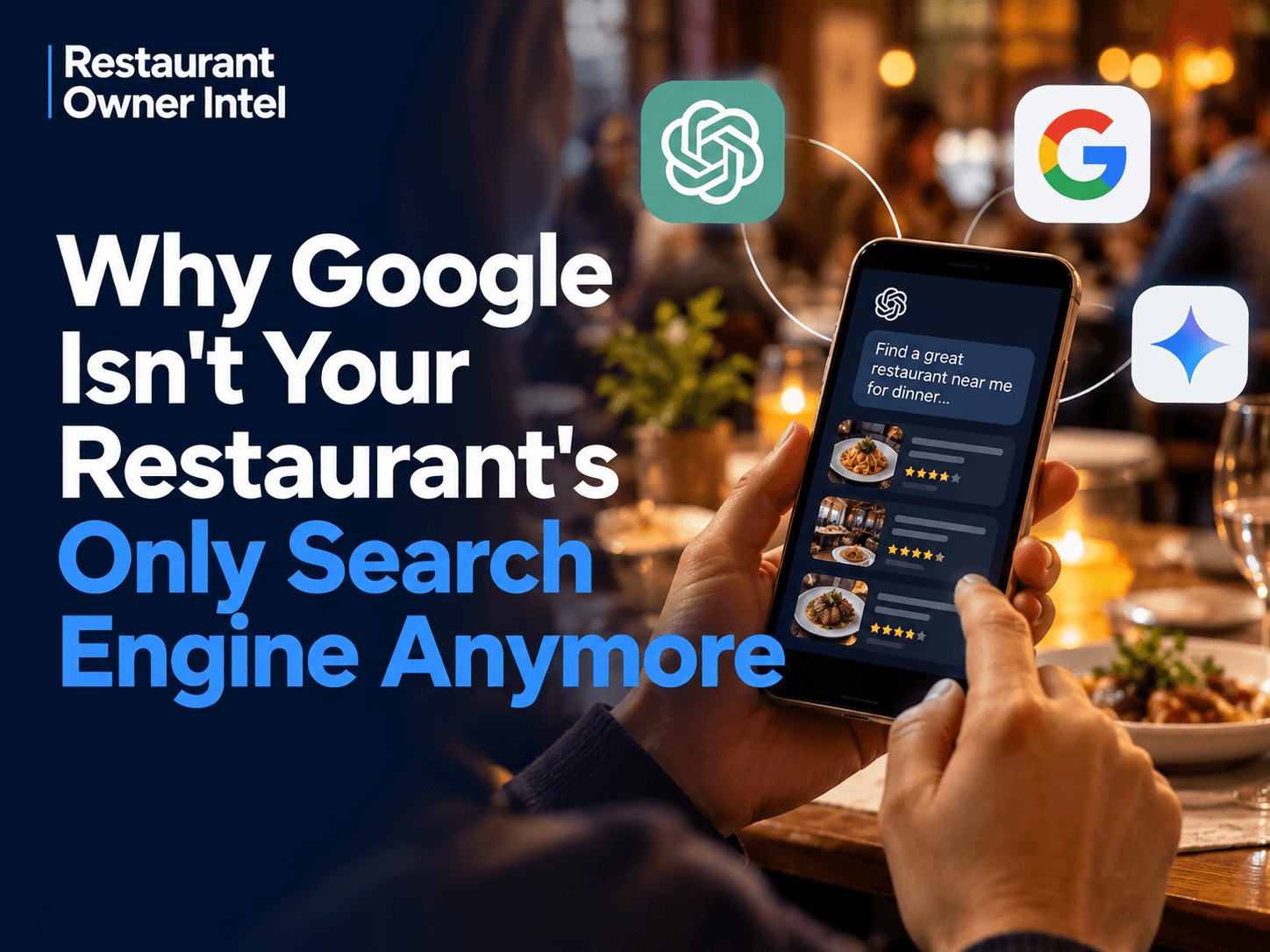
For years, being found online largely meant one thing: appearing on Google. That is changing. A potential customer looking for dinner can now open an AI assistant and ask: “Where can I get a good Italian meal near me tonight that's suitable for children and has vegetarian options?” Or: “Recommend somewhere for a birthday dinner for six people. I want somewhere lively but not too expensive.” Instead of working through a page of search results, the customer may receive a short list of recommendations and continue the conversation from there. That changes restaurant search. Why Google Isn't Your Restaurant's Only Search Engine Anymore comes down to a simple shift: customers can increasingly ask AI to do some of the searching, comparing and filtering for them. For restaurant owners, that creates a new question: Does the internet contain enough clear, accurate information about your restaurant for AI to understand why it should recommend you? Search is becoming a conversationTraditional restaurant search often starts with a few keywords: Italian restaurant Peterborough Sunday lunch near me Best steak restaurant Manchester AI allows people to be much more specific. Someone might ask: “Find me a relaxed independent restaurant in Manchester for an anniversary dinner, with good vegetarian choices and a budget of around £40 per person.” That is a very different search. The customer has described the occasion, location, atmosphere, dietary requirements and budget in one request. AI can then help organise that information and potentially suggest businesses that appear to match it. Google itself is moving in this direction. Its AI-powered search experiences are designed to handle longer and more complex questions, comparisons and follow-up queries. ChatGPT can also search the web, and its restaurant capabilities now go further: customers can search for restaurants based on factors including cuisine, budget, dietary needs and atmosphere, see reservation availability and continue narrowing their choices conversationally. The customer journey is no longer necessarily: Google → restaurant website → booking. It could increasingly become: AI question → restaurant recommendation → further questions → booking decision. That matters. AI search does not make Google irrelevantDo not respond to this shift by neglecting Google. Your Google Business Profile remains an important part of your restaurant's online presence. Opening hours, reviews, photographs, categories, menus, location information and other business details still help customers understand whether your restaurant suits them. Google itself is also becoming more AI-driven. AI Overviews and AI Mode increasingly combine traditional web search with conversational answers. The important change is therefore not Google versus AI. It is that search itself is becoming AI-powered and conversational. Restaurant owners need to think beyond ranking for a handful of keywords and start thinking about whether their restaurant can be clearly understood across the wider web. AI needs to understand what makes your restaurant relevantImagine you operate a neighbourhood restaurant with an excellent Sunday lunch. Your website mentions Sunday lunch. Your current menu is online. Your Google Business Profile is accurate. Customers regularly mention the roast dinners and friendly service in reviews. Local websites have written about your restaurant. Your social profiles contain recent posts about Sunday service. There are multiple consistent signals explaining what your restaurant offers. Now imagine another restaurant with an outdated website, an old menu online, inconsistent opening hours, few recent reviews and almost no useful description of the dining experience. Which business is easier for an AI system — or a customer — to understand? This is why restaurant owners should stop thinking only about being visible. You also need to be understandable. Think about the questions customers actually askRestaurant SEO has traditionally concentrated heavily on keywords. Keywords still matter, but AI search makes context increasingly important. Customers do not necessarily think in neat search terms. They think about situations. Where can I take my parents for Sunday lunch? Which restaurants nearby are good for a first date? Where can eight of us eat before the theatre? Which local restaurants have good gluten-free options? Where can I get dinner with the children without spending too much? What's a good independent restaurant for a business lunch? Look at your website through that lens. Does it clearly communicate the occasions and customers your restaurant serves? If you offer private dining, say so. If you have a children's menu, make it easy to find. If you cater for particular dietary requirements, explain the options accurately. If you are particularly suitable for groups, celebrations or pre-theatre dining, provide useful information about it. Do not manufacture claims simply to attract searches. Give search engines and customers better information about what you genuinely offer. Your website becomes more important, not lessIt would be easy to assume that AI answers make restaurant websites less valuable. For restaurant owners, the opposite argument is stronger. Your website is one of the few online sources you directly control. It can clearly explain:
A restaurant website consisting of a homepage, PDF menu and booking button may technically provide the basics. But it leaves a lot unexplained. Useful, specific information gives potential customers more confidence and provides search systems with clearer context about your business. Reviews could become even more valuableReviews have always helped customers decide whether to book. In an AI-led search environment, the information contained within reviews can also contribute to the wider online picture of your restaurant. Consider the difference between repeatedly receiving reviews such as: “Great place.” and customers naturally writing: “Excellent Sunday lunch. Staff were brilliant with the children and there were several good vegetarian options.” The second review communicates much more about the actual experience. You should never tell customers what to write or attempt to manipulate reviews. You can, however, make reviewing easy and ask customers to share feedback about their experience. The detail customers voluntarily provide can help future diners understand whether your restaurant suits their needs. Accuracy becomes a competitive issueAI search also makes inaccurate information potentially more damaging. Suppose your restaurant stops serving lunch on Tuesdays but several websites still show the old hours. A customer asking an AI assistant for somewhere to eat could encounter conflicting information. The same applies to:
Restaurant owners should therefore treat online information as an operational asset rather than something updated once and forgotten. Every few months, search for your own restaurant and check what a customer can find. Then try asking AI tools questions about it. You may be surprised by what is missing, unclear or outdated. Do not try to “game” AI searchA familiar industry will inevitably develop around promises to get businesses “ranked in ChatGPT” or guarantee AI recommendations. Be cautious. The sensible strategy is far less exciting. Build a strong, consistent and useful online presence. Make your restaurant easy to understand. Keep important information accurate. Earn genuine customer reviews. Maintain a useful website. Make menus accessible. Explain what you offer. Build a reputation that extends beyond one platform. These actions already help customers make decisions. They also put your restaurant in a stronger position as search behaviour evolves. A 15-minute AI search audit for your restaurantOpen an AI assistant and test some realistic customer questions. Do not only search your restaurant's name. Try questions such as:
Look at what appears. Then ask yourself: Does my restaurant appear where it genuinely should? Is the information accurate? Does the description reflect what we actually offer? Are competitors being mentioned for reasons I could learn from? What useful information about my restaurant is difficult to find online? Do not treat the answers as a definitive ranking exercise. AI recommendations can vary, and no single search represents every customer's experience. Use the exercise to identify information gaps. The goal is bigger than rankingRestaurant owners have spent years worrying about where they appear on Google. That will still matter. But the bigger issue is whether your restaurant is represented clearly enough online to be considered when customers ask increasingly detailed questions about where to eat. Google itself is becoming more conversational. AI assistants can search the web. Restaurant discovery and reservations are becoming part of these experiences. The restaurants best prepared for that environment will not necessarily be those chasing every new AI marketing tactic. They will be the businesses with strong reputations, accurate information and enough useful online detail for both customers and technology to understand exactly what they offer. Your action this weekSpend 15 minutes searching for your restaurant as a customer would. Check Google. Check your website. Then ask an AI assistant five realistic questions that could lead someone to your restaurant. Write down every piece of information that is wrong, missing or unclear. Fix those gaps before worrying about complicated AI optimisation strategies. |
Restaurant Owner Resource |
Free AI Restaurant Growth Plan |
Curious what growth opportunities your restaurant might be missing? Our free AI-powered Growth Plan analyses your restaurant's online presence, marketing and growth goals to identify opportunities you may not have considered.
|

Oct 18, 2026
How to Fill Quiet Restaurant Nights Without Offering Discounts
Empty tables on a Tuesday or Wednesday can be expensive. But cutting prices isn't the only way to bring customers through the door. These practical restaurant marketing ideas can help you increase midweek bookings, give diners a reason to visit and protect your profit margins.

Oct 18, 2026
Are Delivery Apps Bringing You Sales or Taking Too Much Margin?
Delivery apps can keep your kitchen busy and your sales figures climbing. But how much of that money are you actually keeping? Here's how to uncover the real cost of restaurant delivery apps, protect your profit margins and make every order work harder for your business.

Oct 17, 2026
Why Customers Choose One Restaurant Over Another (And How to Win Their Business)
Why Customers Choose One Restaurant Over Another comes down to more than food and price. Understanding the psychology behind dining decisions can help your restaurant attract more customers, win bookings and build repeat business.

Oct 16, 2026
Revenue Is Up. But Is Your Restaurant Actually Doing Better?
Higher sales can create the impression of a healthier restaurant business. But unless customer numbers, operating costs and profit margins are improving too, revenue growth may be hiding a very different story.
0 Comments
Join the conversation
Be the first to comment
Share your thoughts above.