
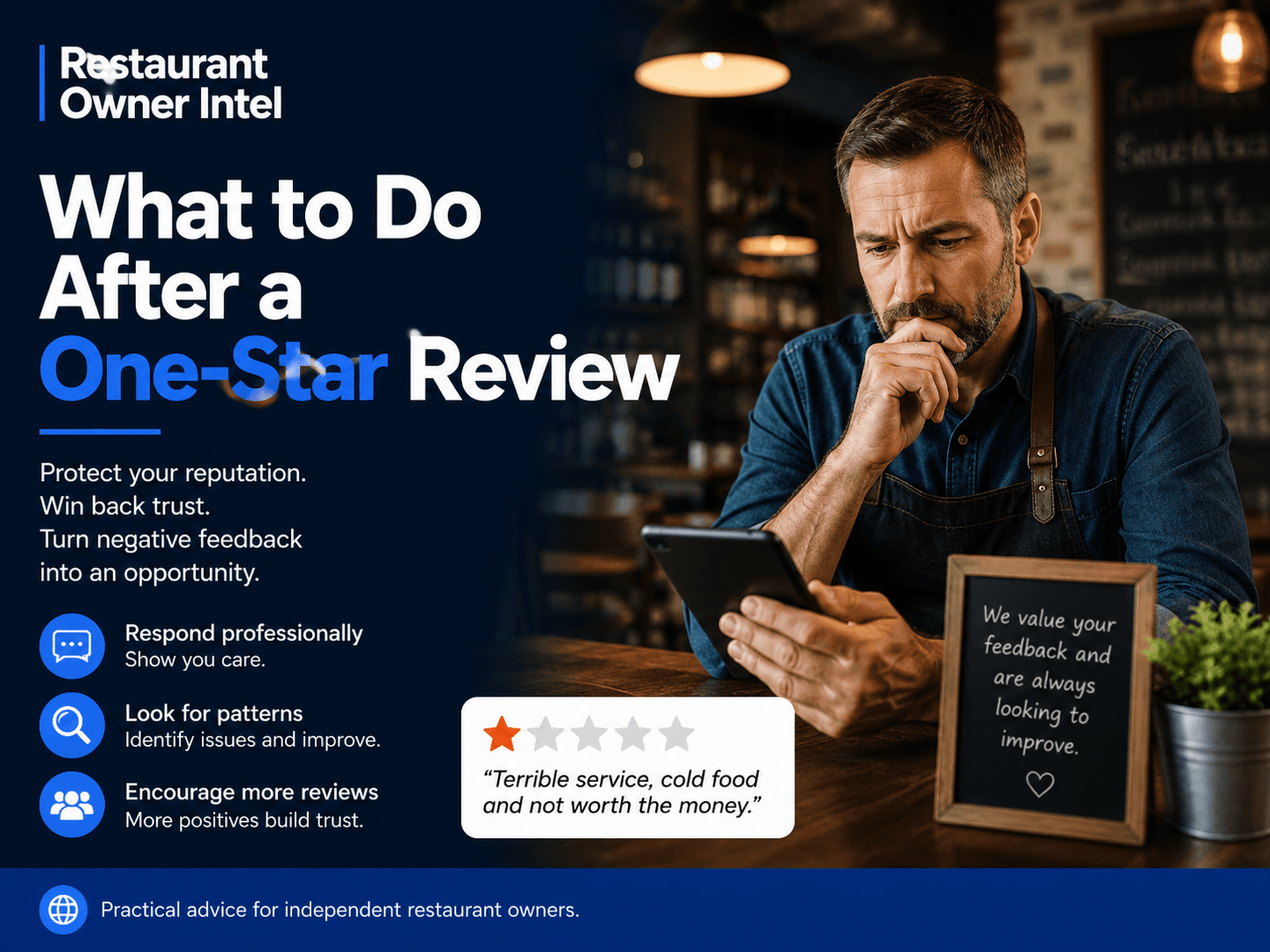
What to Do After a One-Star Review | A Restaurant Owner's Guide
Learn what to do after a one-star review with practical steps to protect your restaurant's reputation, respond professionally, and turn negative feedback into an opportunity to improve.
A one-star review can feel personal. You've invested time, money, and effort into your restaurant, so seeing a harsh public comment is never easy.
Your first instinct might be to defend yourself, ignore it, or even argue with the reviewer.
That can be a costly mistake.
Potential customers often pay more attention to how a restaurant responds to criticism than to the criticism itself. A thoughtful response can build trust, while a defensive one can drive people away before they've even looked at your menu.
The good news is that a single negative review doesn't define your restaurant. What matters is how you deal with it. Don't Respond Emotionally
It's tempting to reply immediately, especially if you believe the review is unfair.
Instead, take a step back.
Read the review carefully, discuss it with your team if necessary, and wait until you can respond calmly and professionally.
Remember, you're not only replying to the reviewer. You're also speaking to every potential customer who reads that exchange in the future. Check Whether the Complaint Is Genuine
Before writing a response, investigate what happened.
Ask yourself:
Even if the review exaggerates the situation, there may still be something useful to learn from it. Respond Quickly and Professionally
A prompt response shows that you care about customer experience.
Keep your reply polite, thank the customer for their feedback, apologise if appropriate, and invite them to continue the conversation privately.
For example:
"Thank you for taking the time to leave your feedback. We're sorry your visit didn't meet your expectations. We take comments like yours seriously and would appreciate the opportunity to learn more about what happened. Please contact us directly so we can discuss your experience."
Avoid making excuses or blaming the customer. Never Start an Argument
Public disagreements rarely end well.
Even if the review contains inaccuracies, responding defensively can make your restaurant appear unprofessional.
Future customers may never know who was right, but they will notice how respectfully you handled the situation.
Professionalism always leaves a stronger impression than winning an online argument. Look for Patterns
One poor review may simply reflect an unhappy customer.
Several reviews mentioning slow service, cold food, long waits, or unfriendly staff suggest a recurring problem.
Use reviews as free customer feedback.
If multiple people are highlighting the same issue, it's worth investigating and making improvements before it affects more customers. Encourage More Positive Reviews
The best way to reduce the impact of a one-star review is to collect more genuine five-star reviews.
Many happy customers never leave feedback unless they're asked.
Train your team to encourage satisfied guests to leave a review after a positive dining experience.
A steady flow of recent, authentic reviews helps keep your overall rating healthy and gives potential customers a more balanced picture of your restaurant. Learn From the Experience
Negative reviews can uncover problems that aren't always obvious during a busy service.
Perhaps your team needs additional training.
Maybe your menu descriptions create unrealistic expectations.
Or perhaps a process in the kitchen needs improving.
Treat reviews as another source of operational intelligence rather than simply an online score.
Restaurants that continually improve based on customer feedback often build stronger reputations over time. Quick Review Response Checklist
Before replying to a one-star review, ask yourself:
The Bottom Line
Every restaurant receives negative reviews from time to time.
A single one-star review is unlikely to damage your business on its own.
Ignoring it, responding emotionally, or failing to learn from it can.
A professional response demonstrates that you value customer feedback and are committed to improving the guest experience. That's exactly what many potential customers want to see before deciding where to dine. One Action to Take Today
Review your three most recent negative reviews. Look for any recurring themes, discuss them with your team, and agree on one practical improvement you can implement this week. Small operational changes today can prevent many future one-star reviews.
Make Responding to Reviews Quick and Consistent
One of the biggest reasons restaurant owners don't reply to every review is simply lack of time. But every unanswered review is a missed opportunity to show potential customers that you care.
If you want to respond professionally without having to think about what to write each time, Review Responder uses AI to generate a personalised reply for every Google review in seconds. You can approve it as it is, ask the AI to rewrite it, or make your own edits before posting. It's a simple way to reply consistently, save valuable time, and ensure every customer receives a thoughtful response.
|
Restaurant Owner Resource |
Free AI Restaurant Growth Plan |
Curious what growth opportunities your restaurant might be missing? Our free AI-powered Growth Plan analyses your restaurant's online presence, marketing and growth goals to identify opportunities you may not have considered.
|
Oct 19, 2026
Restaurant Technology: Which Tools Are Actually Worth the Investment?
From POS systems and booking software to AI and staff scheduling, here's how to choose restaurant technology that earns its place in your budget, protects your margins and makes running your business easier.

Oct 18, 2026
How to Fill Quiet Restaurant Nights Without Offering Discounts
Empty tables on a Tuesday or Wednesday can be expensive. But cutting prices isn't the only way to bring customers through the door. These practical restaurant marketing ideas can help you increase midweek bookings, give diners a reason to visit and protect your profit margins.

Oct 18, 2026
Are Delivery Apps Bringing You Sales or Taking Too Much Margin?
Delivery apps can keep your kitchen busy and your sales figures climbing. But how much of that money are you actually keeping? Here's how to uncover the real cost of restaurant delivery apps, protect your profit margins and make every order work harder for your business.

Oct 17, 2026
Why Customers Choose One Restaurant Over Another (And How to Win Their Business)
Why Customers Choose One Restaurant Over Another comes down to more than food and price. Understanding the psychology behind dining decisions can help your restaurant attract more customers, win bookings and build repeat business.
0 Comments
Join the conversation
Be the first to comment
Share your thoughts above.