
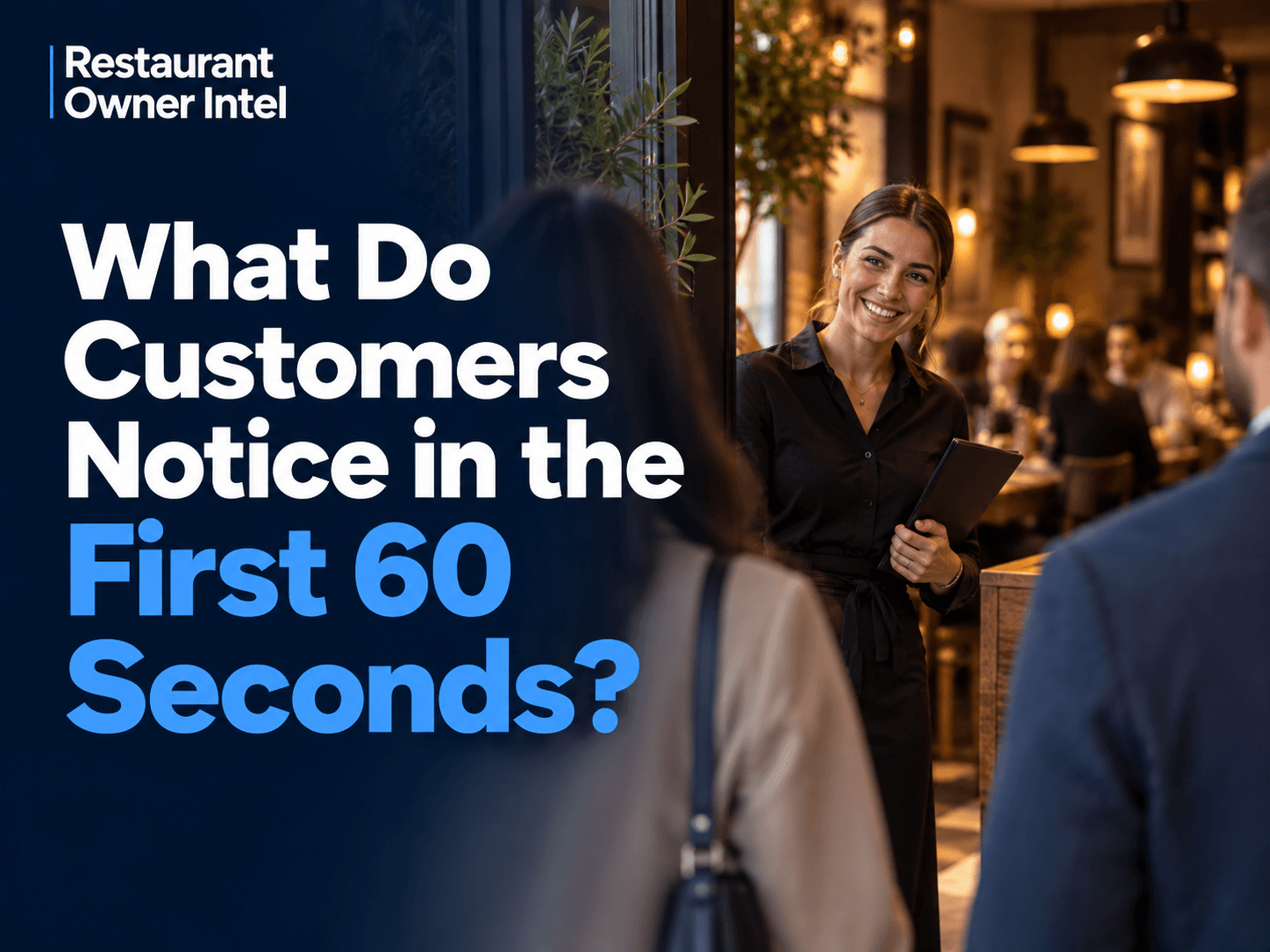
What Do Customers Notice in the First 60 Seconds?
What do customers notice in the first 60 seconds? Audit your restaurant's first impression to improve customer experience and encourage repeat visits.
A customer walks through your door. Before they have tasted the food, studied the menu properly or spoken to their server for more than a few seconds, they are already forming an opinion. Was the entrance clean? Did somebody acknowledge them? Did the restaurant feel welcoming? Was it obvious where they should wait? Did the room look cared for? Within the first 60 seconds, customers can collect dozens of small signals about your restaurant. Individually, some may seem insignificant. Together, they help answer a much bigger question: “Have I made a good choice coming here?” That makes the first minute an important part of customer experience — and one worth looking at through your customers' eyes. What Do Customers Notice in the First 60 Seconds?Restaurant owners naturally spend a lot of time thinking about food, service and price. Customers experience the business differently. They do not separate the restaurant into departments. The dirty front door, friendly greeting, music volume, smell from the kitchen and condition of the menu all become part of one overall impression. The first 60 seconds can include several important moments:
None requires a major refurbishment or expensive customer experience programme. They require attention. 1. The experience starts before the customer sits downYour front door is part of the customer experience. So is the pavement outside, your signage, windows and entrance. Customers may notice fingerprints on the glass, dead plants, faded notices, damaged menus in display cases or a collection of delivery drivers blocking the doorway. You may stop noticing these things because you see them every day. A new customer does not. Consider a restaurant charging £35–£50 per person where the entrance has peeling stickers, an old opening-hours notice and a dirty window. The food may be excellent. But the first signals do not support the price customers are about to pay. What to check: Stand outside your restaurant before service and look at the entrance as though you have never visited before. 2. Customers notice whether anyone notices themFew things make an arrival feel more awkward than walking into a restaurant and apparently becoming invisible. The host is on the phone. A server walks past. Another member of staff sees the customer but continues towards the kitchen. Nobody says anything. The customer is left wondering whether they should wait, find somebody or seat themselves. You do not always need to seat a customer immediately. During a busy service, that may be impossible. But acknowledgement can happen immediately. A simple: “Good evening. We'll be with you in just a moment.” changes the experience. The customer now knows they have been seen. That small interaction costs nothing and removes uncertainty. 3. Cleanliness sends an immediate signalCustomers do not need to conduct an inspection to notice cleanliness. They see the entrance. They notice the floor. They see whether tables have been properly reset. They notice glasses. They notice menus. And if they visit the toilets shortly after arriving, that can strongly influence their perception of the rest of the restaurant. Cleanliness is not simply an operational issue. It affects trust. A sticky menu or visibly dirty table can make a customer start questioning areas they cannot see. That is particularly damaging because it can influence how they perceive everything that follows. 4. Customers notice the atmosphere before the foodAtmosphere begins working immediately. Customers notice whether the restaurant feels busy or empty, warm or cold, lively or flat. They hear the music. They hear staff conversations. They notice the lighting. They see how other customers appear to be behaving. They may even notice the smell before anything else. The question is not whether every restaurant should feel lively. A neighbourhood café, fine-dining restaurant and busy pizza restaurant should not have the same atmosphere. The question is whether the atmosphere matches the experience you are selling. If you position your restaurant as relaxed and intimate but customers enter harsh lighting with loud music and staff shouting across the room, there is a mismatch. 5. Customers watch your teamStaff behaviour is visible even when employees are not directly serving a particular customer. Customers can see a server looking at their phone. They can hear staff complaining near the bar. They notice two employees chatting while somebody waits at the entrance. They also notice positive behaviour. A team member holding a door open. A server helping a colleague reset a table. Someone smiling and acknowledging arriving guests. A manager visibly paying attention to the room. Customers are constantly receiving signals about whether the restaurant is organised and whether the people working there care about the experience. This is why customer service is not limited to scripted interactions. How staff behave when they are not directly speaking to customers matters too. 6. Customers notice frictionGood customer experiences often feel easy. Poor ones contain small moments of uncertainty. Where do we wait? Do we order at the bar? Is this our table? Where do we put our coats? Do we need to scan this QR code? Can we get a physical menu? Does somebody know we are here? Each question creates a small amount of friction. One may not matter. Several within the first minute can make the restaurant feel disorganised. Look particularly closely at your arrival process. A first-time customer should not need previous knowledge of your restaurant to understand what happens next. 7. The table continues the first impressionOnce seated, the customer starts noticing a different set of details. Is the table clean? Are the glasses polished? Is anything chipped? Does the table wobble? Are menus already there? Are the menus clean and in good condition? Is there enough space? These details can appear minor from an operational perspective, but they contribute to perceived value. If your prices have increased significantly over the past few years, this becomes particularly important. Customers are not judging price in isolation. They are judging what they receive in return. A £25 main course presented within a polished, well-managed experience can feel very different from the same £25 dish preceded by a poor arrival, sticky menu and neglected table. 8. Your menu is part of the customer experienceThe menu is often one of the first physical representations of your restaurant that customers handle. Its condition matters. A menu with stains, damaged corners, old price stickers or difficult-to-read text creates an impression before a dish has been ordered. Its usability matters too. Customers should be able to understand what you sell without unnecessarily struggling through the menu. Can they identify starters and mains easily? Are prices clear? Can customers find dietary information? Are your most important dishes easy to notice? A good menu does more than list food. It makes ordering easier and helps sell the experience. Small problems become expensive when customers do not returnThe commercial impact of the first 60 seconds is difficult to isolate on a spreadsheet. A customer rarely leaves a review saying: “The entrance was slightly untidy, nobody acknowledged us for 40 seconds and the menu looked tired, so we decided not to return next month.” They simply do not return. That is what makes small customer experience problems dangerous. Individually, they can appear too minor to demand management attention. Collectively, they can weaken perceived value, reduce recommendations and make it harder to turn first-time visitors into regular customers. Acquiring another new customer to replace the one you failed to retain can then require additional marketing effort and expense. Improving the first minute is therefore not simply about hospitality. It is part of customer retention. Conduct a 60-second customer experience auditOne of the simplest audits you can carry out costs nothing. Walk out of your restaurant. Wait a few minutes. Then come back in through the same entrance your customers use. Do not walk through as the owner looking for operational problems. Walk through as somebody who has never visited before. During those first 60 seconds, check:
Better still, ask someone who does not work in the restaurant to do it. They are more likely to see what you have stopped seeing. Fix the repeated details before chasing bigger improvementsImproving customer experience does not always require a refurbishment, new technology or another staff training programme. Sometimes the highest-value changes are remarkably small. Clean the front door before every service. Remove outdated signs. Create a clear place for customers to wait. Make immediate acknowledgement a service standard. Replace damaged menus. Fix the wobbling tables. Check the toilets before opening. Move staff conversations away from customers. Adjust the music before service starts. None of these changes will transform a restaurant alone. But customer experience is built from repeated details. Get enough of those details right and the restaurant feels better run, more welcoming and more worthy of the price being charged. Your action this weekBefore your next busy service, spend 60 seconds entering your restaurant exactly as a first-time customer would. Do not look for what is working. Look for anything that creates doubt, friction or a poor first impression. Choose the three easiest problems to fix and correct them this week. Then repeat the exercise next month. The first minute may be a very small part of a customer's visit. But it can influence whether they want the rest of the experience — and whether they decide to come back. |
Restaurant Owner Resource |
Free AI Restaurant Growth Plan |
Curious what growth opportunities your restaurant might be missing? Our free AI-powered Growth Plan analyses your restaurant's online presence, marketing and growth goals to identify opportunities you may not have considered.
|

Oct 18, 2026
How to Fill Quiet Restaurant Nights Without Offering Discounts
Empty tables on a Tuesday or Wednesday can be expensive. But cutting prices isn't the only way to bring customers through the door. These practical restaurant marketing ideas can help you increase midweek bookings, give diners a reason to visit and protect your profit margins.

Oct 18, 2026
Are Delivery Apps Bringing You Sales or Taking Too Much Margin?
Delivery apps can keep your kitchen busy and your sales figures climbing. But how much of that money are you actually keeping? Here's how to uncover the real cost of restaurant delivery apps, protect your profit margins and make every order work harder for your business.

Oct 17, 2026
Why Customers Choose One Restaurant Over Another (And How to Win Their Business)
Why Customers Choose One Restaurant Over Another comes down to more than food and price. Understanding the psychology behind dining decisions can help your restaurant attract more customers, win bookings and build repeat business.

Oct 16, 2026
Revenue Is Up. But Is Your Restaurant Actually Doing Better?
Higher sales can create the impression of a healthier restaurant business. But unless customer numbers, operating costs and profit margins are improving too, revenue growth may be hiding a very different story.
0 Comments
Join the conversation
Be the first to comment
Share your thoughts above.