Menu Descriptions That Sell: How Better Words Can Increase Orders
Learn how better restaurant menu descriptions can make dishes more appealing, communicate value and encourage customers to order more.
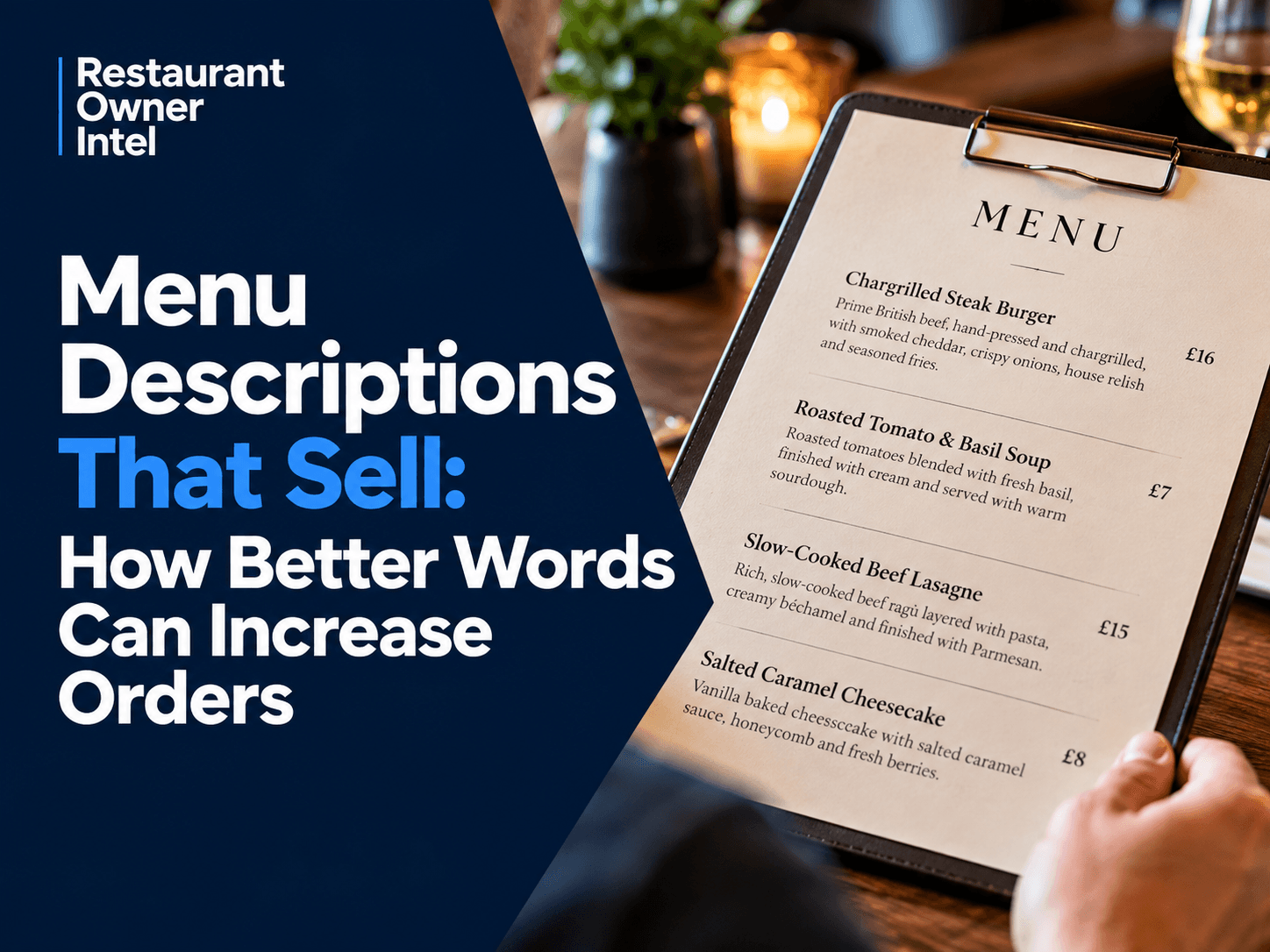
A customer opens your menu and sees two dishes. Chicken Burger Chicken breast, lettuce, tomato, mayonnaise and fries. Then: Crispy Buttermilk Chicken Burger Buttermilk-marinated chicken breast, crisp lettuce and tomato, finished with smoky garlic mayo and served with seasoned fries. It is essentially the same dish. But does it feel like the same dish? The second description gives the customer more reasons to imagine eating it. It communicates preparation, flavour and texture. It also makes the dish sound more distinctive. That matters because customers cannot taste your food when they are deciding what to order. Your words have to do some of the selling first. Menu Descriptions Are Sales CopyA menu is often treated as an operational document. Dish name. Ingredients. Price. But from the customer's perspective, it is also a buying decision. They are comparing options, imagining what they will receive and deciding whether a particular dish sounds worth £14, £18 or £25. That makes your menu one of the most important sales tools inside your restaurant. Good menu descriptions don't need to be elaborate or poetic. They need to make the food easier to want. Compare: Chocolate Cake Chocolate cake with ice cream. With: Warm Chocolate Fudge Cake Warm chocolate fudge cake with vanilla ice cream and rich chocolate sauce. The second version gives the customer considerably more to picture. Warm. Those words create anticipation. And anticipation helps sell food. Describe What Makes the Dish AppealingOne of the easiest ways to improve menu descriptions is to stop thinking only about what is in the dish and start thinking about why someone would want to eat it. Take: Fish & Chips Cod, chips, peas and tartare sauce. Everything is technically there. But it doesn't communicate much about the experience. Consider: Beer-Battered Cod & Chips Crisp beer-battered cod with chunky chips, crushed peas and homemade tartare sauce. Now the customer knows more. "Crisp" suggests texture. "Beer-battered" describes the preparation. "Chunky" helps them picture the chips. "Homemade" gives the tartare sauce more character. You haven't invented anything. You've simply communicated the dish better. That distinction is important. Good menu writing should make the food sound as good as it really is — not make claims the kitchen can't deliver. Use Sensory Words Where They Earn Their PlaceFood is sensory, so useful descriptions often involve texture, temperature, flavour or preparation. Words such as: Crispy can help customers imagine the dish. But don't throw adjectives at everything. "Delicious succulent mouth-watering premium chicken" doesn't sound more appetising. It sounds like somebody is trying too hard. Choose the detail that genuinely makes the food appealing. If the chicken is marinated for 24 hours, that may be worth mentioning. If the pizza dough is fermented for 48 hours, tell people. If the sauce is made in your kitchen, say so. If the beef comes from a local farm that your customers recognise and value, that could matter. Specifics are usually stronger than generic praise. Sell the Difference, Not Just the IngredientsRestaurant owners know what makes their food different. Customers often don't. Perhaps your lasagne uses a beef ragù cooked slowly for several hours. Perhaps your curry paste is made from scratch. Perhaps your burger patties are hand-pressed each morning. Perhaps your cheesecake comes from a local bakery. Perhaps your pizza dough goes through a long fermentation process. If those details contribute to the quality or character of the dish, consider putting them on the menu. Compare: Beef Lasagne Beef, tomato sauce, pasta and béchamel. With: Slow-Cooked Beef Lasagne Slow-cooked beef ragù layered with pasta and creamy béchamel, finished with Parmesan. The first tells the customer what's inside. The second starts explaining why they might choose it. Give Your High-Value Dishes More Selling PowerNot every item on your menu is equally valuable to the business. Some dishes have stronger margins. Some are signature items. Some encourage additional drinks or sides. Some generate great customer feedback. Yet menus often give every dish roughly the same amount of selling effort. That is worth reviewing. If there are dishes you particularly want customers to order, ask: Does the description give them a reason to? A profitable signature dish with a flat, uninspiring description may be losing orders to something that simply sounds more appealing. This doesn't mean making descriptions artificially long. It means putting your best selling language behind dishes that deserve attention. Names Matter TooSometimes the problem isn't the description. It's the name. Consider: House Burger There is nothing necessarily wrong with it, but it doesn't communicate much. Depending on the actual product, something like: Chargrilled Steak Burger or Smoky Bacon & Cheddar Burger immediately gives the customer more information. The name itself begins selling the dish before they even read the description. This can be particularly useful for signature items. If you have something distinctive that customers cannot easily get elsewhere, don't bury that difference underneath a generic name. Don't Make Customers Work Too HardThere is a balance. A menu filled with long paragraphs can become exhausting to read. The objective isn't to write the most elaborate description possible. It's to communicate the most persuasive information efficiently. For example:
could probably become:
Almost all the appeal remains. The clutter disappears. Restaurant customers want to make a decision, not study a brochure. Avoid Empty WordsSome words occupy space without telling the customer anything useful. Delicious. If your menu says a dish is "delicious", the customer learns very little. Show them why it should be delicious instead. Instead of: Delicious homemade soup try: Roasted Tomato & Basil Soup Roasted tomatoes blended with fresh basil and finished with cream. The ingredients and preparation do the selling. You don't have to tell the customer it's delicious. Let them reach that conclusion. Provenance Can Add Value — When Customers Care About ItOrigin can be powerful when it genuinely means something. Locally landed fish. A recognised regional cheese. Beef from a nearby farm. Vegetables grown locally. Bread from a respected local bakery. These details can make a dish feel more distinctive and help justify its price. But provenance shouldn't become decoration. Naming an obscure supplier that means nothing to customers doesn't automatically increase perceived value. Ask a simple question: Does this detail give the customer another reason to choose the dish or feel confident about its quality? If yes, it may deserve menu space. If not, leave it out. Menu Descriptions Can Reduce Price ResistanceBetter descriptions aren't simply about making customers hungry. They can also help explain value. Imagine a customer sees: Steak — £28 They have very little information with which to judge the price. Now consider: 28-Day-Aged Sirloin Steak — £28 Chargrilled 8oz British sirloin with peppercorn sauce, roasted tomato and hand-cut chips. The price hasn't changed. But the customer has more information with which to assess what they are getting for their money. This is particularly important as menu prices rise. Increasing prices without strengthening the way you communicate value can make dishes simply look expensive. The description helps provide context for the price. Don't Forget Sides, Desserts and DrinksRestaurants naturally put most of their effort into describing main courses. But some of the biggest opportunities to increase average spend can sit elsewhere on the menu. Compare: Fries — £4 with: Parmesan & Truffle Fries — £4 Or: Cheesecake — £7 with: Baked Vanilla Cheesecake — £7 With raspberry compote and crushed shortbread. The question isn't only: "How can we sell more mains?" It is also: "Can better descriptions persuade more customers to add something?" An extra side, dessert or premium drink multiplied across hundreds of covers can become meaningful revenue. Use the Language Your Customers UseYour reviews can help here. Look at the words customers use when they describe your food. Perhaps reviewers repeatedly call a particular dish "crispy", "huge", "tender", "fresh", "creamy" or "spicy". Customers may be telling you which characteristics of the dish they value most. That language can inform your menu descriptions. There is an important advantage to this approach: you're not sitting in an office guessing what sounds appealing. You're learning from the people who have actually eaten the food. Be Careful With AI-Written Menu DescriptionsAI can be extremely useful for generating alternative descriptions quickly. But it also has a tendency to over-write. Give an AI tool a simple burger and, unchecked, you can end up with something resembling:
Don't do that to your customers. Use AI for ideas, variations and editing. Then bring the language back to how your restaurant actually speaks. Your descriptions should sound appetising. They should also sound believable. Test Your Menu One Dish at a TimeYou don't need to rewrite the entire menu tomorrow. Start with five dishes. Choose:
Look at each description. Then ask: Does it explain why someone should want this? Does it communicate what makes the dish different? Can the customer imagine the flavour, texture or experience? Does it help justify the price? Is there unnecessary wording we could remove? Rewrite those five descriptions first. Then track what happens. If your ordering or POS system makes it possible, compare the sales mix before and after the change. You may find that changing a few words changes what customers choose. A Quick Menu Description AuditTake your current menu and check ten dishes. For each one, ask:
If several descriptions fail that test, there is probably an opportunity sitting on your menu already. Better Words Can Produce Better OrdersYou have already paid for the ingredients. Your kitchen has developed the dishes. Your staff are ready to serve them. The customer is sitting at the table. At that point, a few words on a menu can influence what happens next. Good menu descriptions don't need to be clever. They need to make the right dishes easier to understand, easier to value and easier to want. Choose five dishes on your menu today and rewrite their descriptions around what makes each one genuinely worth ordering. Then watch whether customers start choosing them more often. |
Restaurant Owner Resource |
Free AI Restaurant Growth Plan |
Curious what growth opportunities your restaurant might be missing? Our free AI-powered Growth Plan analyses your restaurant's online presence, marketing and growth goals to identify opportunities you may not have considered.
|

Oct 18, 2026
How to Fill Quiet Restaurant Nights Without Offering Discounts
Empty tables on a Tuesday or Wednesday can be expensive. But cutting prices isn't the only way to bring customers through the door. These practical restaurant marketing ideas can help you increase midweek bookings, give diners a reason to visit and protect your profit margins.

Oct 18, 2026
Are Delivery Apps Bringing You Sales or Taking Too Much Margin?
Delivery apps can keep your kitchen busy and your sales figures climbing. But how much of that money are you actually keeping? Here's how to uncover the real cost of restaurant delivery apps, protect your profit margins and make every order work harder for your business.

Oct 17, 2026
Why Customers Choose One Restaurant Over Another (And How to Win Their Business)
Why Customers Choose One Restaurant Over Another comes down to more than food and price. Understanding the psychology behind dining decisions can help your restaurant attract more customers, win bookings and build repeat business.

Oct 16, 2026
Revenue Is Up. But Is Your Restaurant Actually Doing Better?
Higher sales can create the impression of a healthier restaurant business. But unless customer numbers, operating costs and profit margins are improving too, revenue growth may be hiding a very different story.
0 Comments
Join the conversation
Be the first to comment
Share your thoughts above.