
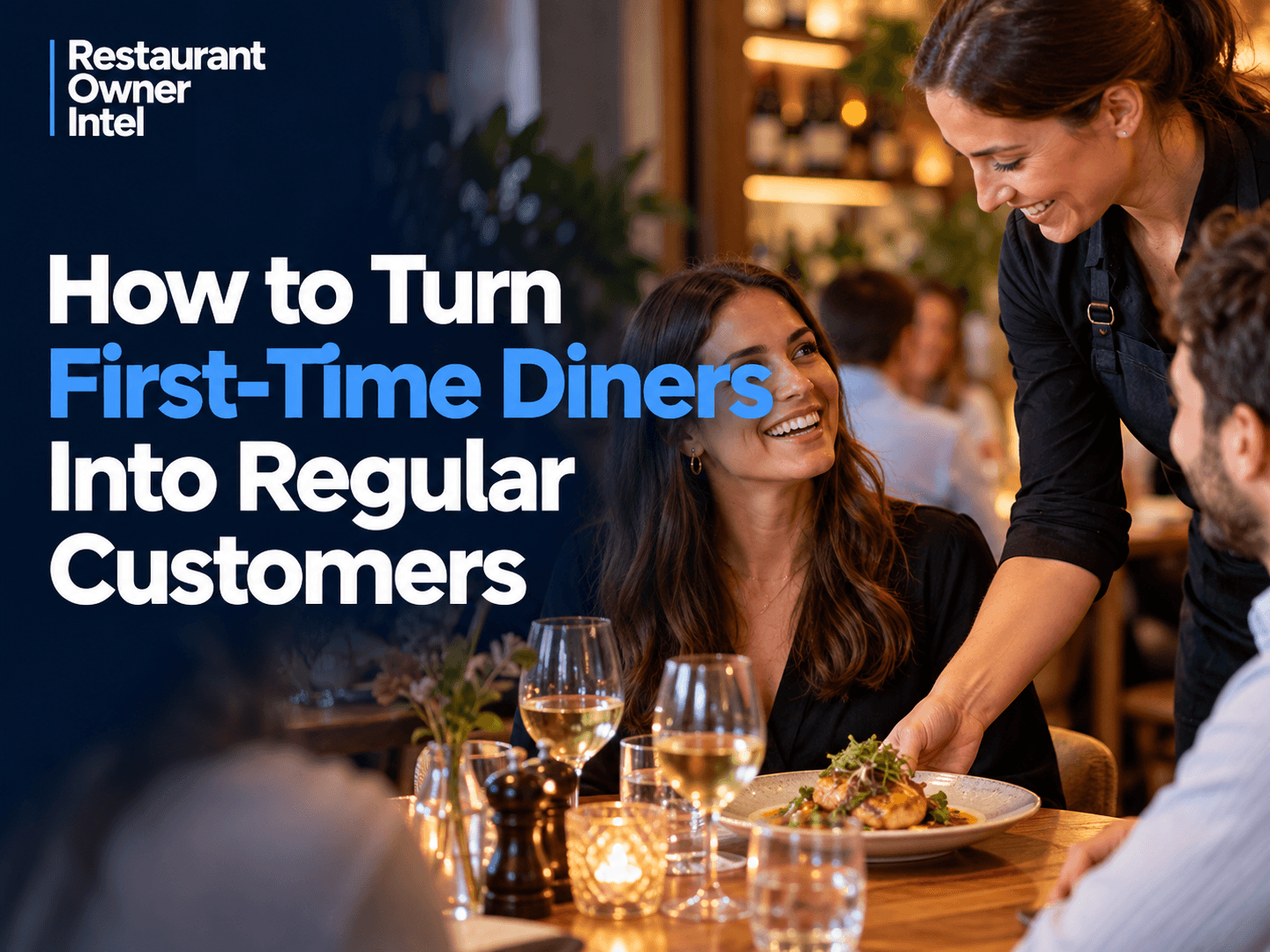
The plates are cleared. The bill is paid. Your guests thank the server, say they had a lovely evening and disappear into the night.
Everything went well.
The food was right. The service was friendly. There were no complaints, no awkward moments, nothing to suggest those customers wouldn't return.
But six months later, you haven't seen them again.
It's a frustrating part of running a restaurant. You can deliver a genuinely enjoyable experience and still fail to earn a second visit.
The problem isn't necessarily your food, your prices or your service. Sometimes, customers simply move on. Another restaurant catches their attention. A friend suggests somewhere different. Life gets busy, and the intention to return gradually fades.
A satisfied customer isn't automatically a returning customer.
That distinction matters because attracting someone new often requires considerable effort. You've worked to build your reputation, maintain your Google presence, create social media content and convince someone to choose your restaurant over dozens of alternatives.
When that customer never returns, you're back to finding someone else to fill the same seat.
Understanding how to turn first-time diners into regular customers means looking beyond the meal itself. It's about creating familiarity, building a connection and making the next visit feel like a natural choice.
And it starts long before the customer leaves.
1. The First Few Minutes Can Shape Whether Customers Return
Think about the last time you walked into a restaurant and immediately felt comfortable.
Perhaps someone greeted you warmly. Maybe the person showing you to your table seemed genuinely pleased you were there. You didn't have to stand awkwardly at the entrance wondering whether anyone had noticed you.
Nothing extraordinary happened.
But you felt welcome.
That feeling matters more than restaurant owners sometimes realise.
Customers might forget the exact ingredients in a dish, but they're more likely to remember whether the experience felt relaxed, awkward, rushed or personal.
A first-time diner is also learning how your restaurant works. They don't know which dishes are particularly good, how generous the portions are or whether the atmosphere will suit them.
Your team has an opportunity to remove that uncertainty.
A simple question can open the conversation:
"Is this your first time dining with us?"
If the answer is yes, your server can offer a little guidance. Perhaps there's a signature dish worth recommending or a particular combination customers enjoy.
The interaction doesn't need to be elaborate.
In fact, it shouldn't be.
A genuine conversation will always feel better than a rehearsed welcome delivered to every table.
Make recognition part of your service
Ask your team to pay attention to first-time guests without making them feel singled out.
A good recommendation, a thoughtful explanation or a brief conversation can turn a pleasant meal into something more personal.
The objective isn't to impress customers with excessive attention.
It's to make them feel comfortable enough to want the experience again.
2. Don't Let Customers Leave Without a Reason to Return
There's a moment during a good meal when customers are particularly receptive to the idea of coming back.
They're enjoying themselves. The food has met their expectations. The restaurant feels like somewhere they'd happily visit again.
Then the bill arrives, everyone says goodbye, and the opportunity disappears.
What if your team gave them a specific reason to return before that happened?
Not a sales pitch. Not an awkward attempt to secure another booking while they're still eating.
Just a relevant suggestion.
Imagine a couple enjoying dinner on a Friday evening.
During a conversation about the menu, their server mentions:
"If you enjoyed the lamb tonight, you'd probably love our Sunday lunch. We do a slow-roasted version that's really popular."
Suddenly, the restaurant isn't just somewhere they visited on Friday.
It's somewhere they could imagine spending a Sunday afternoon.
That small shift matters.
People are more likely to consider returning when they can picture a particular occasion, dish or experience worth coming back for.
A seasonal menu, a midweek special, a Sunday roast or a monthly tasting evening can all provide that reason.
Give your team something specific to recommend
Choose one or two upcoming experiences that deserve attention.
Make sure your team understands what makes them appealing and which customers might enjoy them.
A couple celebrating an anniversary might be interested in your next special dining evening. A family enjoying Saturday lunch might appreciate knowing about your Sunday menu.
The recommendation should fit the conversation.
If it feels natural, it can create interest without making customers feel they're being sold to.
3. The Customer Relationship Shouldn't End When the Bill Is Paid
Picture a customer who enjoyed dinner at your restaurant three weeks ago.
They've been busy since then. Work, family commitments and the usual distractions have pushed that evening further into the background.
Then an email arrives.
You've introduced a new seasonal menu. There's a photograph of a dish that looks particularly appealing, a short description and an easy way to book.
The customer remembers their previous visit.
Perhaps they forward the email to their partner with a simple message: "Fancy going back here?"
That's the value of staying in touch.
Without that reminder, the restaurant might never have crossed their mind.
For an independent restaurant, email marketing can be a particularly useful customer retention tool because it allows you to reach people who have already shown an interest in your business.
You're not trying to persuade a stranger to trust you.
You're reminding someone of an experience they already enjoyed.
Build an email list worth joining
You don't need sophisticated software or a complicated sequence of automated messages to get started.
A simple, permission-based email list can be enough.
Invite customers to subscribe through your website, reservation process or a small sign-up card.
Explain what they'll receive.
Perhaps it's news about seasonal menus, occasional invitations to events or early access to special dining experiences.
Avoid sending emails simply because another week has passed.
Give customers something genuinely worth opening.
And make sure you obtain appropriate marketing consent. A customer's booking details shouldn't automatically become permission to send promotional messages.
The goal is to build a relationship customers welcome, not another source of unwanted emails.
4. Make the Second Visit an Easier Decision
A customer can love your restaurant and still hesitate before booking again.
Perhaps they want to try somewhere new. Maybe they're watching their spending. Or they simply haven't found the right occasion.
A modest incentive can sometimes provide the encouragement they need.
But this is where restaurant owners need to be careful.
Encouraging repeat visits shouldn't mean sacrificing the profit those visits are supposed to generate.
Offering a large discount might fill a table, but it can also attract customers who are interested in the saving rather than the restaurant.
A better approach is to offer something that feels worthwhile to the customer without creating an unreasonable cost for the business.
For example, you might offer a complimentary dessert when a first-time diner returns for another main-course meal within 30 days.
Or invite previous guests to book early for a limited seasonal menu.
The reward doesn't always need to be financial.
Sometimes, access to something interesting is enough.
Check the numbers before making an offer
Imagine you're considering a £10 discount on a meal that normally costs £25.
That discount removes a substantial portion of the sale before you've accounted for food, labour and other costs.
A complimentary item with a relatively low ingredient cost could be a more sensible alternative.
Even then, it needs measuring.
Track how many incentives you distribute, how often they're redeemed and how much returning customers spend.
Compare the additional contribution from those visits with the cost of the promotion.
If customers would have returned anyway, the reward may simply reduce your margin.
A successful retention offer should create profitable additional business, not just more transactions.
5. Remove the Small Frustrations That Stop People Booking Again
Sometimes, the reason a customer doesn't return has nothing to do with their previous experience.
They've decided to come back.
They pick up their phone, search for your restaurant and try to book.
Then something gets in the way.
Your website takes too long to load. The reservation button is buried halfway down the page. Your Google Business Profile shows the wrong opening hours.
Perhaps the booking system makes them enter unnecessary information or doesn't clearly explain whether a table is available.
After a few frustrating attempts, they choose somewhere else.
It's easy to underestimate how quickly a good intention can disappear.
Customers have plenty of dining options. They don't necessarily have the patience to work through a confusing booking process.
Try booking your own restaurant on a phone
Don't use the computer in your office.
Pick up your mobile phone and search for your restaurant as though you've never visited before.
Look at your Google Business Profile. Check your opening hours. Follow the booking link.
Then visit your website and try again.
Can you reserve a table without confusion?
Does the process feel quick and straightforward?
Are your menus current and easy to read?
If you spot a problem, fix it.
Customer retention depends partly on removing obstacles between the decision to return and the booking itself.
A returning guest shouldn't have to work hard to give you more business.
6. Give Customers a Detail They'll Remember Next Week
A great restaurant experience isn't always defined by something dramatic.
Often, it's a small moment that stays with the customer.
A server remembers that someone prefers their coffee without milk.
A chef prepares a thoughtful alternative for a guest with a dietary requirement.
A couple celebrating an anniversary receive a warm acknowledgement without the whole restaurant being drawn into it.
These details can make an evening feel different.
And difference is important.
When customers think about where to eat next weekend, your restaurant is competing with every other place they know.
Good food and competent service are essential, but they might not be enough to make you the first choice.
A distinctive experience gives customers something to remember and talk about.
It might be your signature dish, the atmosphere on a Friday evening or the way your team makes people feel at home.
You don't need to manufacture elaborate gestures.
Look at what your restaurant already does well.
Turn your strengths into consistent experiences
Pay attention to what customers compliment.
Do they mention the friendliness of your team? A particular dessert? The relaxed atmosphere? The way staff handle special occasions?
Those comments reveal what people value.
Now consider whether those strengths are delivered consistently.
A customer who receives excellent service on their first visit but a noticeably poorer experience on their second has little reason to develop loyalty.
The details that make your restaurant memorable need to survive busy shifts, staff changes and difficult evenings.
That's where good service standards become commercially valuable.
7. Find Out Whether Your First-Time Diners Are Actually Coming Back
There's a difference between having a busy restaurant and building a loyal customer base.
A full dining room on Saturday evening looks encouraging.
But how many of those customers have visited before?
How many are trying your restaurant for the first time?
And how many of those new guests will return within the next month or two?
Without some understanding of repeat visits, it's difficult to know whether your customer retention efforts are working.
You might be spending money attracting new diners while overlooking opportunities to bring existing customers back more often.
Your reservation system may already hold much of the information you need.
Some systems can distinguish between first-time and returning customers, show visit histories and help you understand booking patterns.
If yours can't, start with a simpler method.
Record first-time visits where practical and compare them with subsequent bookings.
The information won't always be perfect, particularly when customers walk in without reservations or book under different names.
But even an approximate picture can reveal useful patterns.
What a Small Improvement in Customer Retention Could Mean
Let's say your restaurant welcomes 200 first-time customers during a month.
Over the following 60 days, 40 return.
That's a 20% repeat customer rate.
Now imagine that improvements to your service, follow-up and booking experience increase the rate to 25%.
You'd have 50 returning customers instead of 40.
ILLUSTRATIVE 60-DAY COMPARISON
|
Original repeat rate 20% 40 returning customers |
Improved repeat rate 25% 50 returning customers |
10 additional returning customers
At an average spend of £40 each
+£400
Illustrative additional revenue before costs, assuming one extra visit per additional returning customer.
Ten additional customers might not sound particularly exciting.
But those ten customers represent people who already know your restaurant and have chosen to spend money with you again.
If some become regular visitors, their longer-term value could be considerably higher.
That's why measuring repeat business is useful.
It helps you see beyond today's takings and understand whether your restaurant is developing relationships that generate future revenue.
The Difference Between Serving Customers and Keeping Them
Imagine two restaurants operating on the same street.
Both serve good food. Both have friendly staff. Both attract a steady flow of new customers.
At the first restaurant, each visit is treated as a separate transaction.
The guest arrives, eats, pays and leaves. If they return, that's welcome. If they don't, nobody really notices.
At the second restaurant, the team pays attention to what happens after that first experience.
Staff introduce customers to other reasons to visit. Guests can subscribe to useful updates. The booking process is straightforward. Management reviews how often people return.
Neither restaurant needs an expensive loyalty programme.
But the second has made repeat business part of the way it operates.
That difference can become increasingly important when trading conditions are difficult.
A restaurant that depends entirely on attracting new diners must keep finding fresh demand.
A restaurant with a dependable base of returning customers has more opportunities to generate bookings from people who already trust it.
The challenge is making customer retention a normal part of everyday operations rather than an occasional marketing campaign.
A Practical Customer Retention Audit for Your Restaurant
Think about the last ten first-time customers who visited your restaurant.
Would any of them have a specific reason to come back?
Would they know about your next menu, event or special evening?
Could you contact them again, with their permission?
And if they decided to book tomorrow, would the process be effortless?
Use this short audit to identify where customers may be slipping away.
Five-point retention audit
- ☐ First-time diners receive a genuinely personal welcome.
- ☐ Staff can recommend a specific reason to visit again.
- ☐ Customers have an easy, consent-based way to join our email list.
- ☐ Our website and Google booking links work properly on mobile.
- ☐ We have a way to identify and measure repeat customer visits.
Products / Tools / Resources
You don't need an expensive collection of software to improve restaurant customer retention. A few well-chosen tools can make it easier to recognise returning guests, stay in touch and understand which efforts are producing bookings.
OpenTable or SevenRooms — Reservation and guest management
Depending on the product and plan, these platforms offer tools for recording guest preferences, reviewing visit histories and managing customer relationships. They're worth evaluating if you want your team to recognise repeat guests more consistently.
Check pricing, customer data access and integrations before committing.
Mailchimp — Restaurant email marketing
Useful for building a permission-based email list and sending updates about seasonal menus, events and dining opportunities.
Start with a simple monthly email rather than building complicated automated campaigns before you have enough subscribers.
Google Business Profile — Making return visits easier
A free and important resource for keeping your restaurant's opening hours, contact details, website and booking information accurate.
Review your profile regularly, especially when menus, hours or reservation arrangements change.
Loyalzoo — Customer loyalty programmes
A digital loyalty platform worth exploring if you want to test rewards for returning customers without relying on paper stamp cards.
Before introducing a programme, calculate the likely reward costs and make sure the structure encourages profitable visits rather than unnecessary discounts.
Google Sheets — A simple repeat customer tracker
If your reservation system doesn't provide useful retention reports, a spreadsheet can be a practical starting point.
Track first-time customers by month, the number who return within 30 or 60 days, repeat visit rates and the results of any incentives.
Use aggregated or appropriately protected customer data, and avoid keeping unnecessary personal information.
The figures don't have to be sophisticated. They need to be consistent enough to help you recognise whether more first-time diners are becoming regular customers.



0 Comments
Join the conversation
Be the first to comment
Share your thoughts above.