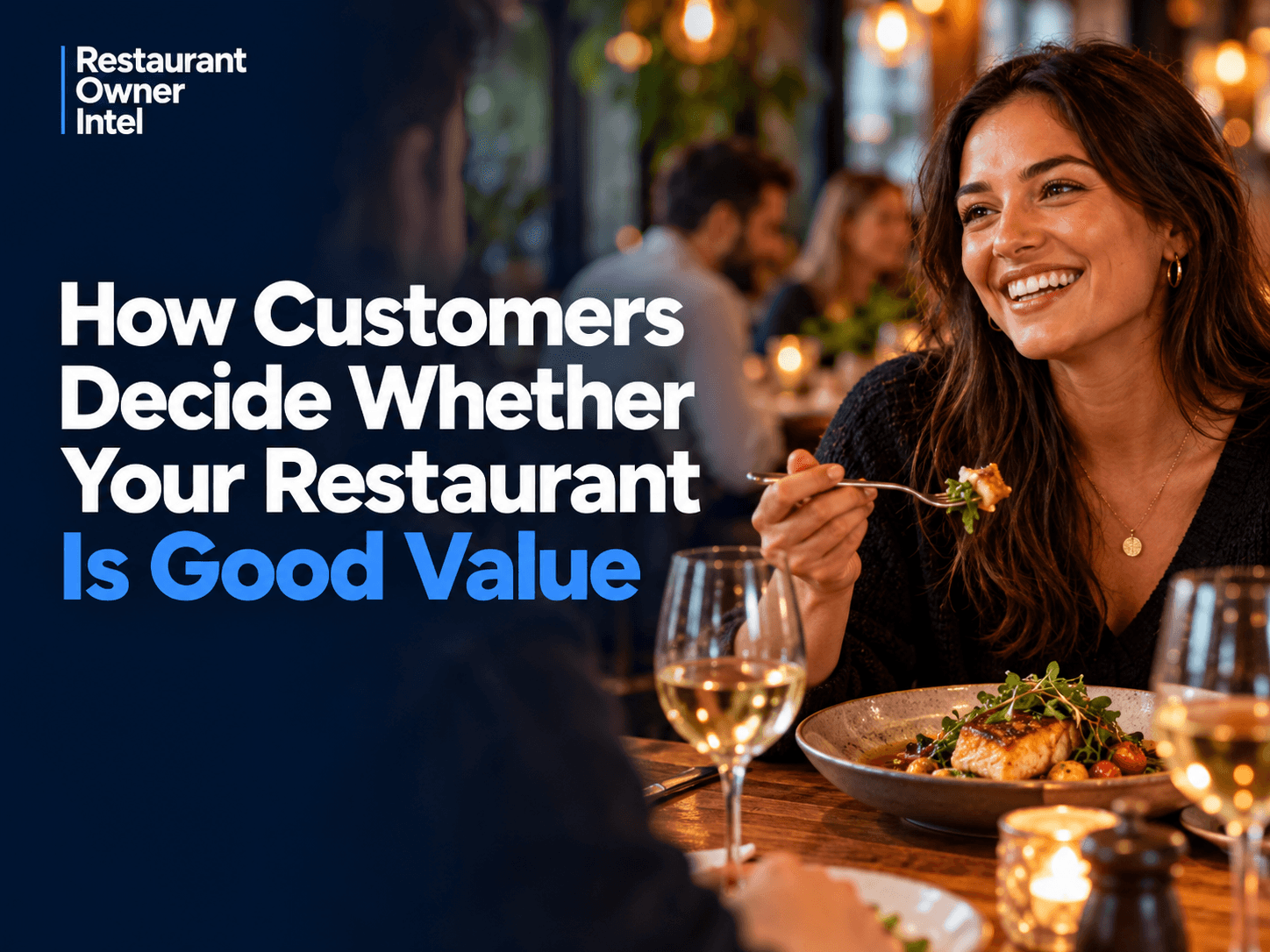
How Customers Decide Whether Your Restaurant Is Good Value
How Customers Decide Whether Your Restaurant Is Good Value: understand what shapes perceived value, improve customer satisfaction and protect your margins.
A customer finishes their meal, pays the bill and leaves your restaurant. The food was good, the service was friendly and nothing went particularly wrong. Yet they never return. Another customer spends exactly the same amount at a different restaurant and leaves feeling they've had an excellent experience. They recommend it to friends and book another table. What explains the difference? It often comes down to perceived value. Understanding how customers decide whether your restaurant is good value is an important part of restaurant pricing. It helps explain why some restaurants can charge higher prices without losing customer loyalty, while others struggle to justify even modest increases. The important point is that customers are not simply calculating the cost of their food. They are judging the entire experience against what they paid. And that creates opportunities to improve how customers perceive your restaurant without automatically reducing your prices. Good Value Does Not Always Mean CheapA £45 meal can feel like excellent value. A £15 meal can feel expensive. The difference is what the customer believes they received for their money. Think about two restaurants. Restaurant A charges £18 for a main course. The food is acceptable, but the portion looks small, the presentation is basic and the service feels rushed. Restaurant B charges £24 for a similar dish. The ingredients appear better, the plate looks appealing, the staff are attentive and the atmosphere makes the occasion feel special. Despite the higher price, Restaurant B may leave customers feeling they received better value. That does not mean customers will pay any price for a pleasant experience. It means price is only one part of the decision. Customers are really asking themselves: "Was that experience worth what I spent?" Your restaurant's job is to make the answer more likely to be yes. 1. Customers Compare Your Prices With Their ExpectationsCustomers rarely arrive at a restaurant without some idea of what they expect to pay. They may have looked at your online menu, visited similar restaurants or remembered what they paid on their last visit. These expectations create a reference point. If your prices are noticeably higher than expected, customers will look for reasons that justify the difference. Those reasons might include:
If customers cannot identify what makes your restaurant worth the additional cost, they may conclude that it is overpriced. What restaurant owners can doLook at three or four restaurants that your customers are likely to consider as alternatives. Compare the price of a typical meal, not just individual dishes. Then ask yourself: What does my restaurant offer that makes its price feel justified? You do not necessarily need to match competitors' prices. You need to understand the comparison customers are making. 2. Portion Size Has a Strong Influence on Perceived ValueCustomers may not know your ingredient costs, labour expenses or gross profit margins. But they can immediately see what arrives on their plate. A dish that looks disappointing in size can create a negative impression before the customer takes the first bite. This is particularly important when customers are already sensitive to rising restaurant prices. However, increasing every portion is not necessarily the answer. Larger portions can increase food costs, create waste and reduce profitability. The better approach is to make portions feel appropriate for the price and style of your restaurant. What restaurant owners can doReview your most popular dishes from the customer's perspective. Consider the size of the plate, the balance of ingredients, the presentation and how filling the meal is likely to feel. For example, a pasta dish served in an oversized bowl may appear smaller than the same quantity presented in more suitable tableware. Improving presentation can strengthen perceived value without increasing ingredient costs. The objective is not to make every plate look enormous. It is to avoid customers feeling disappointed by what they receive. 3. The Overall Experience Influences Whether the Price Feels FairA customer paying £30 for dinner is not only buying food. They are also paying for the experience of visiting your restaurant. That includes the welcome, the surroundings, the service and how comfortable they feel throughout the meal. Small problems can reduce perceived value. A customer might enjoy their main course but remember waiting too long for drinks, struggling to attract a server's attention or sitting at a table that had not been properly cleaned. Individually, these issues may seem minor. Together, they can make the bill feel harder to justify. The reverse is also true. A warm welcome, well-timed service and a comfortable atmosphere can make customers feel they received more for their money. What restaurant owners can doLook for inexpensive improvements that strengthen the experience. These might include better table presentation, clearer communication about waiting times, more attentive service or making sure customers receive their bill promptly. Improving perceived value does not always require spending more money. Sometimes it means removing the frustrations customers are already noticing. 4. Unexpected Charges Can Damage the Feeling of Good ValueCustomers are particularly sensitive to costs they did not anticipate. A meal that initially appears reasonably priced can feel expensive once additional charges appear. Examples include:
The problem is not necessarily the charge itself. It is the difference between what customers expected to pay and what they actually paid. A customer who anticipated spending £50 but receives a £70 bill may feel dissatisfied, even if the food was good. What restaurant owners can doReview your menu and ordering process for potential surprises. Make additional charges clear before customers order. If a main course does not include sides, explain that clearly. If you offer optional upgrades, make the additional cost obvious. Transparent pricing helps customers feel in control of their spending and reduces the risk of an unpleasant surprise when the bill arrives. 5. Menu Descriptions Help Customers Understand What They Are Paying ForConsider these two menu descriptions. Option A: Roast chicken – £22 Option B: Herb-roasted chicken, served with garlic potatoes, seasonal vegetables and a rich chicken jus – £22 The second description gives customers a clearer understanding of what they will receive. It also makes the dish easier to imagine. This matters because customers often judge value before the food reaches their table. A menu that provides little detail forces customers to make assumptions about ingredients, preparation and portion size. A clear description helps explain the price. However, descriptions must accurately reflect what the kitchen serves. Overpromising can make disappointment more likely. What restaurant owners can doReview your five best-selling main courses. Check whether their descriptions explain the ingredients, preparation and accompaniments that make each dish appealing. Avoid filling the menu with unnecessary adjectives. Focus on useful details that help customers understand why the dish is worth ordering. Better descriptions can improve perceived value without changing the recipe or reducing your margin. 6. Consistency Determines Whether Customers ReturnA restaurant can deliver excellent value on one visit and disappointing value on the next. For customers, that inconsistency creates uncertainty. Imagine someone visits your restaurant and enjoys a generous, beautifully presented meal with attentive service. They return three weeks later. This time, the portion is noticeably smaller, the dish arrives lukewarm and the service is slow. Even if the price has not changed, the customer may feel they received poorer value. They are comparing the second experience with the first. That comparison can influence whether they visit again. What restaurant owners can doPay particular attention to consistency in your most popular dishes. Use clear portion standards, agreed presentation methods and basic service expectations. Check that customers receive a similar experience regardless of which chef is working or how busy the restaurant becomes. Consistency protects the value customers associate with your business. It also gives regular customers confidence that returning will be worth their money. 7. Customers Judge Value Against the OccasionA restaurant can represent good value for one occasion and poor value for another. Someone grabbing a quick weekday lunch may prioritise speed, convenience and affordability. The same customer celebrating an anniversary may be happy to spend considerably more for better surroundings, attentive service and a memorable evening. This is why restaurant pricing should reflect the experience customers are seeking. A casual neighbourhood restaurant does not need to deliver the same experience as a fine-dining venue. But it does need to meet the expectations created by its positioning and prices. What restaurant owners can doThink about the main reasons customers visit your restaurant. Are they coming for quick lunches, family meals, date nights, celebrations or convenient midweek dinners? Identify what matters most for those occasions. For a lunch customer, good value might mean a satisfying meal served within 40 minutes. For a family, it might mean clear pricing, suitable portions and a relaxed atmosphere. For a couple celebrating, it might mean attentive service and a sense that the evening is special. Understanding the occasion helps you focus your spending on the parts of the experience customers actually value. How Customers Decide Whether Your Restaurant Is Good Value: A Simple AuditYou can assess your restaurant's perceived value without commissioning expensive research. Start by looking at your business through the eyes of someone visiting for the first time. Ask yourself:
Pay particular attention to that final question. Customer reviews can reveal whether your pricing is creating resistance. Comments such as "a little expensive for what you get", "small portions for the price" or "not worth the money" can identify specific problems. Do not treat every complaint about price as evidence that you need to charge less. Look for repeated themes. If customers regularly praise the food but criticise portion sizes, the issue may be presentation or expectations rather than the actual price. If they complain about expensive drinks, you may need to review your drinks pricing or offer a wider range of price points. The goal is to identify what is weakening the perception of value before making changes that could damage profitability. Why Discounting Is Not Always the Right SolutionWhen customers begin describing a restaurant as expensive, reducing prices can seem like the obvious response. But discounting does not necessarily solve the underlying problem. If customers feel the service is poor, the food is inconsistent or the portions are disappointing, a lower price may only make those weaknesses slightly easier to tolerate. It can also reduce your profit on every sale. Consider a dish selling for £20 with £7 in variable costs. ILLUSTRATIVE PRICING EXAMPLE Original contribution per dish: £13 £20 selling price − £7 costs After a 10% price reduction: £11 £18 selling price − £7 costs A 10% reduction in selling price produces a 15.4% reduction in contribution per dish, assuming variable costs remain unchanged. To generate the same total contribution, you would need to sell approximately 18% more dishes. That additional volume may be achievable, but it should be a deliberate commercial decision rather than an automatic response to complaints about price. Before discounting, ask whether you could improve the customer's experience, communicate the value more clearly or adjust a particular dish without reducing prices across the menu. The Best Pricing Strategy Makes Value Easier to RecogniseCustomers do not have access to your food cost percentages, wage bills, rent or energy costs. They cannot see the financial pressures behind your menu prices. They judge what is in front of them. That means your restaurant must make its value visible through the food, service, atmosphere and overall experience. A higher price becomes easier to accept when customers understand what they are receiving. A reasonable price becomes harder to justify when the experience disappoints. For independent restaurant owners, the commercial opportunity is to strengthen the parts of the experience customers notice while keeping costs under control. You do not need to be the cheapest restaurant in your area. You need customers to feel that the money they spent was worthwhile. One Action to Take This WeekChoose your three best-selling main courses and review them as though you were a first-time customer. Look at the menu descriptions, prices, portion presentation and accompaniments. Then read recent customer reviews for any comments about value, price or portion size. Identify one improvement that could make those dishes feel more worthwhile without significantly increasing your costs. The aim is not simply to charge less. It is to give customers a stronger reason to feel good about what they paid — and a reason to come back. |
Restaurant Owner Resource |
Free AI Restaurant Growth Plan |
Curious what growth opportunities your restaurant might be missing? Our free AI-powered Growth Plan analyses your restaurant's online presence, marketing and growth goals to identify opportunities you may not have considered.
|

Oct 18, 2026
How to Fill Quiet Restaurant Nights Without Offering Discounts
Empty tables on a Tuesday or Wednesday can be expensive. But cutting prices isn't the only way to bring customers through the door. These practical restaurant marketing ideas can help you increase midweek bookings, give diners a reason to visit and protect your profit margins.

Oct 18, 2026
Are Delivery Apps Bringing You Sales or Taking Too Much Margin?
Delivery apps can keep your kitchen busy and your sales figures climbing. But how much of that money are you actually keeping? Here's how to uncover the real cost of restaurant delivery apps, protect your profit margins and make every order work harder for your business.

Oct 17, 2026
Why Customers Choose One Restaurant Over Another (And How to Win Their Business)
Why Customers Choose One Restaurant Over Another comes down to more than food and price. Understanding the psychology behind dining decisions can help your restaurant attract more customers, win bookings and build repeat business.
Oct 16, 2026
Revenue Is Up. But Is Your Restaurant Actually Doing Better?
Higher sales can create the impression of a healthier restaurant business. But unless customer numbers, operating costs and profit margins are improving too, revenue growth may be hiding a very different story.
0 Comments
Join the conversation
Be the first to comment
Share your thoughts above.