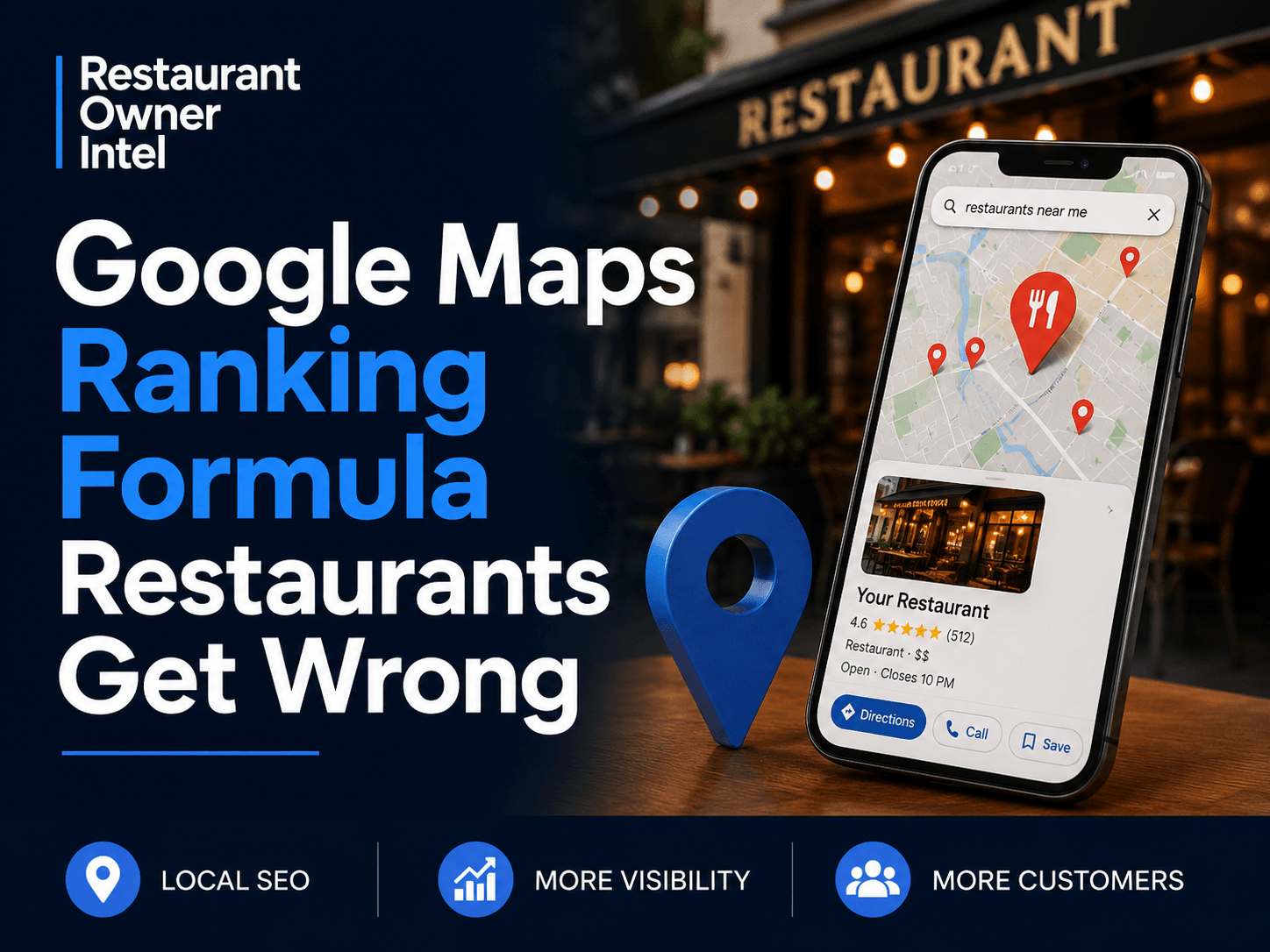
Google Maps Ranking Formula Restaurants Get Wrong
These local SEO tips to rank my restaurant higher on Google Maps will help you improve visibility, attract more local diners, and outperform nearby competitors.
Most restaurant owners think Google Maps rankings are mainly about getting more reviews.
Reviews matter, but they're only one piece of the puzzle.
Google's local ranking system looks at dozens of signals, and small technical details often separate the restaurants that appear in the Local Pack from those that don't.
These local SEO tips to rank my restaurant higher on Google Maps explain what really makes the difference.
Claim and Complete Your Google Business Profile With Every Field Filled
Most restaurants claim their Google Business Profile but leave half the fields empty. This wastes your biggest ranking opportunity. Google rewards complete profiles with better visibility in local searches.
Start by logging into your Google Business Profile dashboard. Fill in your primary category as the most specific option available. Add secondary categories only if they truly describe what you serve. A pizza restaurant shouldn't list "Italian Restaurant" and "Fast Food" together.
Write a business description using natural language about your cuisine and atmosphere. Include your neighborhood name and the types of dishes you specialize in. Keep it under 750 characters. Mention any unique features like outdoor seating or live music.
Upload your hours for every single day of the week. Add special hours for holidays well in advance. Google needs this data to show accurate information to searchers. Wrong hours lead to frustrated customers and negative reviews.
The attributes section matters more than most owners realize. Select every attribute that applies to your restaurant honestly. Outdoor seating, wheelchair accessibility, free WiFi, accepts reservations. Each attribute helps Google match you to relevant searches.
Local SEO Tips to Rank My Restaurant Higher on Google Maps Through Strategic Photo Uploads
Photos influence both rankings and click rates on Google Maps results. Restaurants with 100+ photos rank significantly better than those with just a handful. Quality matters but quantity creates momentum.
Upload at least three photos per week on a consistent schedule. Monday mornings work well for most restaurants. Google interprets regular uploads as a sign of an active business. Active businesses get ranking preference.
Take photos of individual menu items with good lighting and composition. Add photos of your dining room from multiple angles. Capture your exterior during daytime so people can recognize your building. Show your staff preparing food or serving customers.
Name your photo files before uploading them. Use descriptive names like "margherita-pizza-downtown-seattle.jpg" instead of "IMG_4721.jpg". Google reads these file names. They provide context about your location and offerings.
Avoid stock photos entirely. Google can detect them and may devalue your profile. Authentic photos from your actual restaurant perform better. They also build more trust with potential customers.
Get Reviews From Real Customers Without Violating Google's Policies
Review quantity and recency both affect your Google Maps ranking position. You need a steady stream of new reviews each month. Five reviews this week beats fifty reviews from two years ago.
Create a simple review request process for your staff. Train servers to mention reviews during the payment process. Provide a short link or QR code that goes directly to your review page. Make leaving a review take less than 30 seconds.
Send follow-up emails or texts to customers who provide contact information. Wait 24 hours after their visit. Include a direct link to leave a review. Keep the message short and personal.
Never offer discounts or incentives in exchange for reviews. Google prohibits this practice. They can detect patterns of incentivized reviews. Violations can result in review removal or profile suspension.
Respond to every review within 48 hours of posting. Thank positive reviewers by name and mention specific details they mentioned. Address negative reviews professionally without getting defensive. Google tracks your response rate and uses it as a ranking signal.
Local SEO Tips to Rank My Restaurant Higher on Google Maps With Citation Consistency
Your restaurant's name, address, and phone number appear across hundreds of websites. These mentions are called citations. Inconsistencies in this information hurt your rankings directly.
Search for your restaurant name plus your city on Google. Look at the top 20 results. Check how your information appears on Yelp, TripAdvisor, and other directories. Write down every variation you find.
Standardize your business name across all platforms. If you're "Mario's Pizza" don't use "Mario's Pizzeria" elsewhere. Choose one version and stick with it everywhere. The same applies to abbreviations in your address.
Your phone number should be identical on every single platform. Don't use different numbers for different directories. Pick your main contact number and update everything to match it. This consistency signals legitimacy to Google.
Submit your information to major restaurant directories manually. Don't rely on automated services that might introduce errors. Focus on Yelp, TripAdvisor, OpenTable, and Zomato first. Then move to local chamber of commerce listings and tourism sites.
Build Local Links From Community Websites and Local News Sources
Links from other local websites tell Google your restaurant is part of the community. These local signals boost your Maps ranking more than generic directory links. Quality matters far more than quantity here.
Sponsor a local sports team or community event. Ask for a link on their website sponsors page. This creates a natural local connection. Most teams and organizations gladly add sponsor links.
Reach out to local food bloggers in your area. Invite them for a complimentary meal in exchange for honest coverage. Most food bloggers maintain well-established sites with strong local relevance. A single link from a trusted local food blog carries significant weight.
Contact your local newspaper about featuring your restaurant. Pitch a unique story angle about your chef, your ingredients, or your history. Local news sites rank well and pass strong authority. Getting featured often includes a link to your website.
Partner with nearby businesses for cross-promotion opportunities. A hotel might link to recommended restaurants. A theater might list nearby dinner options. These natural local links help your Google Maps visibility.
Local SEO Tips to Rank My Restaurant Higher on Google Maps Using Posts and Updates
Google Business Profile posts appear directly in your Maps listing. They show special offers, events, and updates to potential customers. More importantly, they signal freshness to Google's ranking algorithm.
Create a new post at least once per week. Announce daily specials, new menu items, or upcoming events. Keep posts between 100 and 300 words. Include a clear call to action like "Reserve your table today."
Add a photo to every single post you publish. Posts with images get more engagement than text-only updates. Higher engagement sends positive signals to Google about your business relevance.
Use the event post type when you host special occasions. Live music nights, wine tastings, or holiday celebrations all qualify. Event posts appear more prominently in search results than standard updates.
Posts expire after seven days for most types. This means you need consistent publishing to maintain visibility. Set a calendar reminder to create new posts weekly. Consistency matters more than occasional bursts of activity.
Target Neighborhood-Specific Keywords on Your Website Pages
Your website supports your Google Maps ranking indirectly but powerfully. Google looks at your site to verify your location and relevance. The right keywords help Google understand where you serve customers.
Create dedicated pages for each neighborhood you serve. A downtown location might have pages for surrounding districts within walking distance. Use the neighborhood name in the page title and first paragraph.
Write about local landmarks near your restaurant naturally in your content. Mention the park across the street or the theater next door. These geographic references strengthen your local relevance signals.
Include your full address in your website footer on every page. Use schema markup to identify this information as your business location. Schema helps Google extract and verify your address information accurately.
Add an embedded Google Map showing your restaurant location. This creates another connection between your website and your Maps listing. Make sure the map uses the same address as your Business Profile.
Monitor Your Competitors and Track Your Ranking Progress Monthly
You can't improve what you don't measure. Tracking your Google Maps position shows what's working. It also reveals when competitors make moves that affect your visibility.
Search for your main keywords from different locations around your service area. Note which restaurants appear in the top three map results. These positions get the most clicks and calls from searchers.
Check competitor profiles for changes in their photo count or review numbers. If a competitor suddenly jumps in rankings, investigate what they changed. You can often spot new review campaigns or profile updates.
Use Google Search Console to see which queries bring traffic to your website. Filter for searches containing your city or neighborhood names. These show how people actually search for restaurants like yours.
Track your total review count and average rating monthly. Set specific goals like gaining 15 new reviews per month. Measure your progress and adjust your review request process accordingly.
Understanding these local SEO tips to rank my restaurant higher on Google Maps gives you a clear advantage over competitors who ignore these details.
Google Maps rankings rarely improve because of one big change. They improve because restaurants consistently get dozens of small things right. Choose one area from this guide, improve it this week, then move on to the next. Six months from now, those small improvements can make a significant difference to how often local diners discover your restaurant.
How long does it take to see ranking improvements on Google Maps?
Can I rank well on Google Maps without a website?
How many reviews do I need to rank in the top three?
Should I respond to fake or unfair negative reviews?
Does my restaurant category choice affect my Google Maps ranking? |
Restaurant Owner Resource |
Free AI Restaurant Growth Plan |
Curious what growth opportunities your restaurant might be missing? Our free AI-powered Growth Plan analyses your restaurant's online presence, marketing and growth goals to identify opportunities you may not have considered.
|
Oct 19, 2026
Restaurant Technology: Which Tools Are Actually Worth the Investment?
From POS systems and booking software to AI and staff scheduling, here's how to choose restaurant technology that earns its place in your budget, protects your margins and makes running your business easier.
Oct 18, 2026
How to Fill Quiet Restaurant Nights Without Offering Discounts
Empty tables on a Tuesday or Wednesday can be expensive. But cutting prices isn't the only way to bring customers through the door. These practical restaurant marketing ideas can help you increase midweek bookings, give diners a reason to visit and protect your profit margins.

Oct 18, 2026
Are Delivery Apps Bringing You Sales or Taking Too Much Margin?
Delivery apps can keep your kitchen busy and your sales figures climbing. But how much of that money are you actually keeping? Here's how to uncover the real cost of restaurant delivery apps, protect your profit margins and make every order work harder for your business.

Oct 17, 2026
Why Customers Choose One Restaurant Over Another (And How to Win Their Business)
Why Customers Choose One Restaurant Over Another comes down to more than food and price. Understanding the psychology behind dining decisions can help your restaurant attract more customers, win bookings and build repeat business.
0 Comments
Join the conversation
Be the first to comment
Share your thoughts above.