
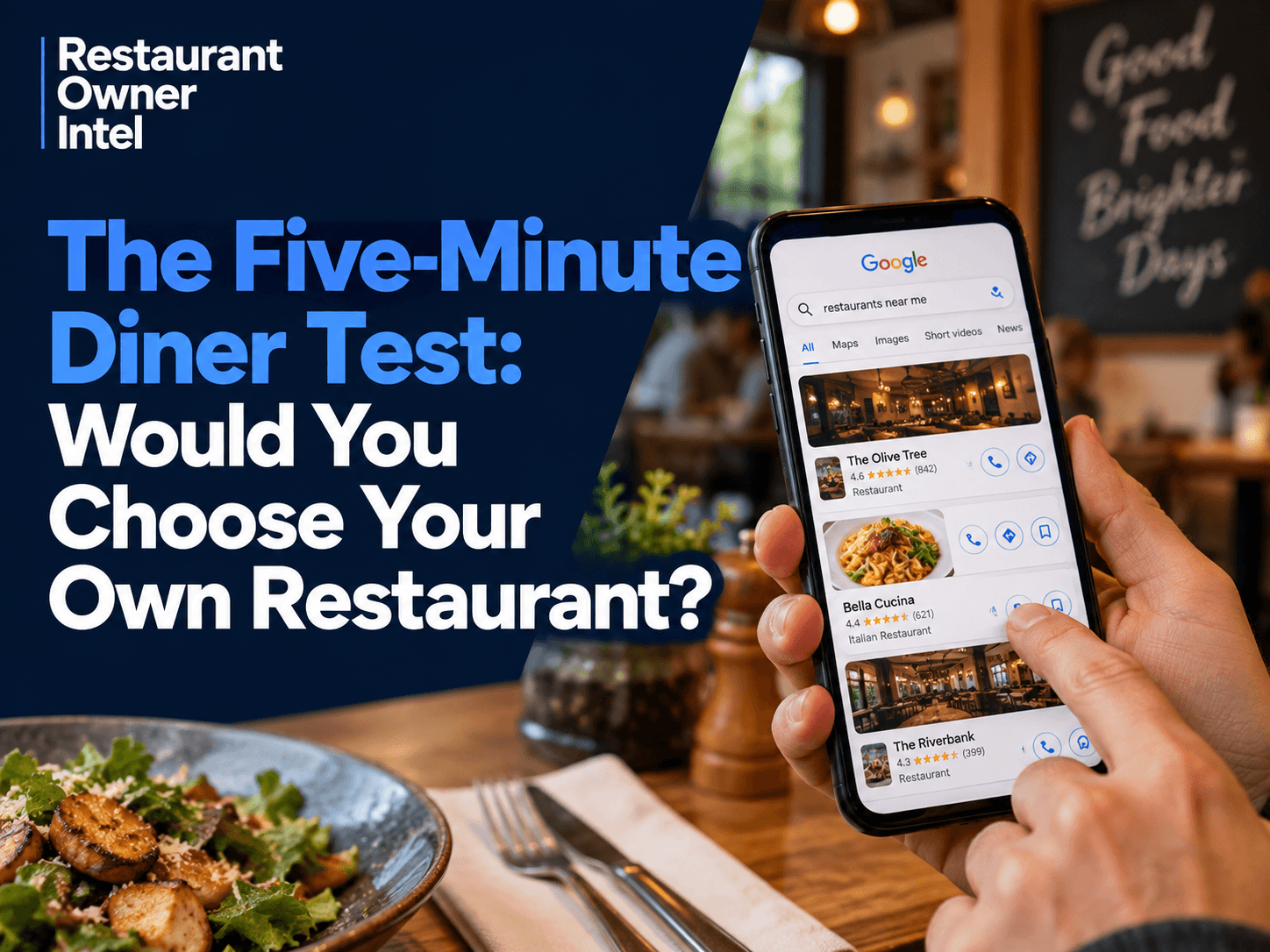
The Five-Minute Diner Test: Would You Choose Your Own Restaurant?
Google Business Profile for restaurants: use this five-minute competitor test to spot weak photos, reviews, menus and booking friction before they cost you customers.
Most restaurant owners look at their Google Business Profile the wrong way. They check whether the opening hours are correct. They make sure the phone number works. They look at the star rating, perhaps upload a few photos, check the menu link and decide the profile is in reasonable shape. Everything is there. But that's an owner's audit. A customer isn't auditing your profile for accuracy. They're using it to make a decision. They might be sitting at home looking for somewhere to eat tonight. They might be walking through town searching for lunch. They might have friends visiting at the weekend and want somewhere that feels like a safe choice. And they probably aren't looking at your restaurant alone. They're comparing you with other restaurants nearby. That changes the question completely. The useful question isn't: "Is our Google Business Profile good?" It's: "If I knew nothing about these restaurants except what Google showed me, which one would I choose?" That's the Five-Minute Diner Test. It exposes weaknesses that are difficult to see when you only inspect your own profile. Stop auditing your profile in isolationImagine three restaurants. Restaurant A has a respectable rating, accurate opening hours, a menu link and 150 photographs. Restaurant B has similar information. Restaurant C does too. Look at each profile separately and all three might appear perfectly acceptable. Now behave like a customer. Search for the type of restaurant you operate in your local area. Open your profile and two realistic competitors. Give yourself five minutes to decide where you're eating. Suddenly, the differences become much easier to see. One restaurant's first photographs show bright dishes, a busy dining room and an attractive exterior. Another opens with dark customer photos taken several years ago. One has recent reviews describing specific dishes, friendly staff and a good atmosphere. Another has plenty of reviews, but the most visible recent comments include complaints that haven't received a response. One restaurant makes its menu easy to find and understand. Another sends you through several clicks before you can work out what dinner might cost. One makes booking obvious. Another makes you hunt for a website, navigate a slow page and eventually find a reservation button. None of these differences necessarily tell you which restaurant serves the best food. But customers don't have access to the complete restaurant experience when they're choosing. They have decision evidence. That's the distinction restaurant owners need to understand. Your Google Business Profile isn't simply a collection of business information. It's a collection of evidence a potential customer uses to reduce uncertainty. And your evidence is being judged against somebody else's evidence. A profile can therefore be perfectly accurate and still be commercially weak. That gives you a useful rule: Don't ask whether your Google profile is complete. Ask whether it makes choosing your restaurant easier. The difference sounds small. It changes what you notice. Compare the decision experience, not the featuresThe Five-Minute Diner Test works best when you stop counting features and start watching what happens to your confidence. Take your restaurant and two nearby competitors a customer could realistically consider. Don't automatically choose the restaurants you regard as your closest competitors. Choose restaurants that appear alongside you when somebody searches with genuine dining intent. Then look at six things: photos, reviews, menu, opening information, booking or contact options, and your overall confidence at the end. The important part is that you experience them in sequence, as a customer would. Start with the photos. Don't ask, "Do we have enough photos?" Ask, "What do I understand about this restaurant from the first images I see?" Can you quickly see the food? Can you understand the atmosphere? Can you tell whether it feels casual, premium, family-friendly, lively, intimate or somewhere suitable for a particular occasion? Can you see what the dining room actually looks like? The competitor with fewer photographs may create more confidence because the first images answer more useful questions. Then move to reviews. Again, don't reduce the comparison to star ratings. Read what a potential diner can see. What are recent customers talking about? Are there recurring positives? Do people mention particular dishes? Does the restaurant respond when something goes wrong? Are recent reviews reinforcing the experience suggested by the photographs? You're looking for reassurance and uncertainty. Then try to answer one basic customer question: What could I eat here, and roughly what will it cost me? A menu technically existing somewhere online isn't the same as a customer being able to use it easily. Imagine a couple deciding between three local restaurants for Friday evening. The first restaurant has appealing food photos, but its menu link leads to an awkward website where the menu is difficult to find. The second has a clearly accessible menu with recognisable dishes, prices and enough information to understand the offer. The third has a downloadable menu, but it appears outdated and doesn't match some of the dishes shown in recent photos. As the owner of the first restaurant, you may know your food is excellent. The customer doesn't. Restaurant two has removed more uncertainty. Now check the basics. Are the opening hours clear? Does anything create doubt about whether the restaurant will actually be open when the customer wants to visit? Is the address straightforward? Can they call if they need to? Finally, try to take the next step. If you accept bookings, how quickly can somebody get from interest to attempting to reserve a table? This is where owners often underestimate small amounts of friction. A customer may have become interested because of the photos, reassured by the reviews and convinced by the menu. Then they reach the booking stage and encounter confusion. The competitor's booking process is clearer. The customer switches. You don't necessarily lose that booking because the competitor looked dramatically better. You can lose because they were easier to choose. That's an important distinction. Customers don't always choose the restaurant with the strongest profile. They can choose the restaurant with the fewest unresolved questions. That principle gives you a much sharper way to assess Google. Instead of asking, "What should we add to our profile?" ask: "What question does the customer still have that our competitor answers faster?" That question can uncover surprisingly practical improvements. Perhaps customers can't tell what your restaurant looks like inside. Perhaps your best dishes are buried beneath dozens of weaker photographs. Perhaps the menu creates uncertainty around pricing. Perhaps reviews repeatedly praise something valuable that you aren't showing anywhere else. Perhaps an unanswered complaint creates unnecessary doubt. Perhaps your opening hours are accurate, but a competitor communicates availability more clearly. Perhaps your profile creates plenty of interest but the next action isn't obvious. The weakness only becomes obvious through comparison. Run the test like a customer, then fix it like an ownerSet aside five minutes and search Google using a phrase a potential customer might genuinely use. Choose your restaurant and two nearby alternatives. Then give each one the same treatment.
Don't give yourself points for knowing information a customer wouldn't know. That's crucial. You know that the photograph of the dining room is outdated because you refurbished six months ago. The customer doesn't. You know the menu on the website isn't the current version. The customer doesn't. You know somebody normally answers the phone immediately. The customer doesn't. You know the negative review complaining about slow service happened on a night when two members of staff called in sick. The customer doesn't. For the duration of the test, your internal knowledge doesn't count. Judge only the evidence on the screen. This prevents one of the biggest problems with owner-led audits: familiarity fills in the gaps. You can't easily experience your own restaurant as a stranger because you already know too much about it. Comparison helps break that familiarity. A competitor's profile makes missing information on your own profile easier to notice. Their strong interior photography can reveal how little atmosphere yours communicates. Their clear menu can reveal friction you've stopped noticing. Their recent owner responses can make your unanswered reviews suddenly look different. That doesn't mean you should copy competitors. The objective isn't to make three restaurants look identical. You're looking for places where another restaurant communicates its own experience more clearly than you communicate yours. Once you've finished, don't create a huge improvement list. Identify the first confidence gap. That's the earliest point in the customer's decision where another restaurant starts feeling easier, clearer or safer to choose. Fix that first. If your photos create the gap, improve the visible photo experience before worrying about minor profile details. If customers reach the menu and confidence drops, fix the menu journey. If everything looks convincing until they try to book, work on the route from interest to reservation. Then repeat the Five-Minute Diner Test. Your Google Business Profile doesn't need to win an imaginary competition for the "best profile." It needs to help a real diner make a decision. So open Google, put your restaurant beside two nearby alternatives and give yourself five minutes. Then ask the question that matters: If I didn't own this restaurant, and all I had was the evidence in front of me, would I choose it? If the answer is no, don't defend the restaurant. Find the first moment your confidence changed. That's where your next improvement starts. Try This With AIUse the AI you're already using: ChatGPT, Claude, Gemini, Grok, Meta AI, Copilot, or another general-purpose AI assistant. Replace the example information inside the brackets with your own information, then copy and paste the complete prompt into your AI. AI PromptAct as a potential diner choosing between my restaurant and two nearby competitors using only the evidence available on their Google Business Profiles. Run a Five-Minute Diner Test and judge the profiles as a customer would, not as a restaurant owner checking whether information is technically complete. Use only the information I provide and don't invent missing details. Here is the information from the three profiles: |
Restaurant Owner Resource |
Free AI Restaurant Growth Plan |
Curious what growth opportunities your restaurant might be missing? Our free AI-powered Growth Plan analyses your restaurant's online presence, marketing and growth goals to identify opportunities you may not have considered.
|
Oct 18, 2026
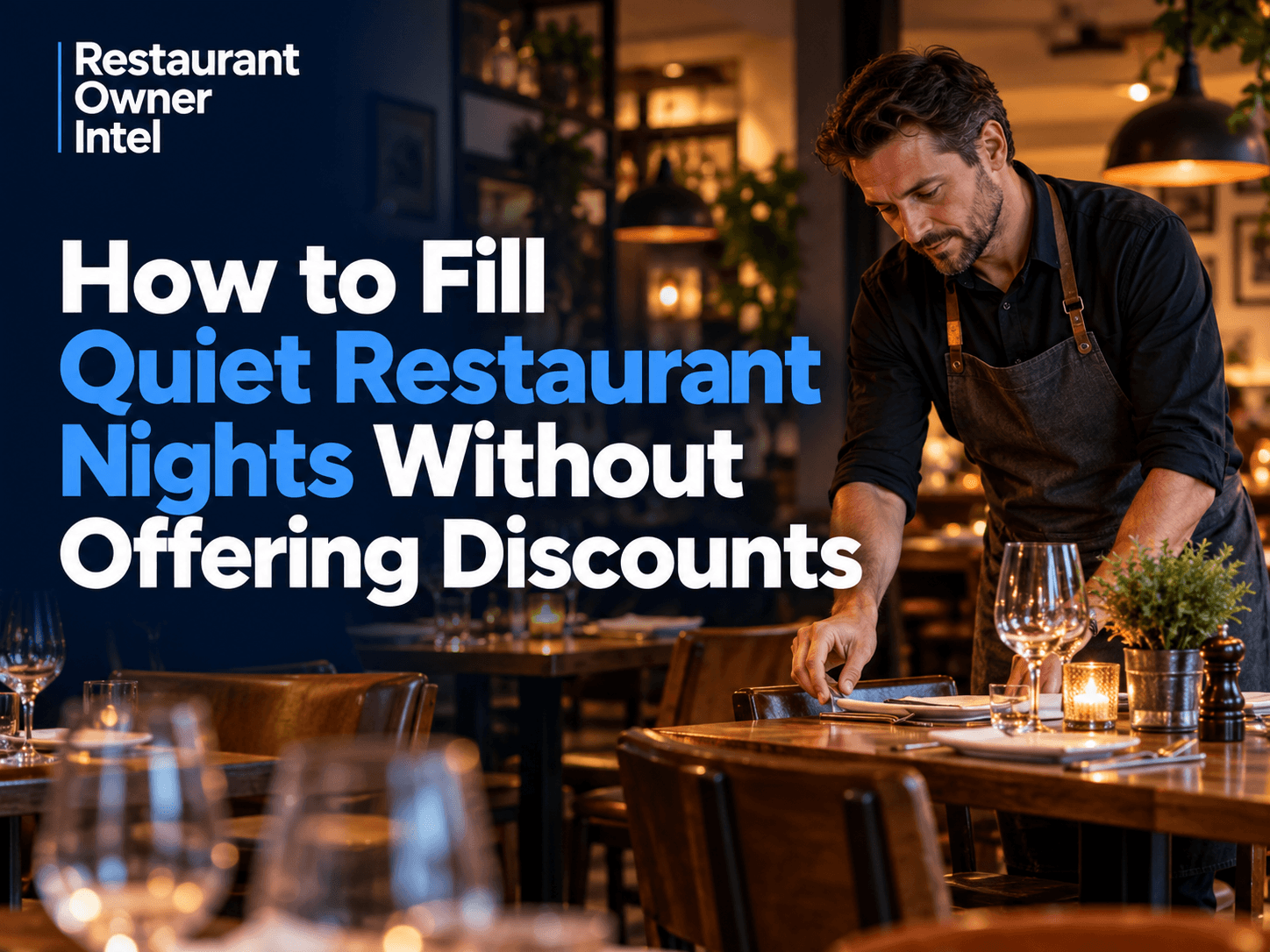
How to Fill Quiet Restaurant Nights Without Offering Discounts
Empty tables on a Tuesday or Wednesday can be expensive. But cutting prices isn't the only way to bring customers through the door. These practical restaurant marketing ideas can help you increase midweek bookings, give diners a reason to visit and protect your profit margins.

Oct 18, 2026
Are Delivery Apps Bringing You Sales or Taking Too Much Margin?
Delivery apps can keep your kitchen busy and your sales figures climbing. But how much of that money are you actually keeping? Here's how to uncover the real cost of restaurant delivery apps, protect your profit margins and make every order work harder for your business.
Oct 17, 2026
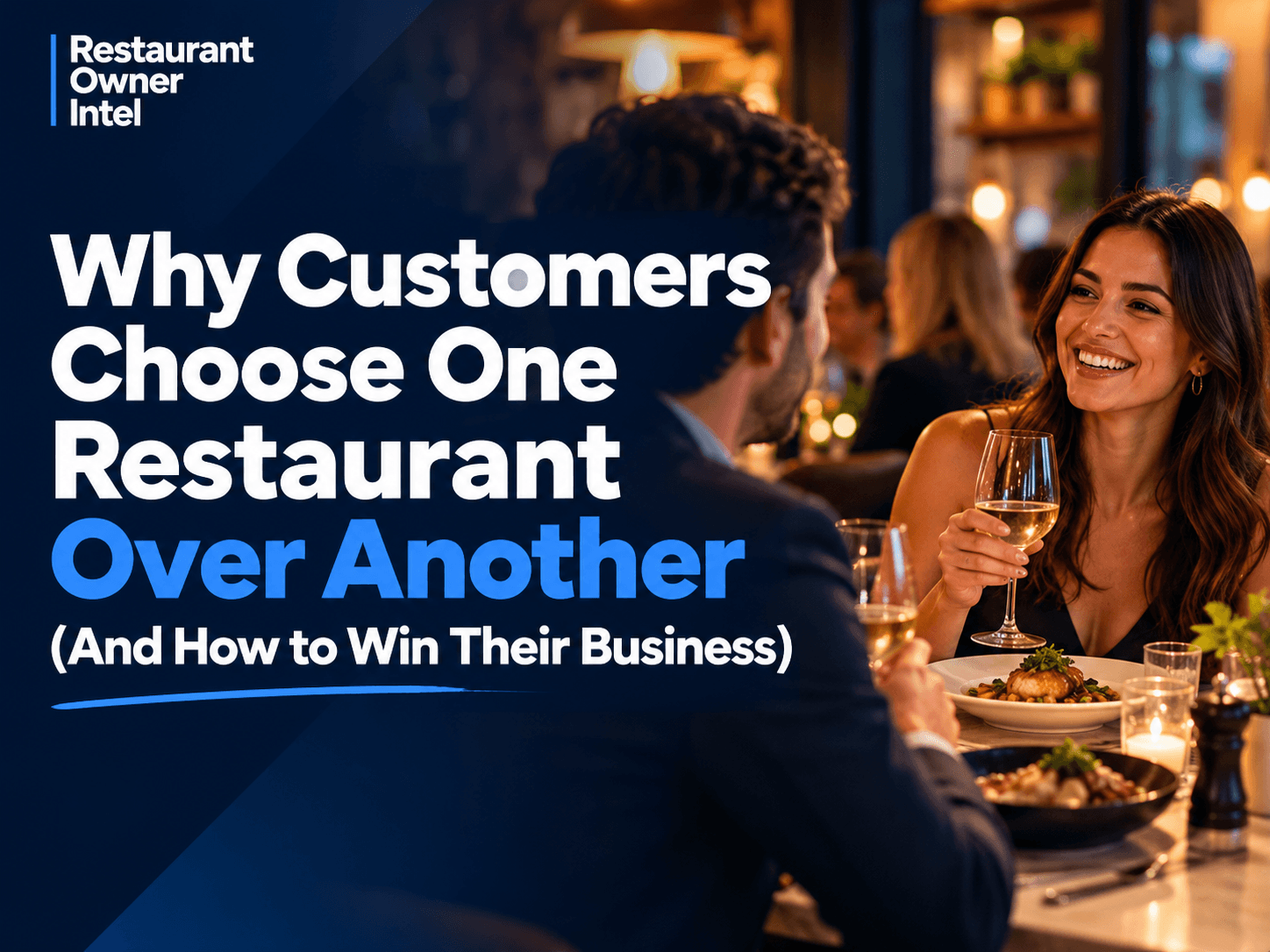
Why Customers Choose One Restaurant Over Another (And How to Win Their Business)
Why Customers Choose One Restaurant Over Another comes down to more than food and price. Understanding the psychology behind dining decisions can help your restaurant attract more customers, win bookings and build repeat business.
Oct 16, 2026
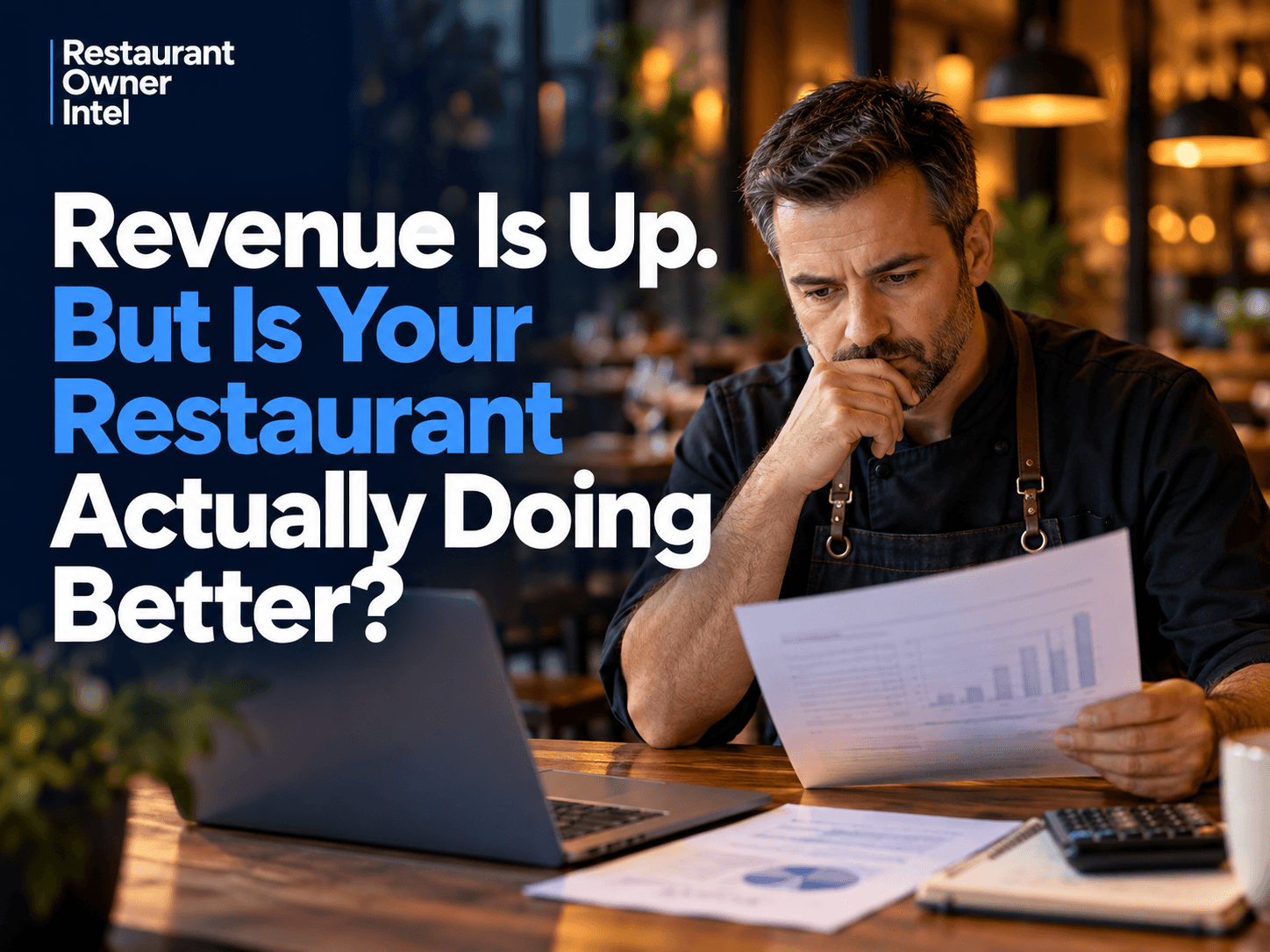
Revenue Is Up. But Is Your Restaurant Actually Doing Better?
Higher sales can create the impression of a healthier restaurant business. But unless customer numbers, operating costs and profit margins are improving too, revenue growth may be hiding a very different story.
0 Comments
Join the conversation
Be the first to comment
Share your thoughts above.