
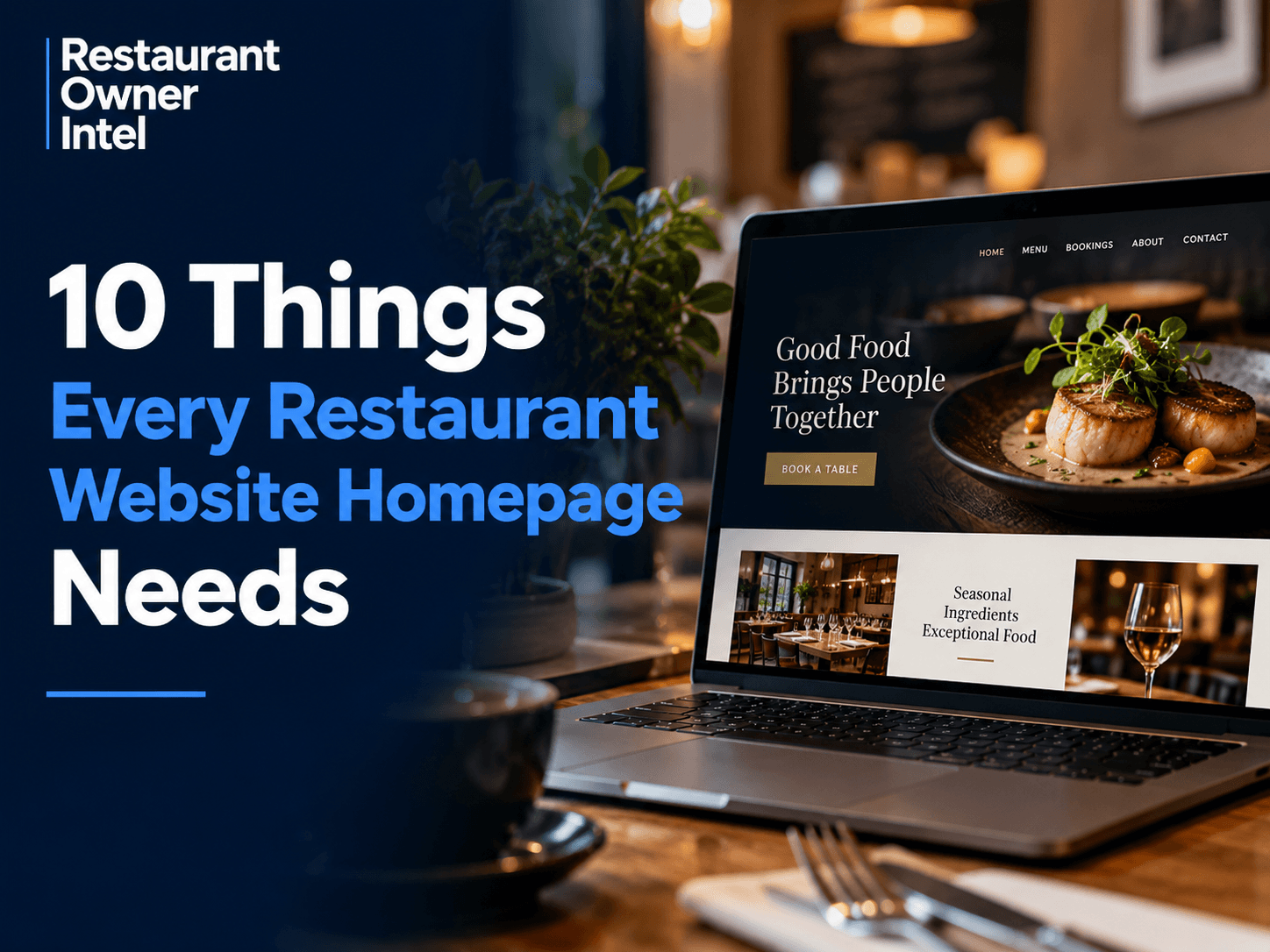
10 Things Every Restaurant Website Homepage Needs
Discover the 10 things every restaurant website homepage needs to turn more visitors into bookings, orders and customers.
A potential customer lands on your restaurant website. They might have found you through Google, seen you mentioned on social media or had your restaurant recommended by a friend. Now they want to make a decision. Should we eat here? Your homepage has an important job to do. It needs to quickly show customers what kind of restaurant you are, where you are, what you serve and what they should do next. Make people search for basic information, and you create unnecessary friction. Make the decision easy, and your website has a much better chance of turning interest into a booking, order or visit. Here are 10 things every restaurant website homepage needs. 1. A Clear Explanation of What Your Restaurant IsSomeone visiting your website for the first time should understand your restaurant within seconds. Do not assume everyone already knows you. Your homepage should quickly communicate:
For example: Independent Italian restaurant in Cambridge serving handmade pasta, wood-fired pizza and seasonal dishes. That single sentence tells a new customer considerably more than: Welcome to our website. Your restaurant name alone may not explain what you offer, particularly to customers discovering you through search. Practical check: Show your homepage to someone unfamiliar with the restaurant for five seconds. Can they tell you what kind of restaurant it is? 2. A Prominent Book a Table ButtonIf reservations matter to your business, customers should not have to hunt for the booking button. Make Book a Table one of the most obvious actions on the homepage. Ideally, it should appear near the top of the page and remain easy to find on mobile. This sounds basic, but every unnecessary step creates another opportunity for a potential customer to leave. The customer should not need to: Homepage → Contact → Reservations → Booking page. Give them the shortest possible route. Homepage → Book a Table. The same principle applies if takeaway or delivery is a major part of your business. Make Order Online immediately visible. Your website should make your most valuable customer actions easy. 3. Your MenuFor many customers, the menu is one of the main reasons they visit a restaurant website. Do not make it difficult to find. Include a clear View Menu button prominently on the homepage. Where possible, use a mobile-friendly web menu rather than relying exclusively on a PDF that customers have to download and zoom into on their phone. Your menu also needs to be current. Old prices, discontinued dishes and outdated menus create confusion before the customer has even arrived. Remember that customers are not simply checking what food you sell. They are deciding: Do I want to eat here, and does this restaurant suit my budget? Help them answer both questions quickly. 4. Strong, Current Restaurant PhotographyCustomers buy with their eyes. Good photography helps people imagine the experience before they arrive. Your homepage should include a small selection of strong images showing the restaurant at its best. Consider including:
Avoid filling the homepage with dozens of photographs. A handful of excellent, current images will usually do more than a large gallery of average ones. Photography should also accurately represent the experience. If the dining room has been refurbished but the website still shows photographs from five years ago, you are underselling the restaurant. 5. Your Location and Opening HoursNever make customers work to find basic information. Your address and opening hours should be easy to locate from the homepage. This is particularly important for customers viewing your website on a phone while deciding where to eat. Consider including:
If you have unusual service times, make them clear. For example, if lunch finishes at 2:30pm and dinner service starts at 5:30pm, customers should be able to see that without calling you. And whenever opening hours change, update your website and your Google Business Profile. Inaccurate information creates frustration and can cost you customers. 6. Social ProofA customer who has never visited your restaurant is taking a small risk. Will the food be good? Will the service be good? Will the restaurant live up to the photographs? Social proof helps reduce that uncertainty. Your homepage could feature a small number of strong customer reviews, recognised awards, press mentions or other credible evidence that customers enjoy your restaurant. For example, a short section containing three genuine customer comments can provide useful reassurance. Keep it selective. Your homepage does not need 30 reviews. Its job is simply to give potential customers another reason to feel confident about choosing you. 7. A Reason to Choose Your RestaurantCustomers often compare several restaurants before making a decision. Why should they choose yours? Your homepage should communicate something distinctive about the restaurant. Perhaps you:
This does not need to become a long brand story. A few lines may be enough. The important point is to give customers something memorable. “Great food and friendly service” is not a differentiator. Almost every restaurant could say that. Give customers a specific reason to remember you. 8. Clear Calls to ActionA restaurant homepage should not leave customers wondering what to do next. Think about the actions that matter commercially to your restaurant. They may include:
Prioritise them. Do not give every action equal prominence. If reservations generate most of your business, Book a Table should usually be more prominent than joining your mailing list. Your website design should reflect the actions that matter most to the restaurant. 9. A Mobile-Friendly ExperienceA restaurant website can look excellent on a large computer screen and be frustrating to use on a phone. That is a problem. Customers frequently search for restaurants while they are out, travelling or discussing where to eat. Check your homepage on an actual phone. Can you:
Pay particular attention to intrusive pop-ups. A newsletter box covering most of a customer's screen just as they are trying to view the menu is not helping you build your database. It is getting in their way. Mobile usability is not simply a technical website issue. It affects whether customers can do business with you easily. 10. A Way to Keep the Relationship GoingNot every person visiting your website will book today. That does not mean the visit has no value. Give interested customers a simple way to stay connected with the restaurant. An email signup can be particularly valuable because it gives you a direct way to reach customers again. But give people a reason to subscribe. Instead of: Sign up for our newsletter try something more specific: Be the first to hear about new menus, special events and restaurant offers. You are gradually building an audience you can reach when you launch a new menu, organise an event or need to generate demand for quieter periods. Unlike a social media audience, an email database gives you a more direct relationship with your customers. That makes your website more than a digital brochure. It becomes part of your customer retention strategy. Your Homepage Has One Main JobRestaurant owners can spend a surprising amount of time debating website colours, fonts, animations and design details. Those things matter, but they are secondary. The bigger question is: Does your homepage make it easy for a potential customer to choose your restaurant and take the next step? A beautiful website that hides the menu, makes reservations difficult and fails to explain the restaurant is not doing its job. A simple website that gives customers the right information at the right time can be considerably more effective. The 60-Second Restaurant Website Homepage AuditOpen your restaurant homepage on your phone and check whether a customer can quickly find:
If something important is missing, fix that before worrying about a complete website redesign. Small improvements that remove friction can make it easier for customers to move from “This looks interesting” to “Let's book it.” One Action to Take TodayOpen your restaurant website on your phone and pretend you have never seen it before. Give yourself 30 seconds. Try to find the menu, opening hours, location and booking button. Anything that feels difficult to find is probably difficult for your customers too. Fix the biggest source of friction first. |
Restaurant Owner Resource |
Free AI Restaurant Growth Plan |
Curious what growth opportunities your restaurant might be missing? Our free AI-powered Growth Plan analyses your restaurant's online presence, marketing and growth goals to identify opportunities you may not have considered.
|
Oct 18, 2026
How to Fill Quiet Restaurant Nights Without Offering Discounts
Empty tables on a Tuesday or Wednesday can be expensive. But cutting prices isn't the only way to bring customers through the door. These practical restaurant marketing ideas can help you increase midweek bookings, give diners a reason to visit and protect your profit margins.

Oct 18, 2026
Are Delivery Apps Bringing You Sales or Taking Too Much Margin?
Delivery apps can keep your kitchen busy and your sales figures climbing. But how much of that money are you actually keeping? Here's how to uncover the real cost of restaurant delivery apps, protect your profit margins and make every order work harder for your business.

Oct 17, 2026
Why Customers Choose One Restaurant Over Another (And How to Win Their Business)
Why Customers Choose One Restaurant Over Another comes down to more than food and price. Understanding the psychology behind dining decisions can help your restaurant attract more customers, win bookings and build repeat business.

Oct 16, 2026
Revenue Is Up. But Is Your Restaurant Actually Doing Better?
Higher sales can create the impression of a healthier restaurant business. But unless customer numbers, operating costs and profit margins are improving too, revenue growth may be hiding a very different story.
0 Comments
Join the conversation
Be the first to comment
Share your thoughts above.